SPECIFICHE
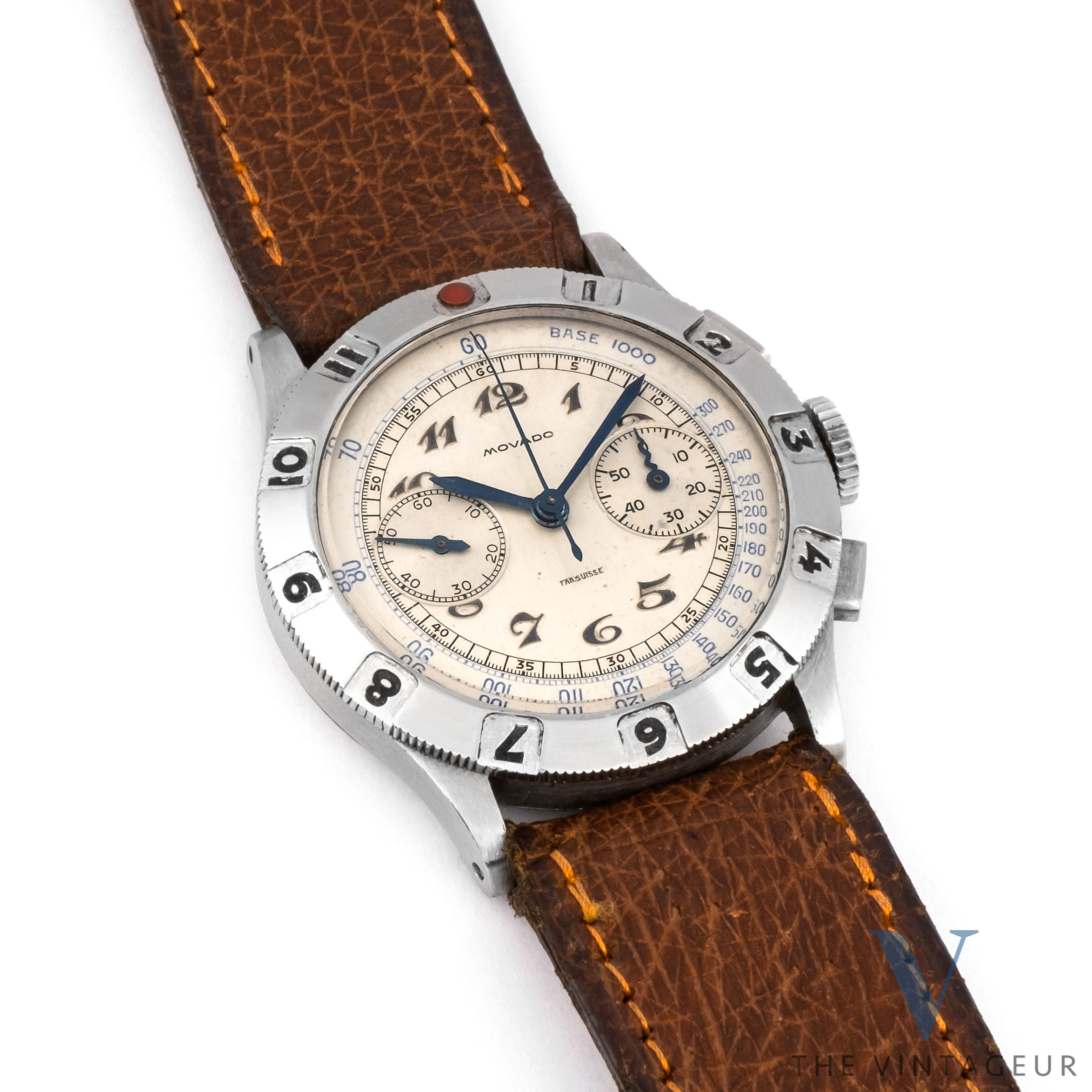
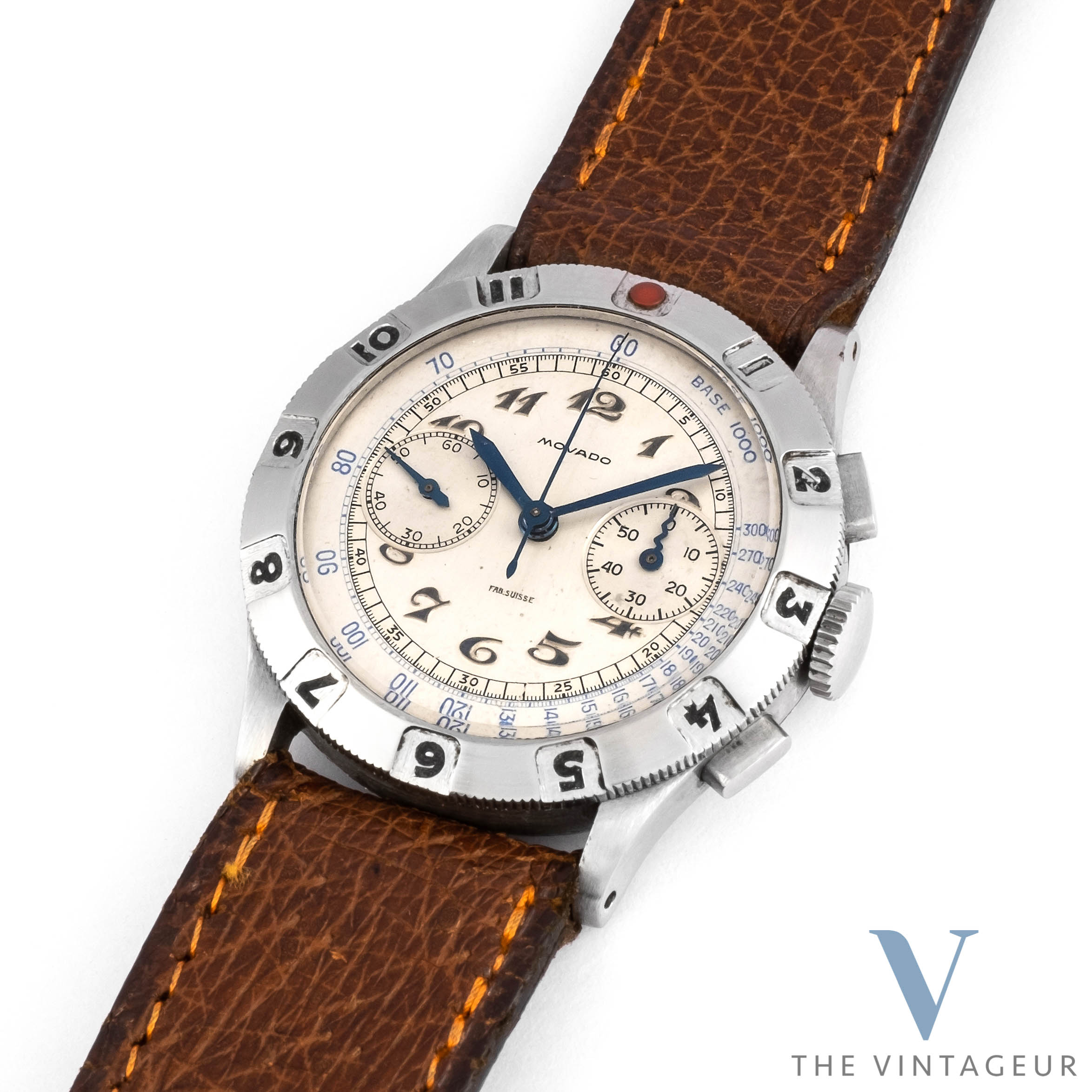
Extraordinary and truly rare Movado Tempograf chronograph ref. 19006, with a steel case and in-house M90 movement, from 1938.
Steel case measuring 33mm
Original steel bezel
Original pushers and crown
Corona originale
Cristallo di plastica
Movado M90 Manual-Winding Movement
ANALISI
The review I’m writing about this watch will be full of emotion for me. For a Movado scholar and collector, the Tempograf represents a grail watch. I could spend hours (even days) admiring this chronograph without ever tiring, because it has everything a watch with a chronograph complication should have. This strong fascination stems from the Tempograf’s technical and aesthetic features that had never been seen before its launch in 1938 and would be rediscovered much later. In the 1930s, Movado was one of the finest Swiss watchmakers. It had already experimented with and produced unique watches, but it was at the end of that decade that it decided to focus on creating in-house chronographs. In 1937, it had advanced the idea of a watch with concentric rotating bezels (patent no. 191,277 of 1936), the “Cronoplan.” The following year, the Maison developed its own semi-integrated chronograph movement, created in collaboration with Frederic Piguet. It was an innovative caliber for its time, as it maintained the functional quality of a chronograph with a lateral clutch and column wheel, while also being able to be literally implanted onto a time-only movement (the Movado-manufactured cal. 470) via a dedicated baseplate. This offered enormous advantages in terms of production savings and ease of assembly and disassembly. At a certain point, this new and innovative chronograph movement and the concept of a rotating bezel for adding an additional time measurement came together in the Tempograf, giving rise to a one-of-a-kind watch in the late 1930s (and still today).
It is a very rare watch. Its production did not last beyond 1939, when Movado introduced the M95, the new and improved chronograph movement that implemented the chronograph hour adder, effectively rendering the bezel obsolete as a mechanical means of keeping track of the same time. The name “Tempograf” was registered on September 2, 1938, under patent number 94120, along with another significant name for Movado, the “Cronacvatic” (patent number 94119). This marked Movado’s debut with its first water-resistant chronograph, the ref. 9008, whose defining features were the “round buttons” and a Taubert/FB case now incorrectly referred to as a “565.”
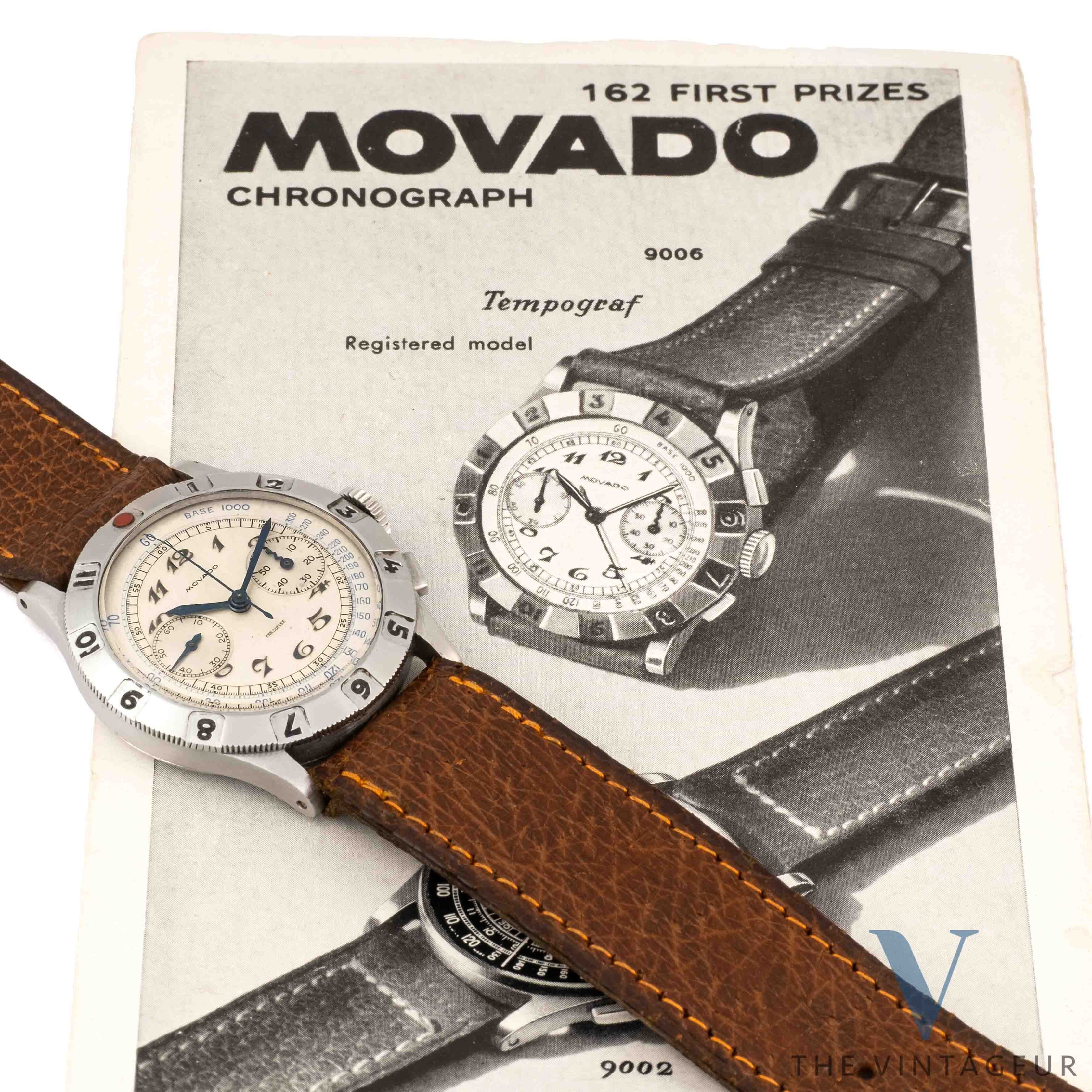
Production of the Tempograf (reference 9006) was therefore extremely limited (1938 > 1939), and today it is one of the rarest birds to be seen. This particular example is also one of the most beautiful Tempografs ever seen on this planet, due to its dial configuration and its unparalleled state of preservation.
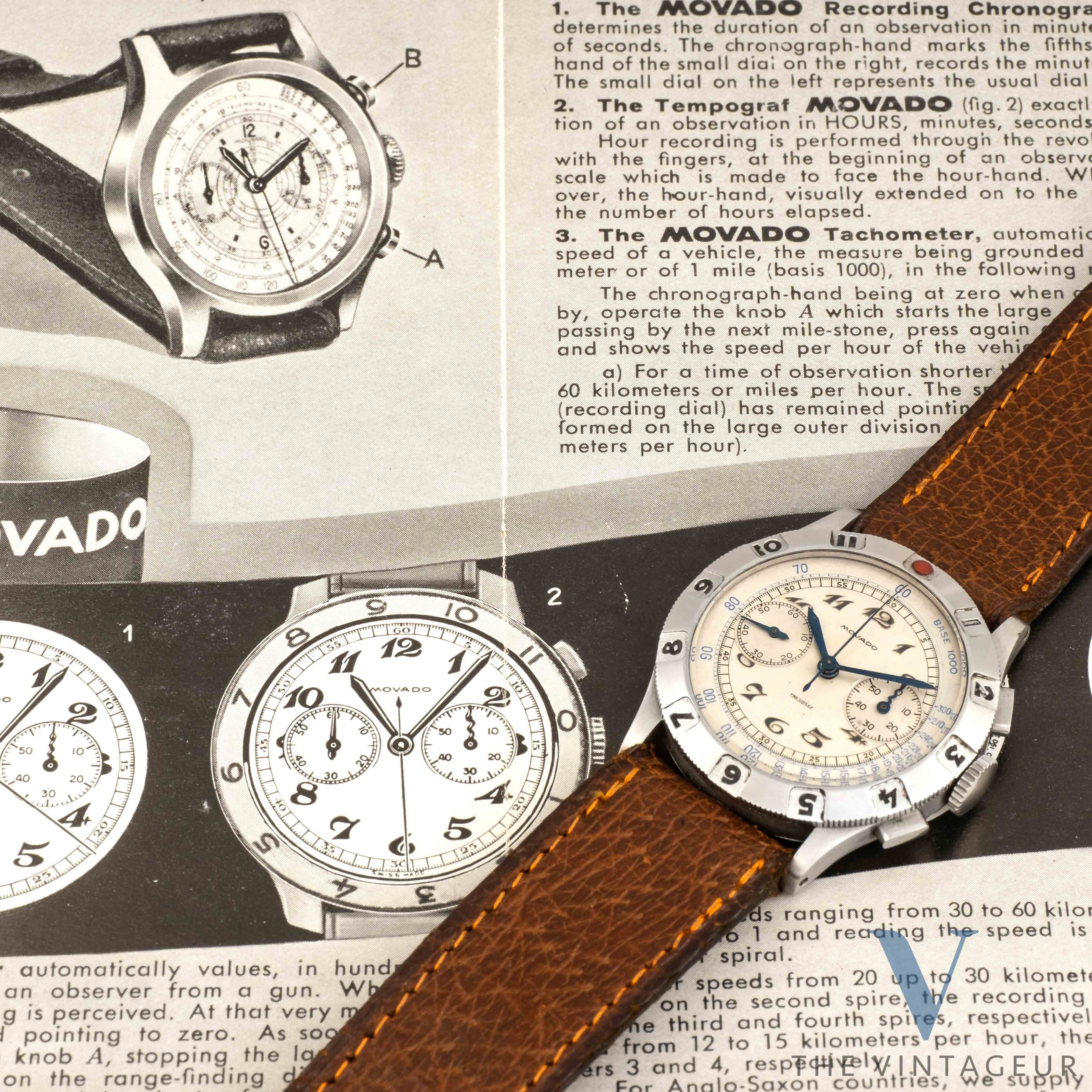
Tempograf dials generally had a peripheral telemeter scale and a 1000-based tachometric scale spiraled inside the dial. This is the most common configuration. In this stunning example, however, the absence of the internal balance spring emphasizes the cleanliness of the composition and adds even more prestige to the Breguet Arabic numerals. The watch is much more versatile: it is extremely elegant while maintaining its distinctly sporty feel. Not all vintage chronographs we admire today have these intrinsic properties.
The overall design of the dial is enhanced by the set of hands: the hours and minutes are sword-shaped; the chronograph seconds hand is very thin and features a seed-shaped counterweight; the small running seconds hand is typically dagger-shaped; while the small 60-minute chronograph counter hand has the characteristic “kris” shape, with a fascinating wavy pattern that begins with broad spirals at the bottom and ends in a soft point. The entire set is achieved through tempering the steel, which gives the hands a vibrant blue/azure color with purple refractions.
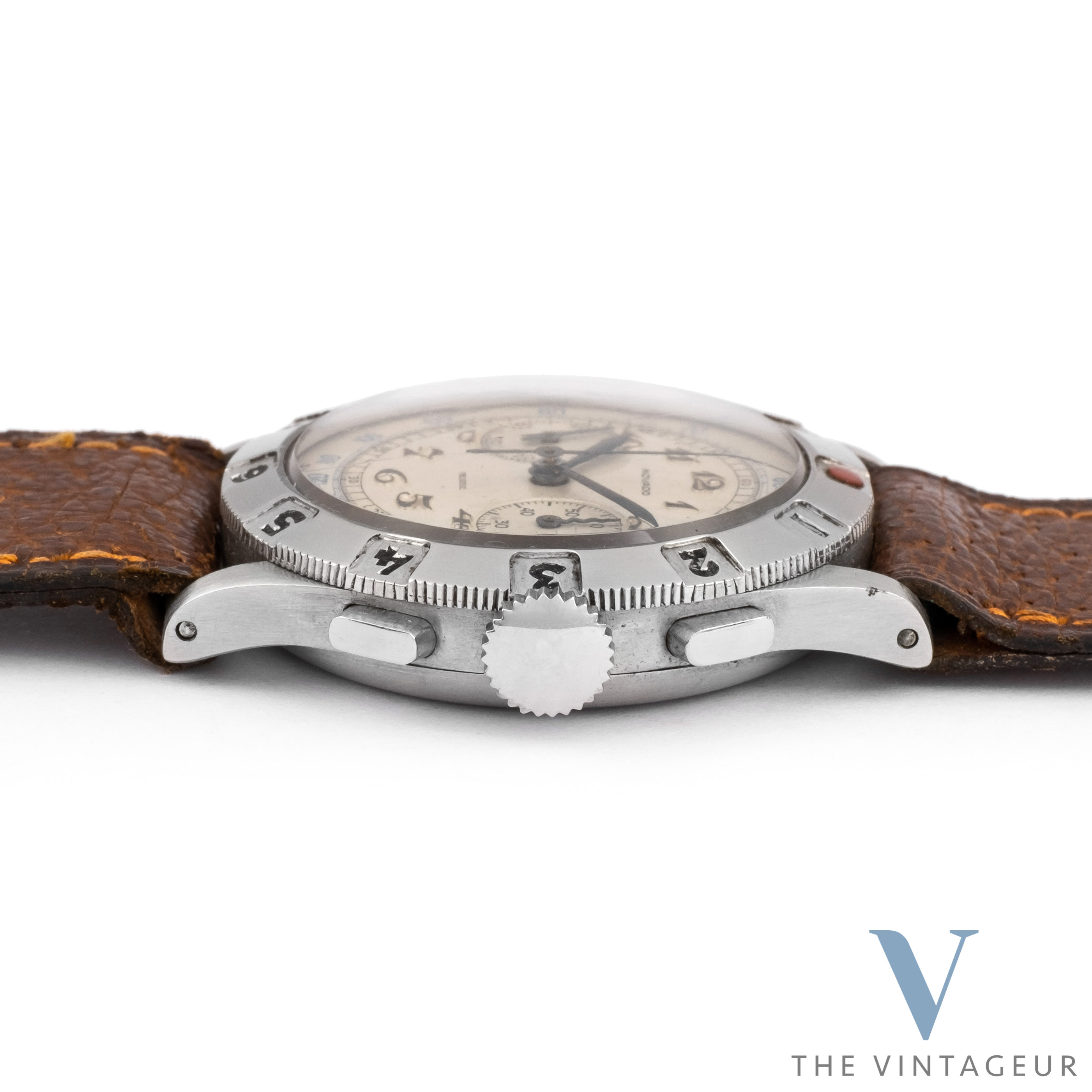
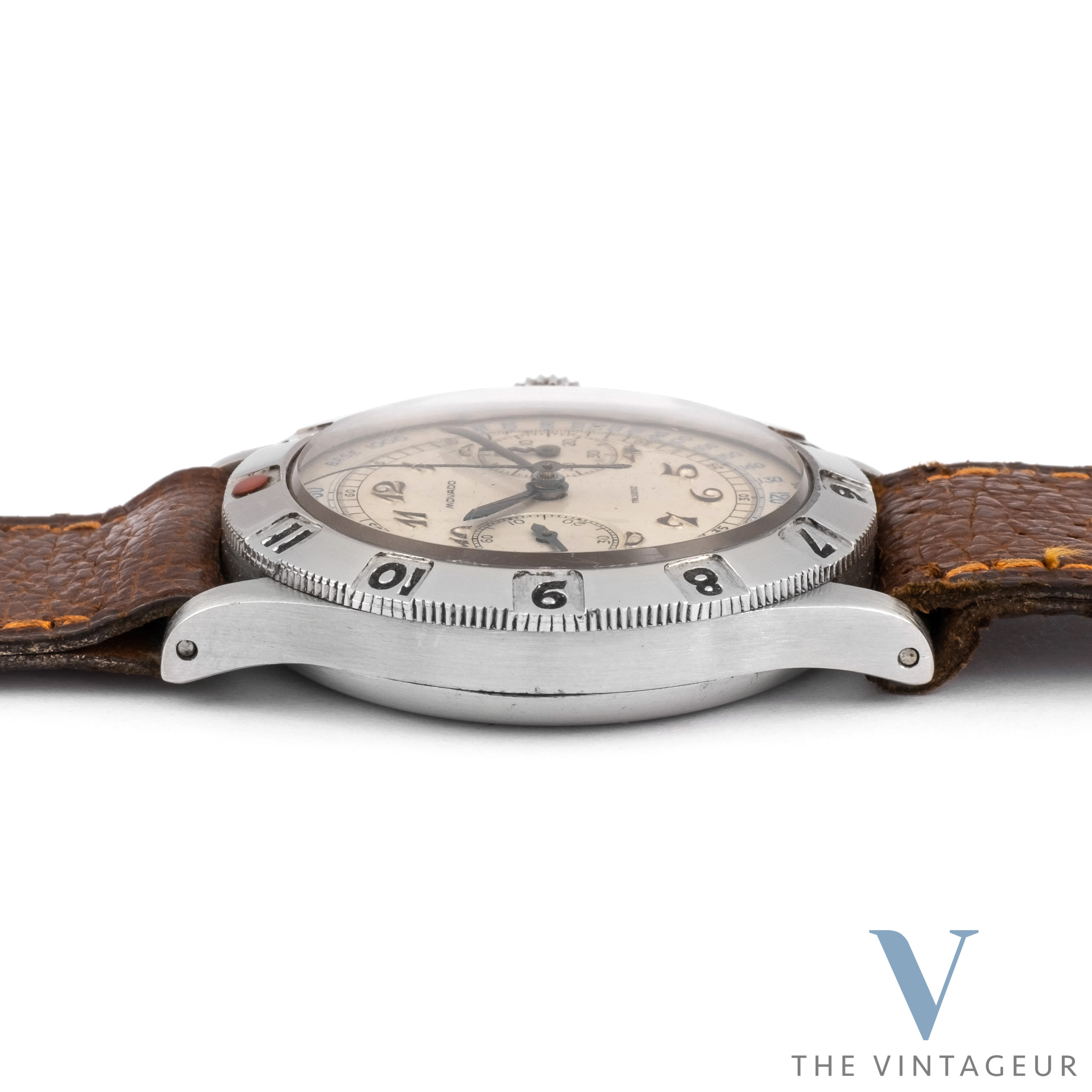
The dial is enclosed within the steel bezel, which makes this watch unique. It has a “thousand-line” profile that allows for excellent maneuverability. Its slightly sloping surface features recesses within which are imprinted the numbers 1 to 11, painted black, and a circular red dot at the 12 o’clock position. It’s incredible how this bezel has remained perfectly intact and with its vivid colors to this day.
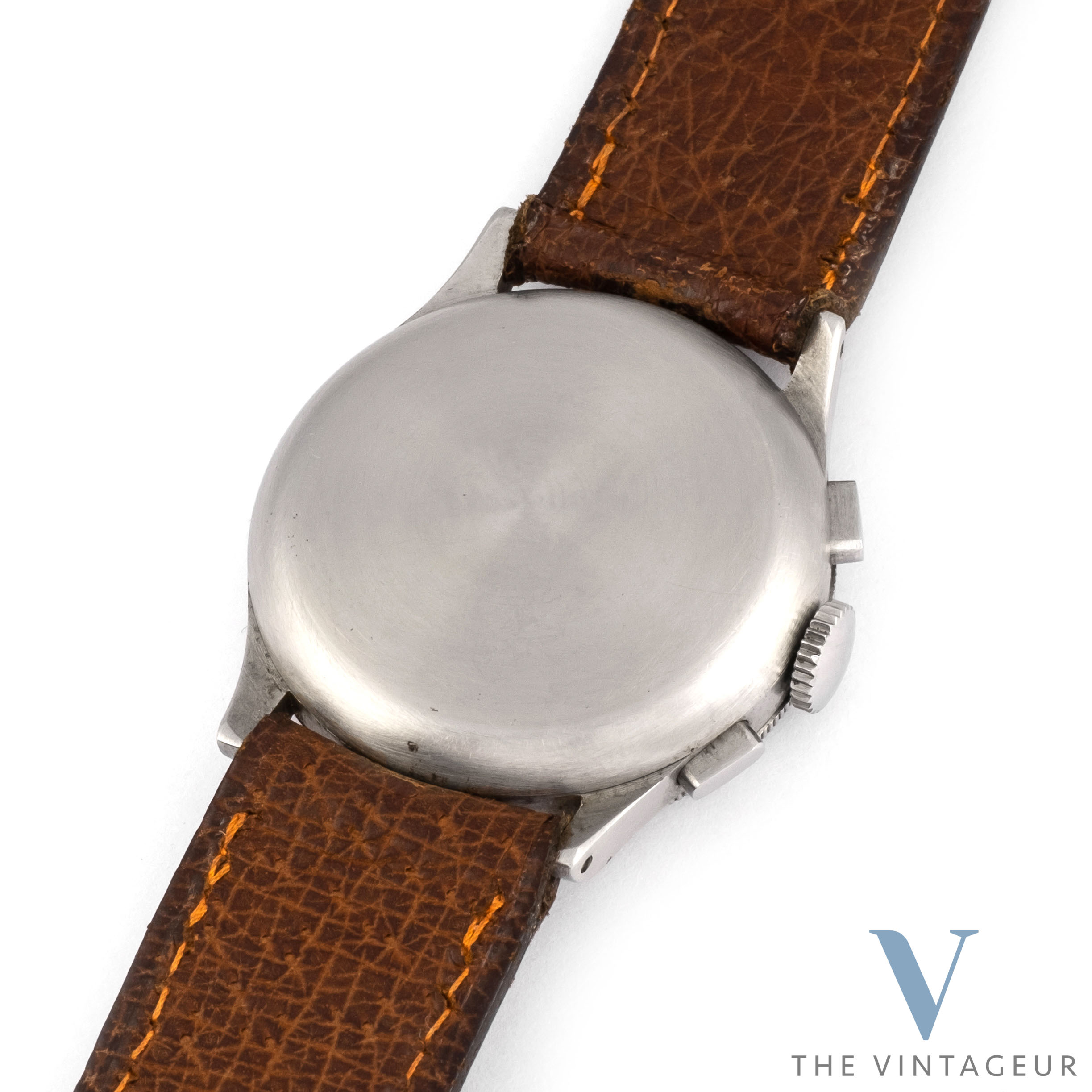
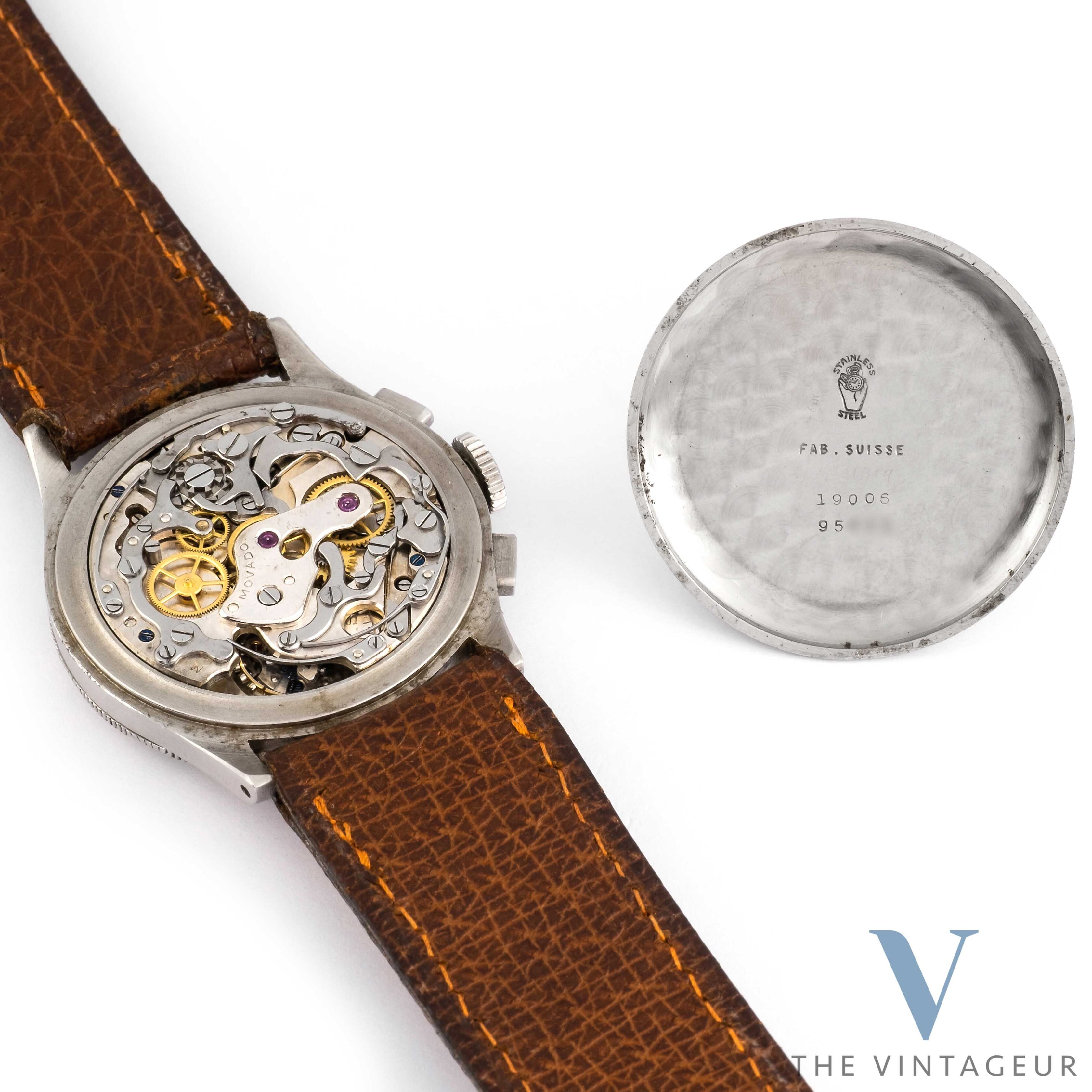
The steel case has also been untouched. It’s compact at 33mm in diameter and comfortable and elegant on the wrist thanks to the snap-on case back that conceals its thickness and streamlines the construction. The chronograph buttons are positioned at 3 o’clock, which at Movado are rectangular with rounded corners for a softer feel. It’s worth noting that the M90, like the M95, has a truly unique construction, characterized in practice by the reversed functions: start and stop are activated with the button at 4 o’clock, while the reset is via the button at 2 o’clock.
This beautiful chronograph is powered by the first-generation in-house M90 manually wound movement. The construction of this distinctive caliber is exquisite: all the levers and the bridge on the upper plate that attaches to the time-only base are treated with a distinctive hand-beveled finish, making it luminous and vibrant.
In short, this watch is marvelous in every micron of its surface, both inside and out.