SPECIFICHE
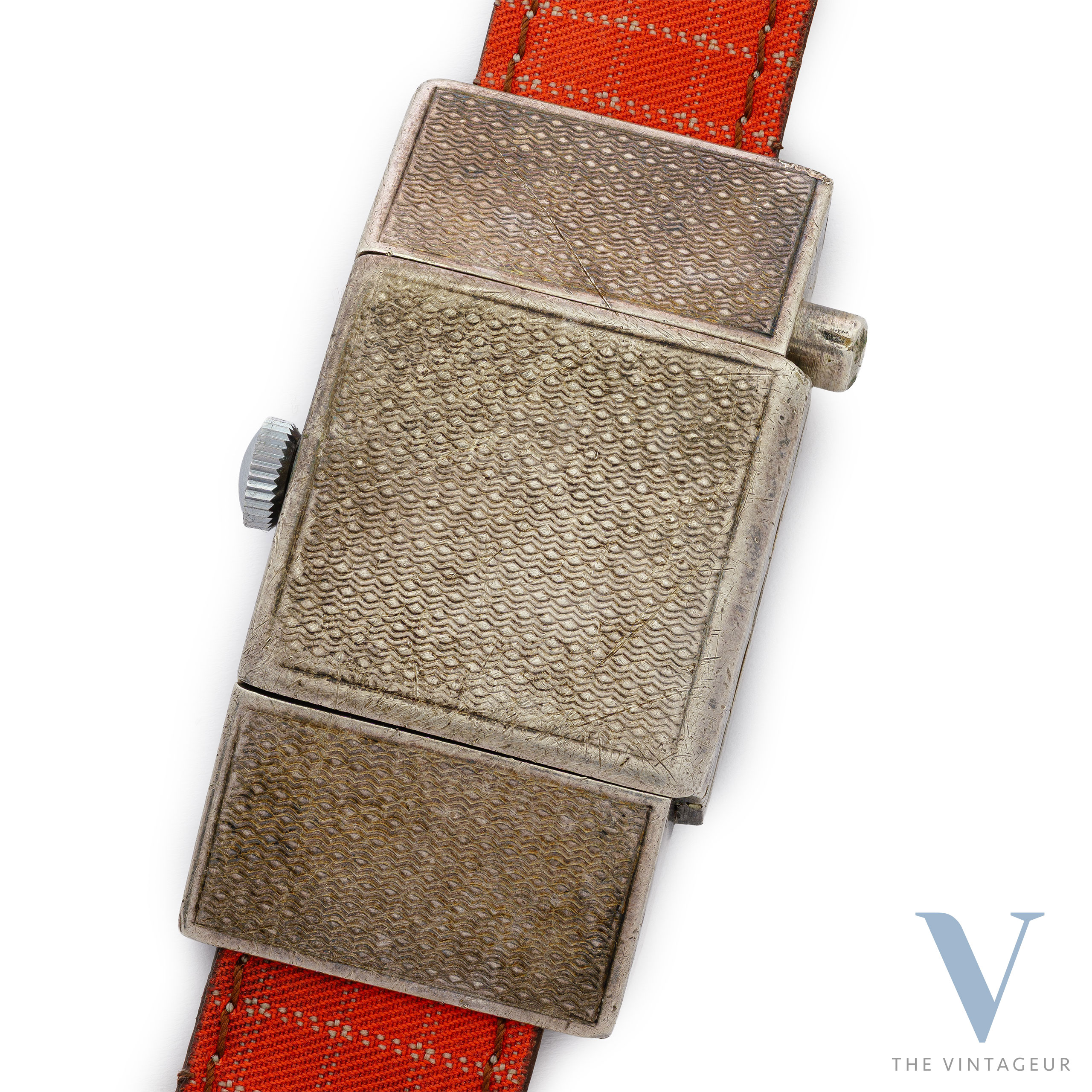
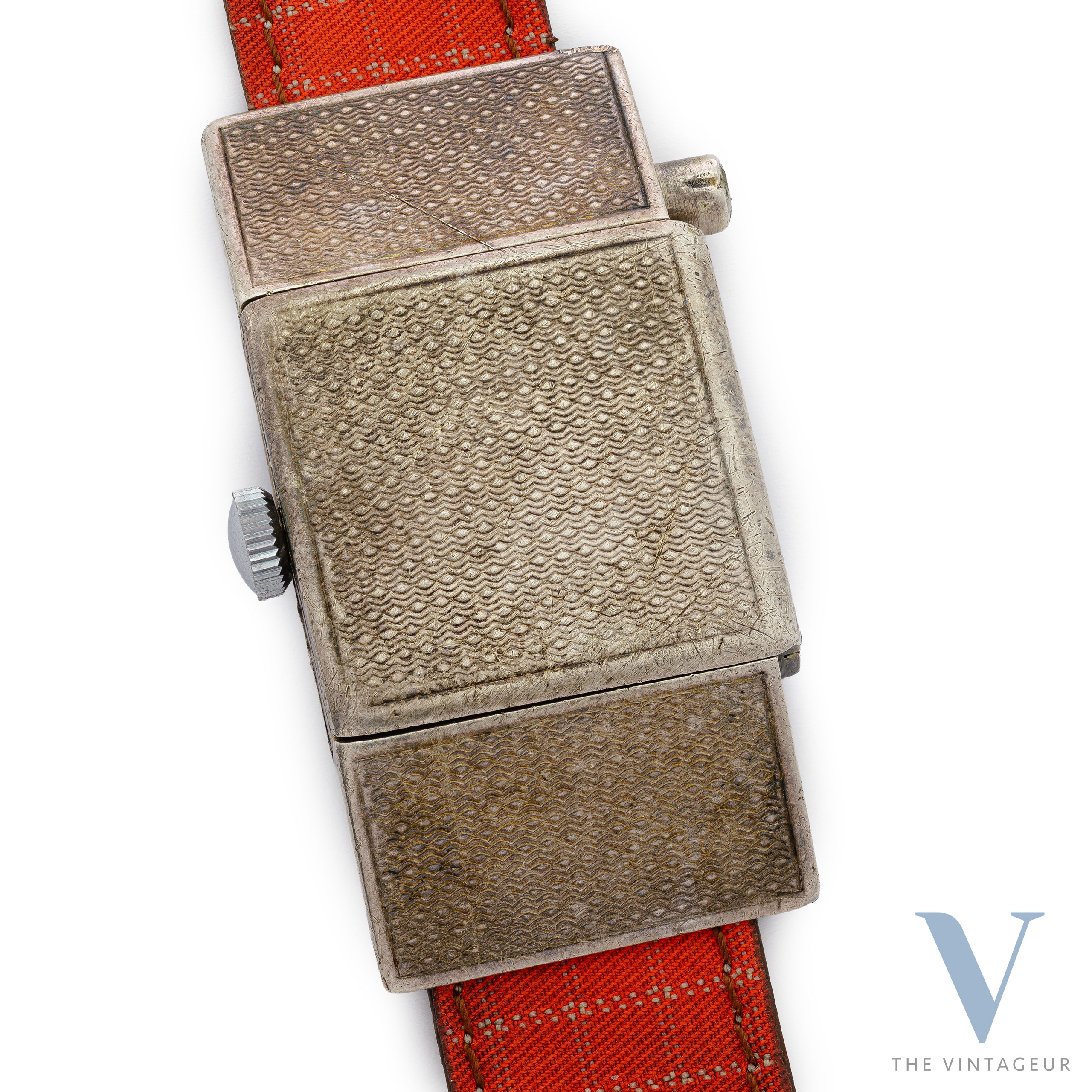
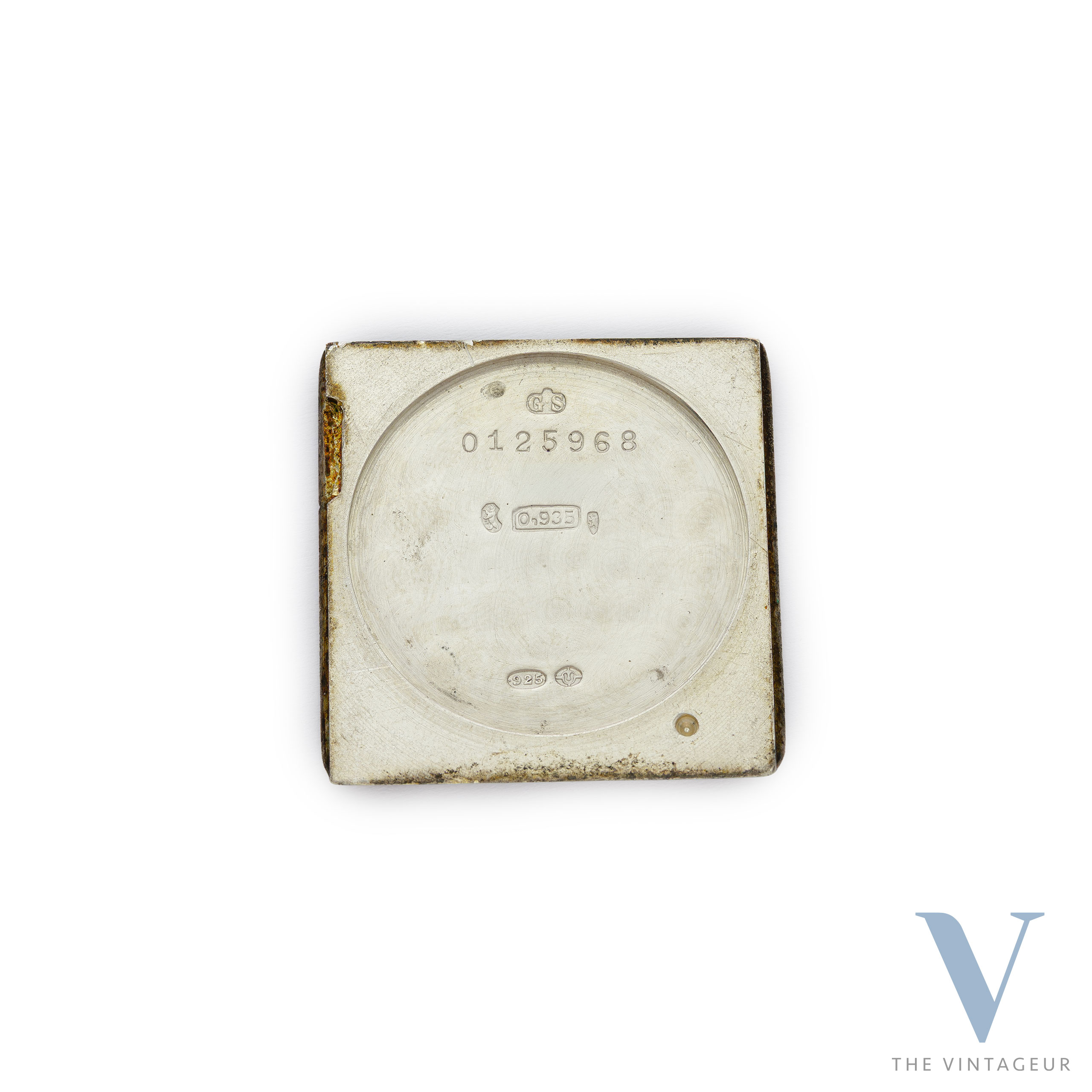
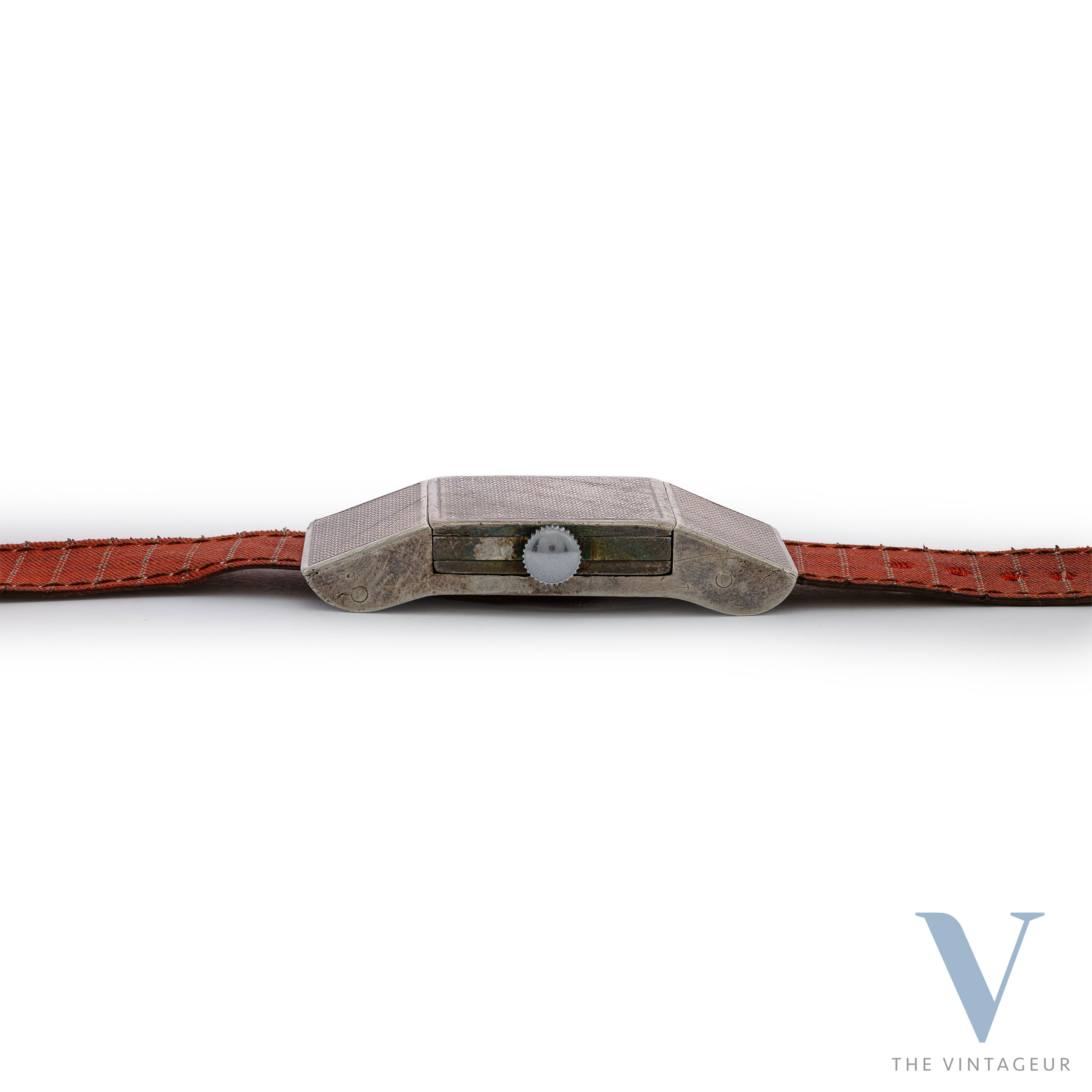
935 sterling silver case, 29 mm x 57 mm
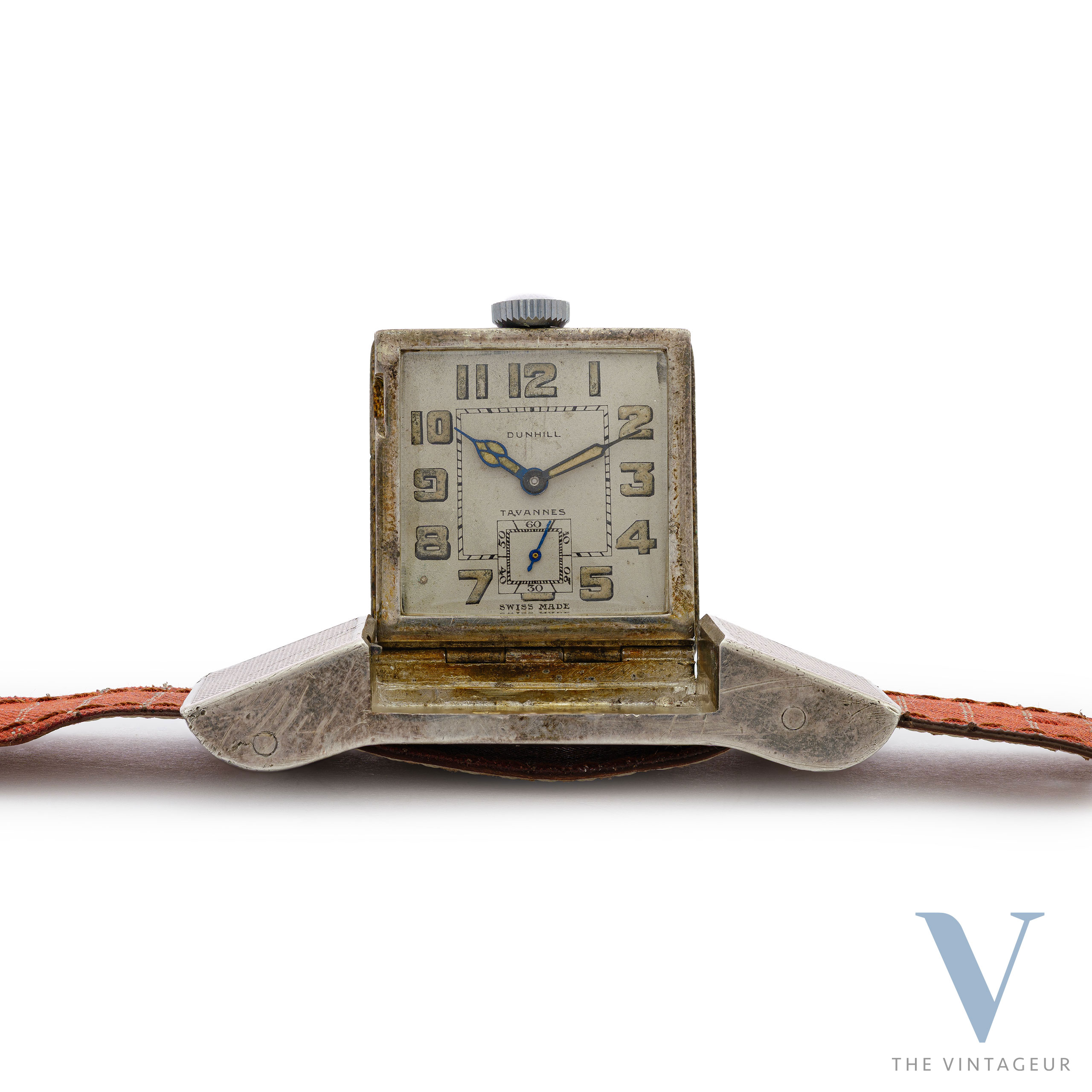
29 mm x 29 mm dial body
9 mm case thickness
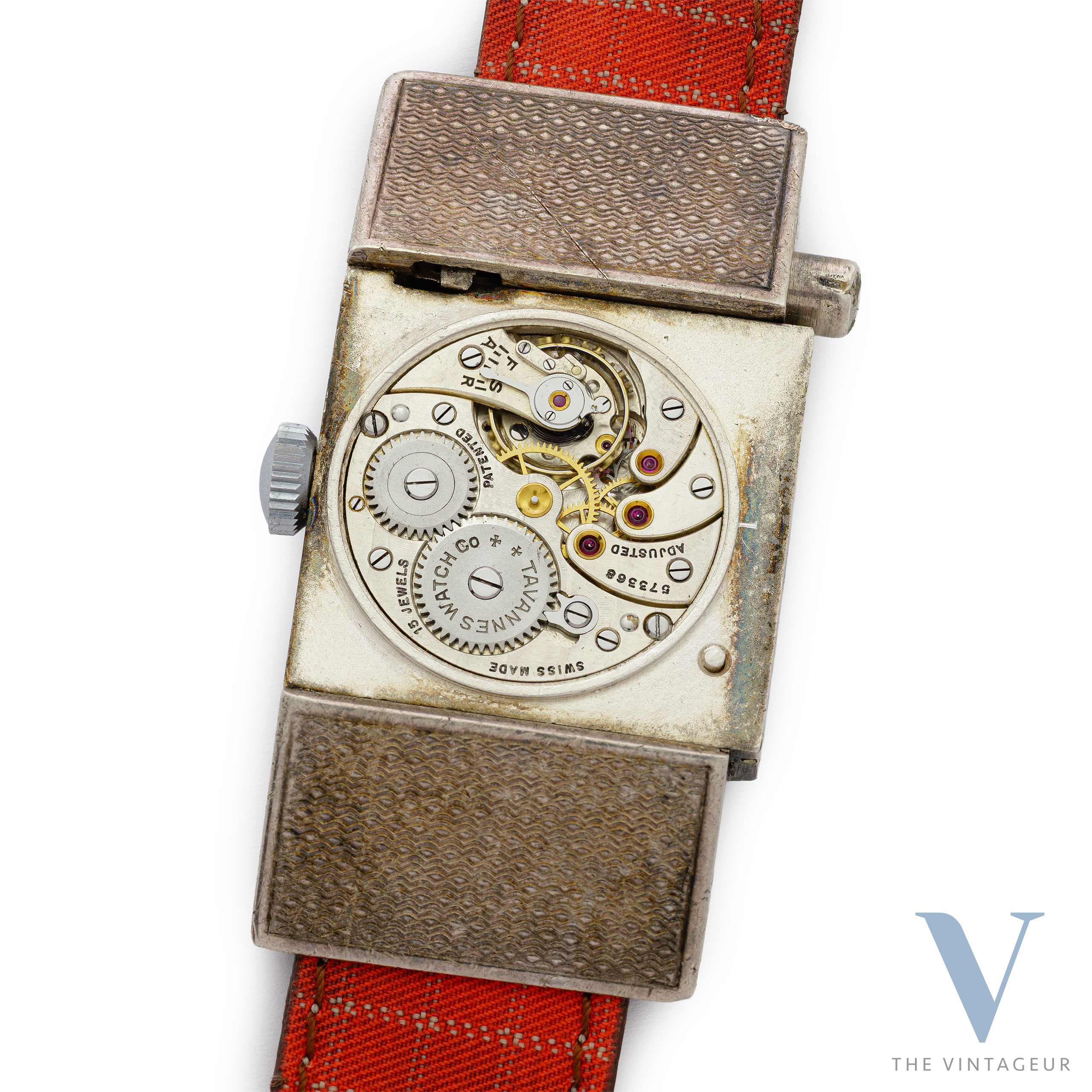
Tavannes 814 manual-winding movement inside
ANALISI
Between the late 1920s and early 1930s, many Swiss watchmakers began developing patents for pocket, travel, or purse watches. These watches featured cases composed of one or two shells that protected the dials from impacts and allowed them to lift from the case for easy reading of the time. These were years of intense experimentation, with many major Swiss manufacturers—such as Movado, Juvenia, Zenith, Longines, Lipmann, Eterna, Tissot, and others—competing to find highly innovative technical and aesthetic solutions in this field of watchmaking. Cyma and Tavannes were also in the running and played a leading role. On February 15, 1929, they registered the name “Captive” with registration number 69301.
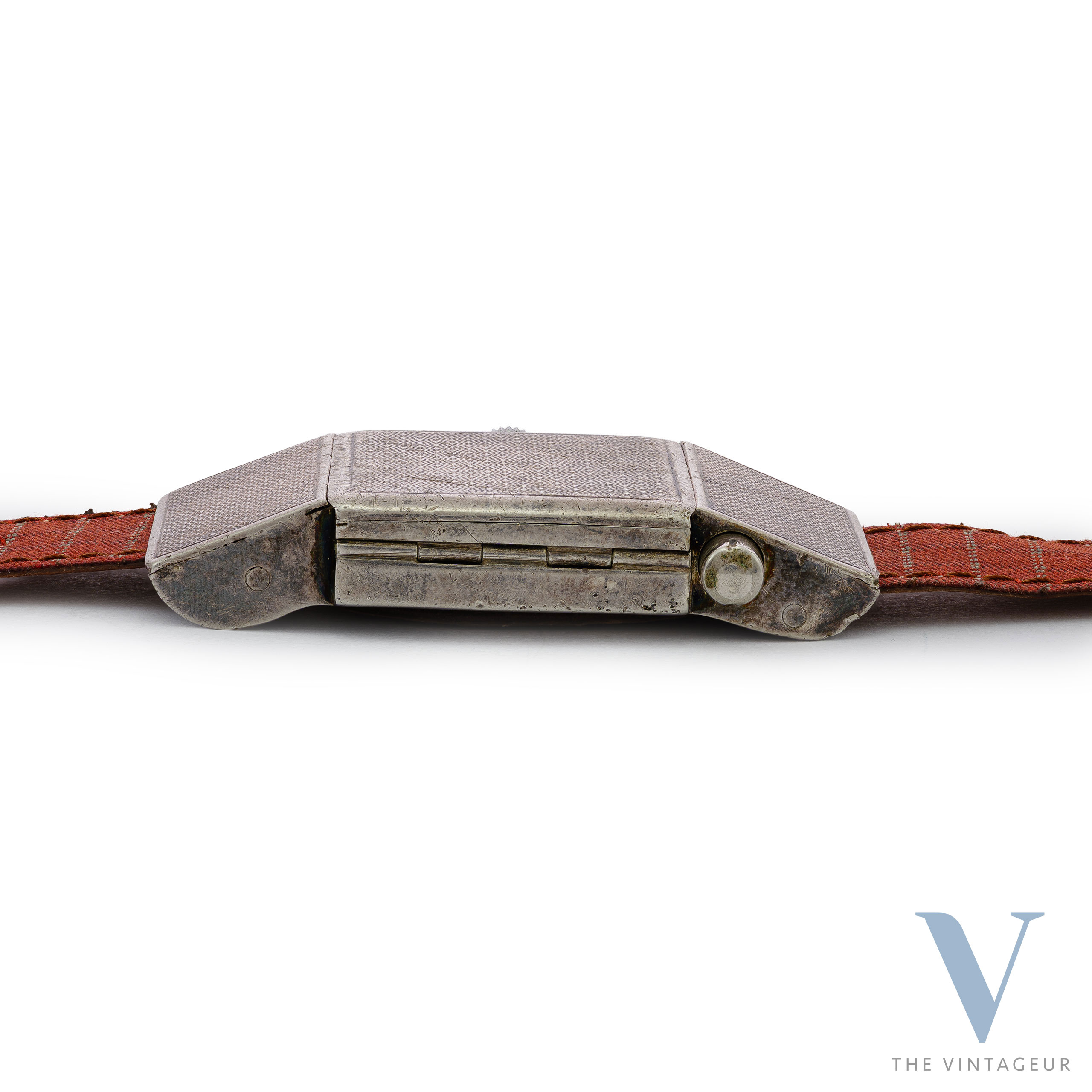
This name designated a watch with a case that opened a double-glazed window above the dial by pressing two special buttons on the sides of the case. It was an immediate commercial success when exhibited at the 1930 Barcelona Exposition. Schwob & Frères & Cie S.A., owner of the two historic brands Cyma and Tavannes, took it a step further between 1932 and 1934, developing that original patent to create a watch they still called “La Captive,” which could be securely worn on a belt for sports activities. With patent no. 662027 filed in France and Belgium, both Cyma and Tavannes began producing these special watches. A single button under the clasp raised the dial to a 90-degree angle from the case. It was a huge success, especially among certain categories of athletes, such as golfers and tennis players, who could engage in amateur or competitive activities while freeing up their pockets and wrists. Naturally, the distribution chains for this product were major jewelers and prestigious retailers such as Cartier, Hermès, and, of course, Dunhill.
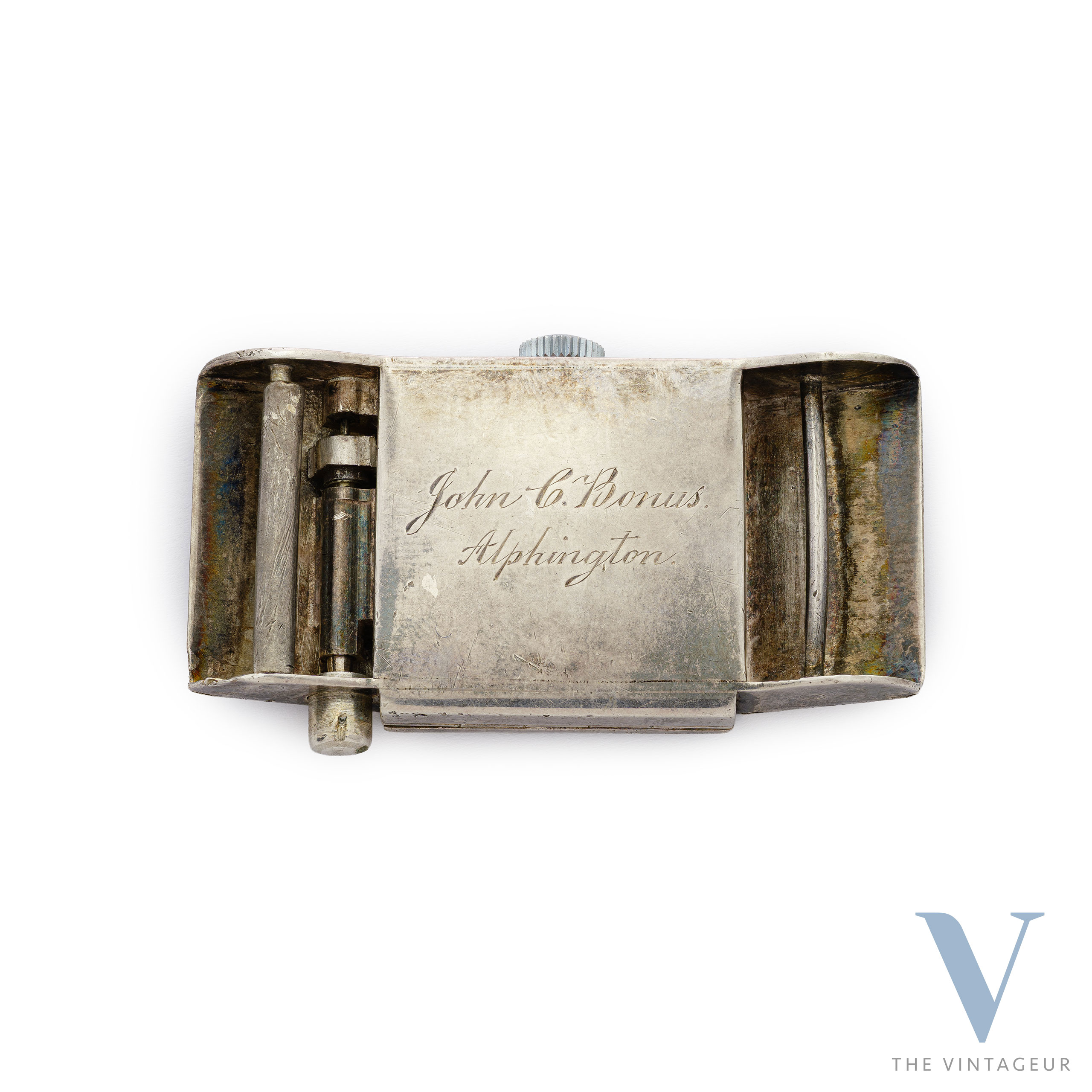
The beautiful case, with its distinctive trapezoidal profile, features a surface finish with a wavy geometric pattern. The case is crafted from 935 sterling and produced by one of Switzerland’s leading case manufacturers: Huguenin Fréres. The inside of the caseback also features the “GS” hallmark, directly referencing Stockwell & Company. This was a major London shipping and transport company as early as the 19th century. Following the 1907 British law requiring the hallmarking of precious metal watch cases imported into England, Stockwell & Company immediately registered its “GS” logo/hallmark at its offices in London, Birmingham, Chester, Dublin, and Glasgow so it could virtually monopolize the certification market by applying its own “sponsor mark.”
The dial has a light background characterized by symmetry between the railway minute track and the square-shaped sub-seconds.
The dial’s periphery is largely occupied by oversized Arabic numerals with radium placed above the pad printing, creating a three-dimensional effect for each numeral. The hands, also filled with luminescent paste, are shaped like a “cathedral” or “fly wing.” At 6 o’clock, immediately above the running seconds subdial, is the Tavannes signature; at 12 o’clock, the signature of the great British retailer Dunhill emerges.
Within this exceptional case is the hand-wound Tavannes caliber 814, with 15 jewels, 18,000 vph, and a 38-hour power reserve.