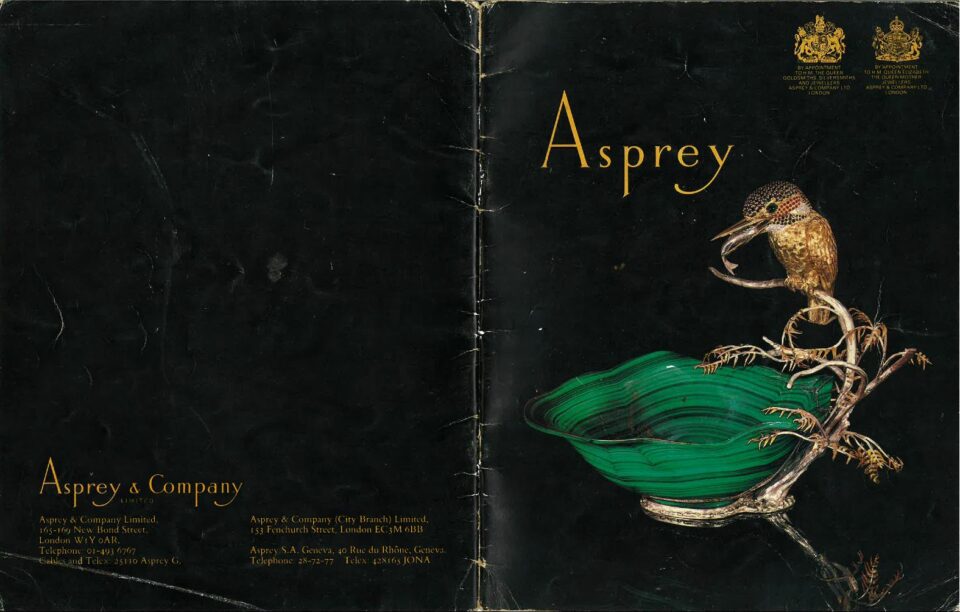
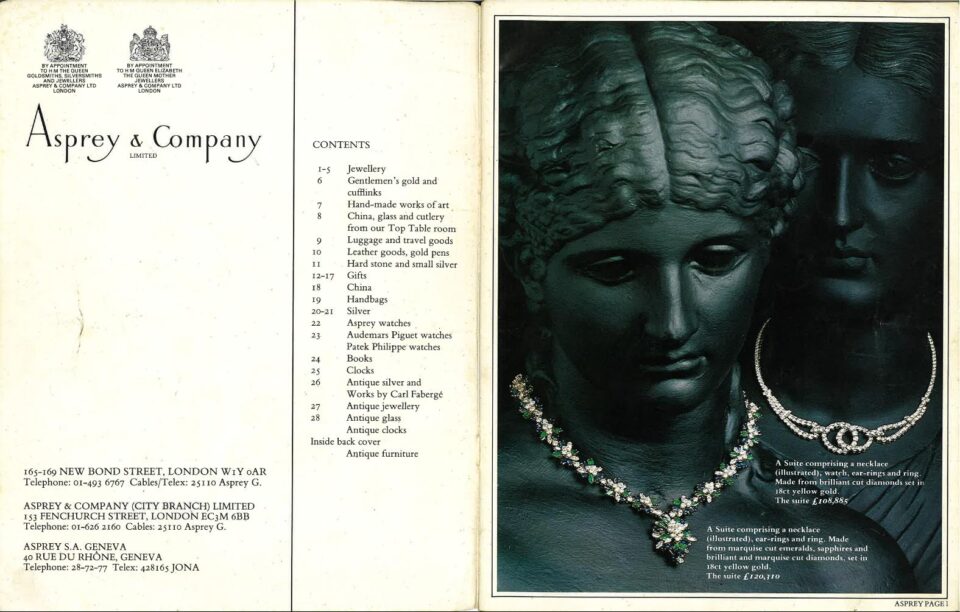
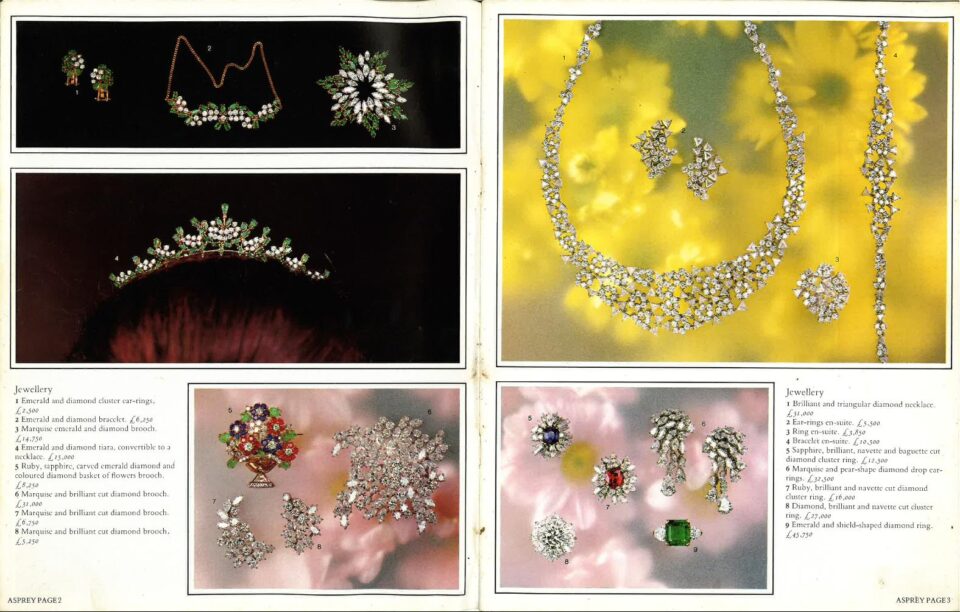
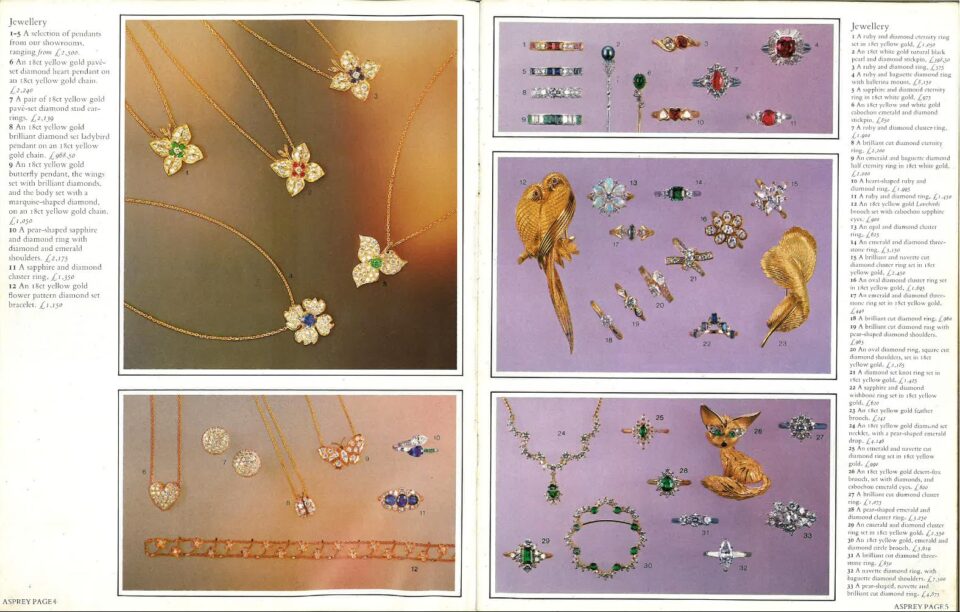
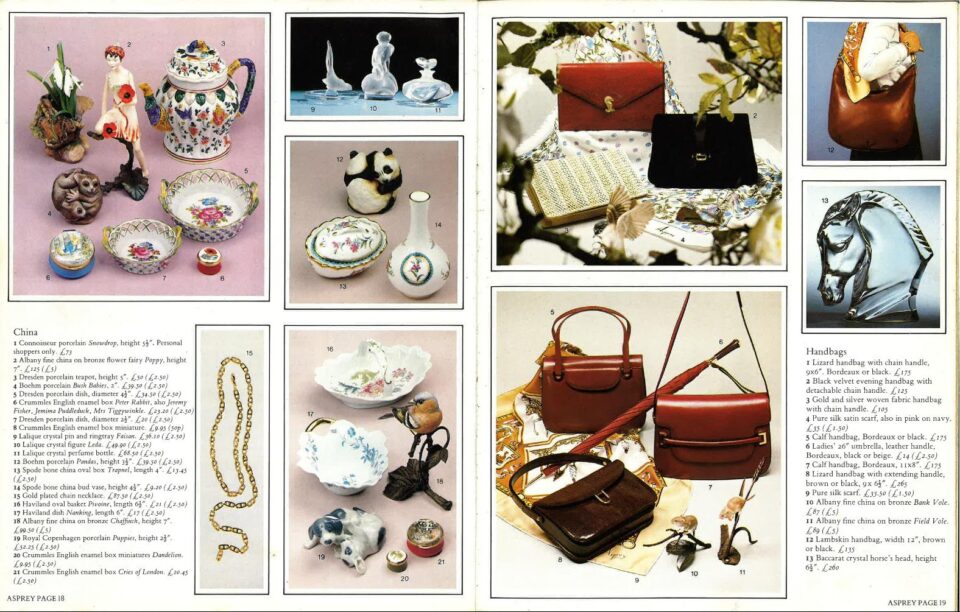
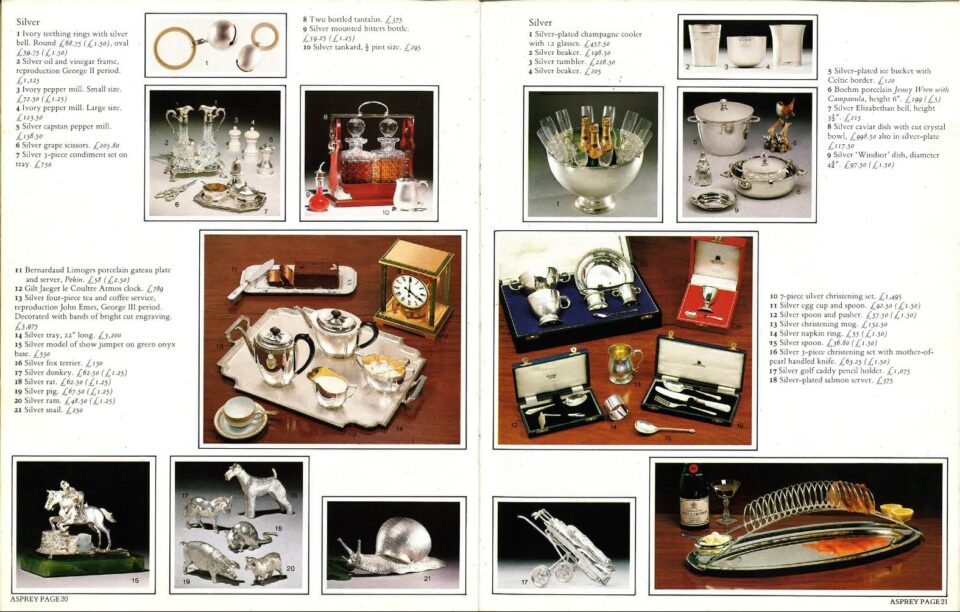
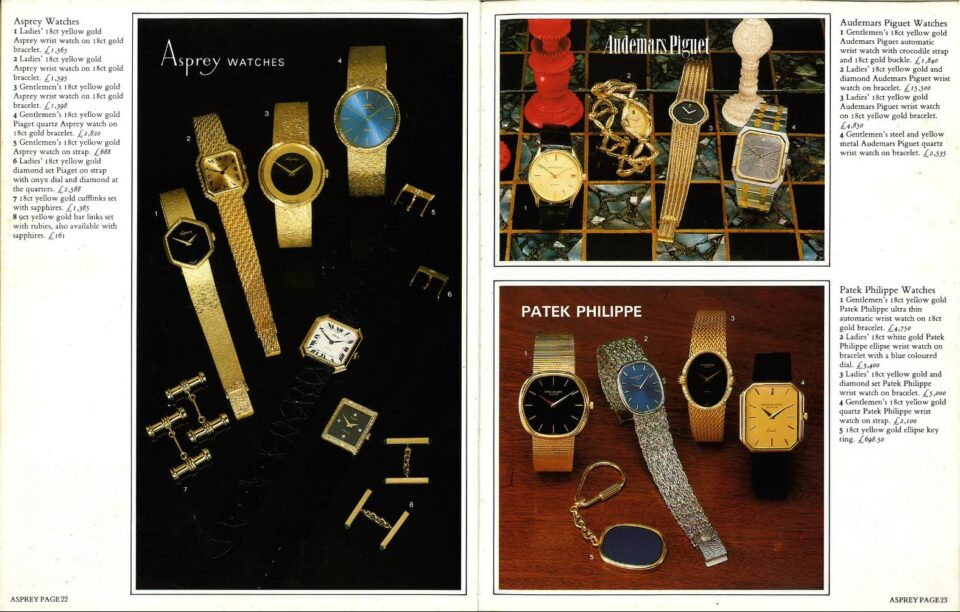
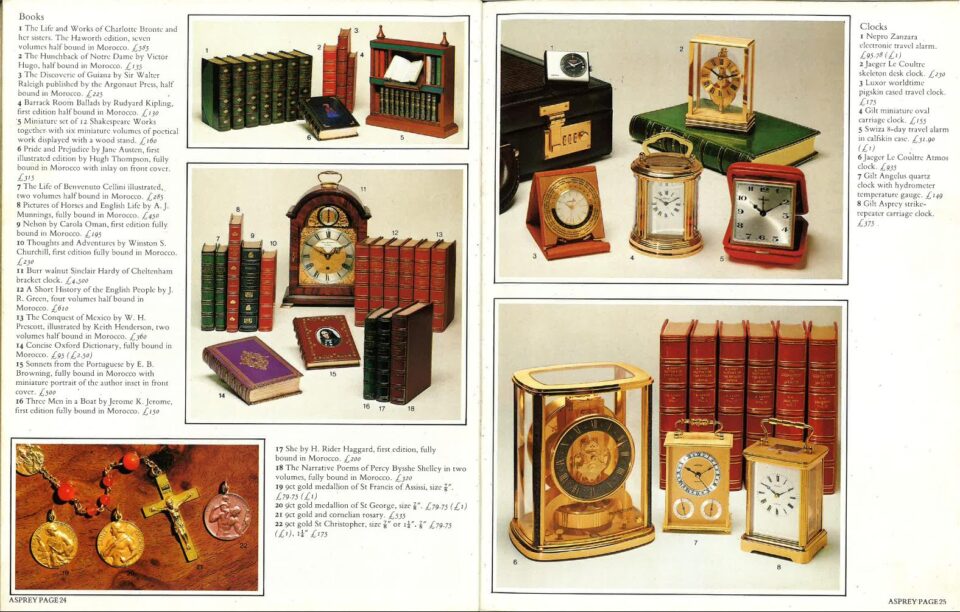
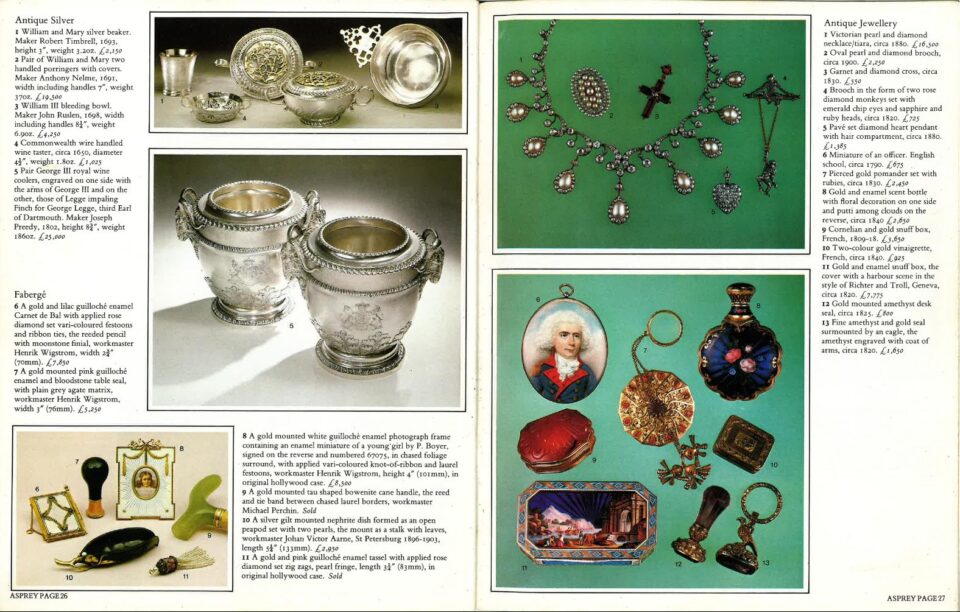
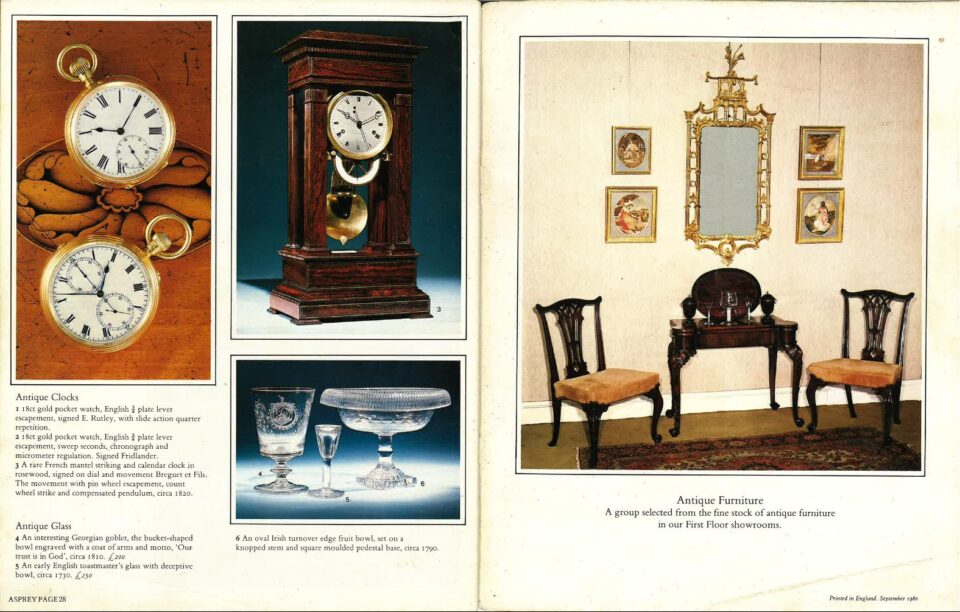
IN THE APPENDIX: GENERAL CATALOGUE OF 1965 AND GENERAL CATALOGUE OF 1980
INTRODUZIONE
Since its founding and to this day, Aspery has been synonymous with the highest luxury. It preserves a remarkable legacy encompassing centuries of history, innovation, and service to the elite. Aspery’s prestige is rooted not only in longevity, but in a series of strategic decisions and accolades that have inextricably linked it to the institutions and tastes of high society.

(Asprey’s signature, detail. Credit by langantiques.com)
PART I. FROM THE ORIGINS TO THE END OF THE 19TH CENTURY
origins date back to 1781, when William Asprey, along with his eldest son, Charles (I), opened a silk printing workshop in the town of Mitcham, Surrey, just outside London. His Huguenot family had sought refuge in England after fleeing persecution in Louis XIV’s France. The company’s operations quickly evolved, quickly transforming what was once a textile printing factory into a renowned luxury goods emporium.
William Asprey began to make a name for himself through his silk work, but also for his magnificent, intricately designed beauty cases embellished with precious metals and fine woods. In the late 1820s, William died, and his eldest son, Charles (I), took over the business.
In 1841, Charles founded a company, Kennedy & Asprey, with his son-in-law, Francis Kennedy, who worked in the stationery business. The two remained in business together until 1846 at 49 Bond Street, London. But it was the following year that Asprey took a decisive leap forward: Charles (I) and his son, also named Charles (II), opened their own store at 166/167 Bond Street, a location that would become the historic headquarters of the House.
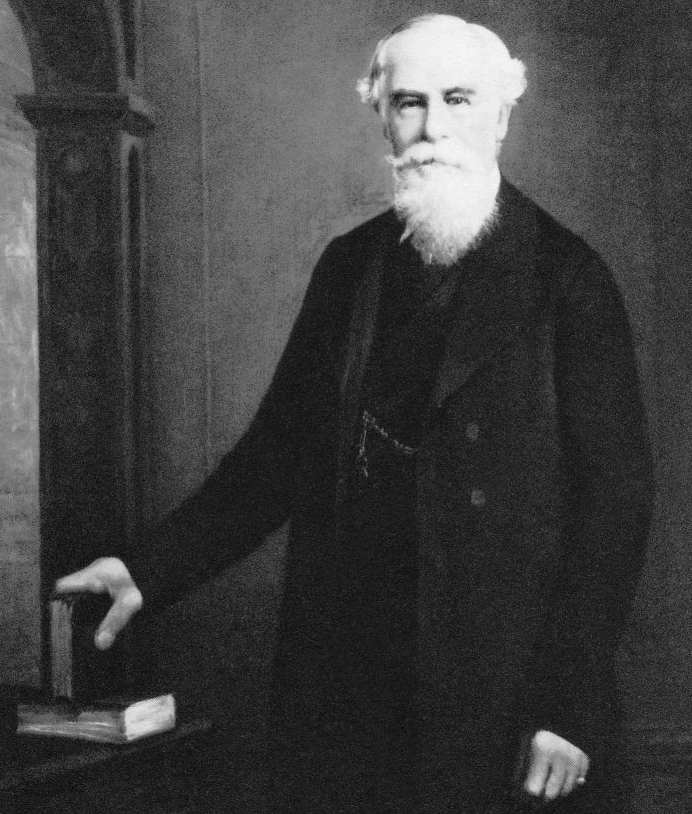
(Portrait of Charles Asprey (II). Credit by antiquebox.org)
After acquiring another premium London business in 1858, Edwards, a cabinetmaker active since 1813 and specializing in the production of writing cases and boxes, and already holding a Royal Warrant, Asprey was ready to seal its success with its first Royal Warrant.
Asprey’s craftsmanship received the highest recognition at the 1862 World Exhibition, where its collection of toiletry cases was awarded a gold medal. Such excellence led the then Queen Victoria, personally impressed by the workmanship of the objects, to award the company a Royal Warrant that same year, appointing it the official supplier to the Crown for toiletry cases, travel bags, and writing cases.
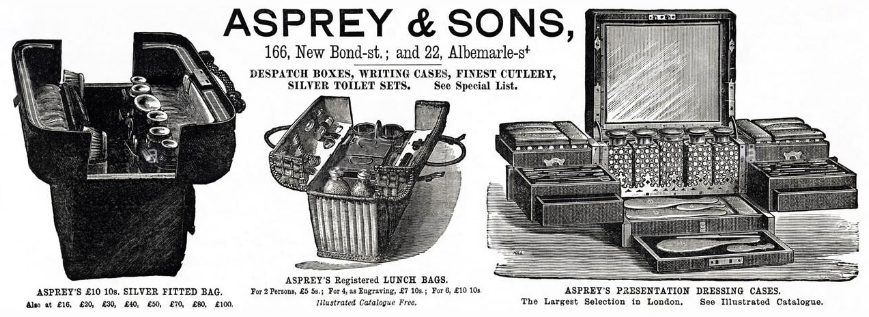
(Asprey, affiche, 1887. Credit by antiquebox.org)
An extraordinary example of a still-intact beauty case has historical significance. It was exhibited at the Great Exhibition of 1851, held in Hyde Park in a huge structure called “The Crystal Palace”. That exhibition is still considered the most important world exhibition of all time, as it attracted 15,000 national and international exhibitors promoting craftsmanship, industrial technology, design, and avant-garde art.
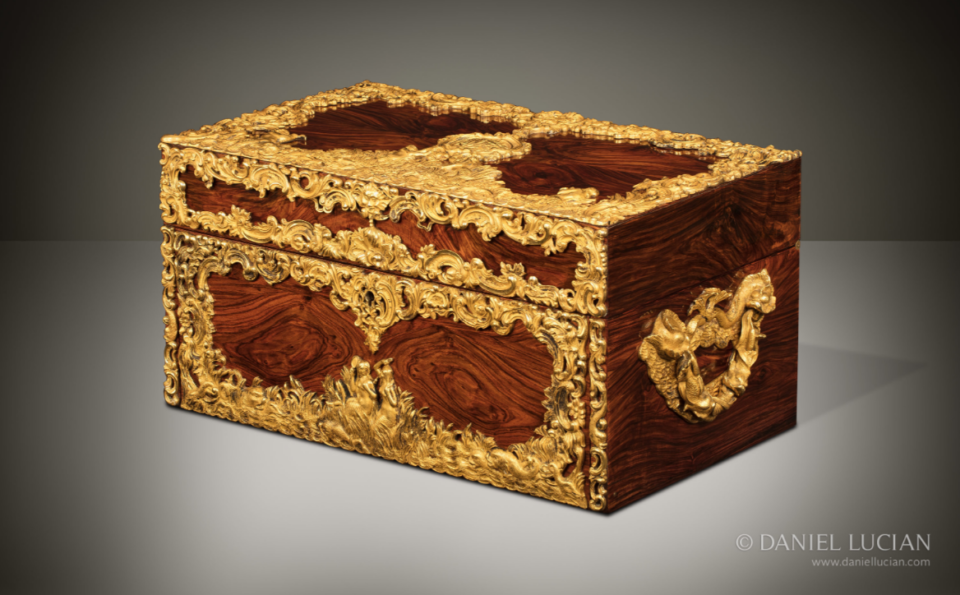
(Asprey: wooden, gilded bronze, crystal, gold, ivory beauty case, 1851. Credit by danillucian.com)
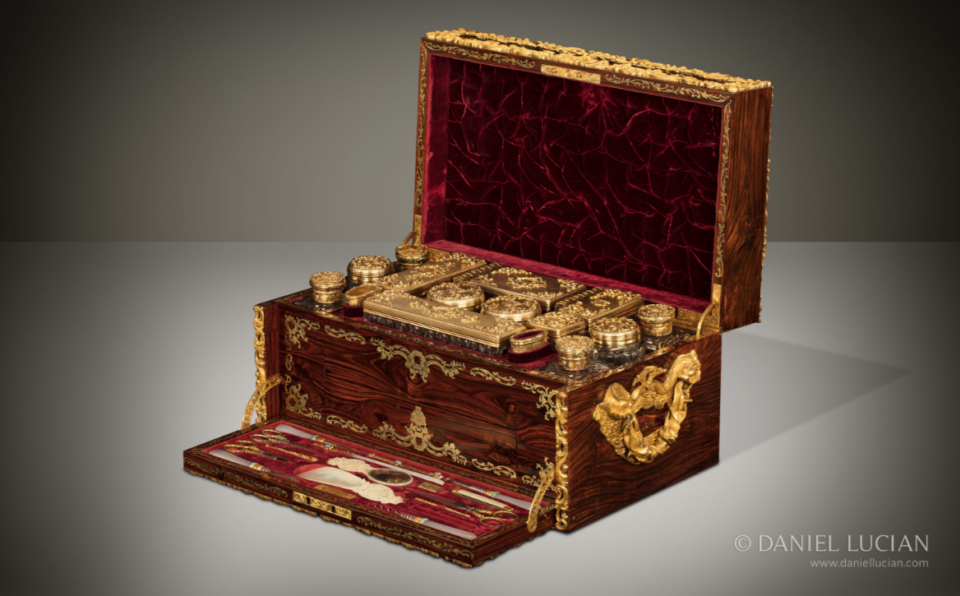
(Asprey: wooden, gilded bronze, crystal, gold, ivory beauty case, 1851. Credit by danillucian.com)
In 1889, King Edward VII granted Asprey its second Royal Warrant, which still holds a Royal Warrant as a silversmith and goldsmith under the patronage of His Royal Highness the Prince of Wales. This series of recognitions (which can be revoked if they fail to meet the highest quality standards over time) are summarized in emblems and coats of arms accompanied by ritual formulas, which companies could display on their product packaging and in advertisements, highlighting the high quality of their production, recognized as such by the Royal Household.
In an early 1900s photograph, we see a vehicle advertising Asprey and its products, with the words “to H.M. the KING,” which summarizes the formula “(suppliers) to His Majesty the King.” In other cases, we find the formula beginning with “By Appointment…”, which has the same value and meaning.
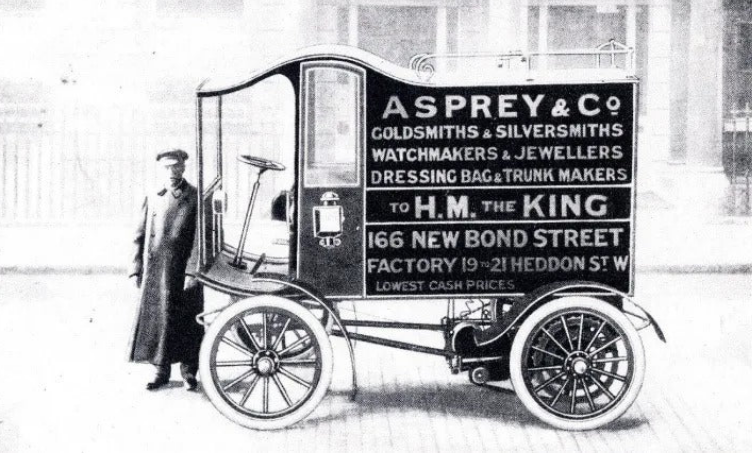
(Photograph from the early 1900s. Credit by asprey.com)
PART II. THE 20TH CENTURY AND THE MODERN REDEFINITION OF LUXURY
The Bond Street boutique/emporium, thanks also to these royal recognitions, and after the annexation in 1906 of its direct competitor Houghton & Gunn, soon became the center of gravity of London’s elite, who could purchase at Aspery exclusive objects for various uses, such as fabric accessories (especially silk), board games, crystal, porcelain, first- and limited-edition leather-bound books, wristwatches, desk and travel clocks, silverware, writing accessories, leather goods, jewelry, beauty cases, boxes and trunks.
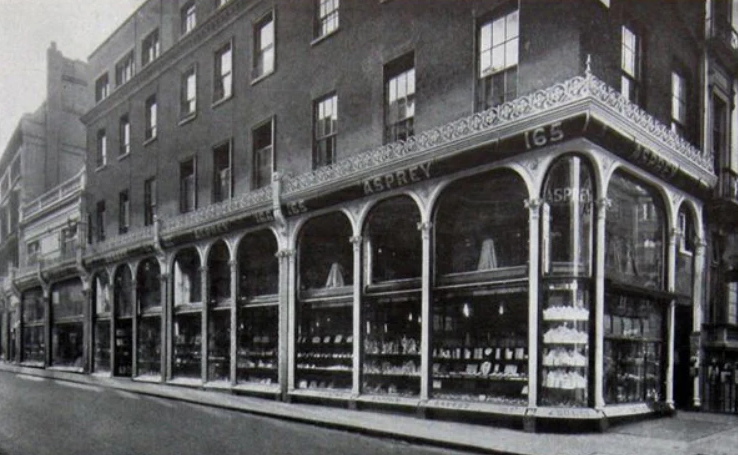
(Asprey boutique in Bond Street, London, early 1900s. Credit by thevintagecompactshop.com)
Asprey’s multifaceted and multi-thematic offerings embrace the frenetic times leading up to the transition from the 19th to the 20th century. Movement, travel, and transportation—from the railroad to the automobile—catalyzed new, diverse needs for the men and women of high society. From industrialists to theater divas, from kings to queens, everyone needed accessories suited to modern times and of the highest possible quality.
After the Great War, the 1920s and 1930s represented a period of incredible social splendor, and Asprey gathered the “nouveau riche” into this fertile terrain. In the Art Nouveau and, above all, Art Deco styles, Asprey produced objects of astonishing quality and design complexity.
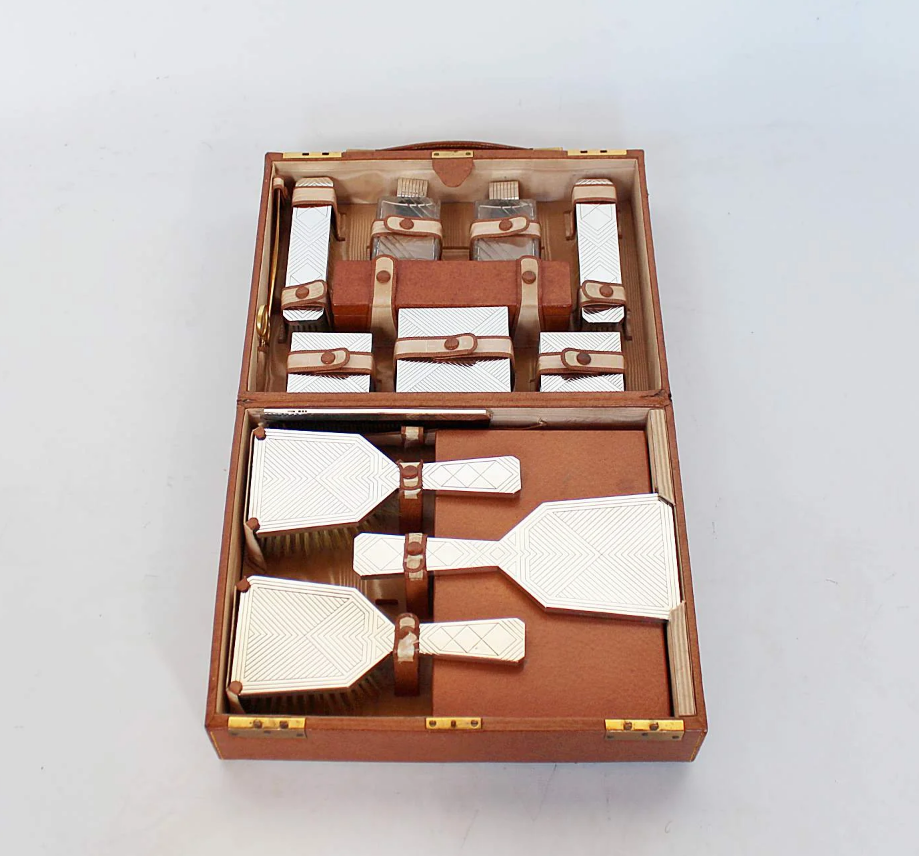
(Asprey: leather, silver, crystal, and gold beauty case. Mid-1930s. Credit: markiesantiques.co.uk)
The in-house production of silver and gold objects is characterised by the “A & C” hallmark, which will vary over time, until it is imprinted inside a cartouche, inside a triangle, inside a pentagon or inside a four-leaf clover (with the variants “A & Co”, “A & Co LTD”, “APLC”)
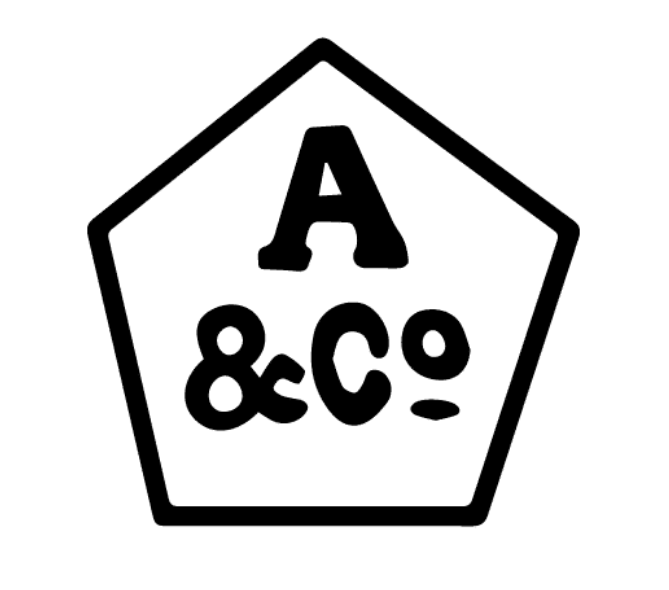
(Punchmark “A & Co” within a pentagonal frame. Credits: langantiques.com)

(Punchmark “A & Co LTD”. Credits by langantiques.com)
Later on, Asprey would also add his full signature next to the punch, in his characteristic and unmistakable font with frayed and vibrant characters and typified by the elongated final “Y”.
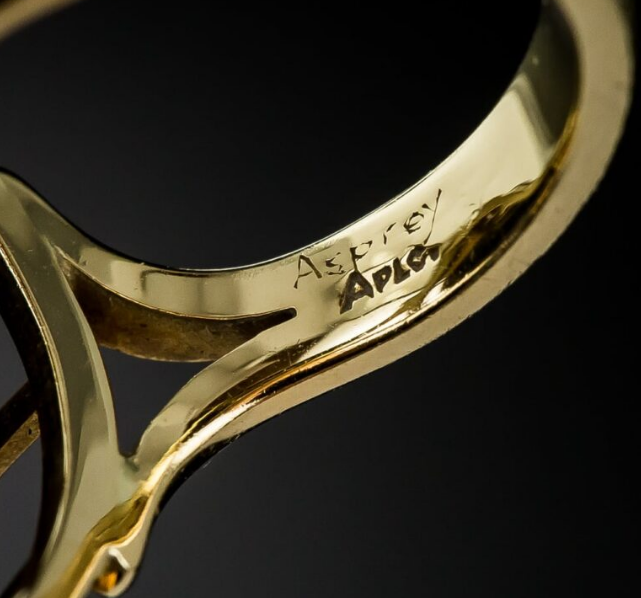
(Marked “APLC” with the “Asprey” signature on a yellow gold necklace. Credit: langantiques.com)
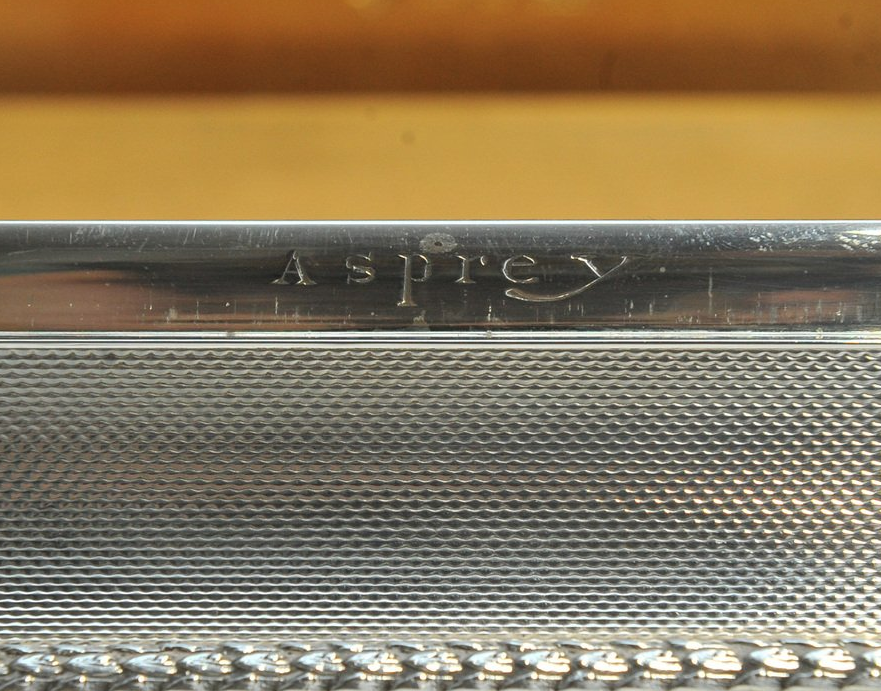
(Asprey signature on a 1950s silver cigarette case. Credit by pamono.it)
The 1930s represented the pinnacle of communication and marketing. Asprey adopted advertising campaigns that fully exploited multi-sector magazines and newspapers. Each of these advertising images reflected a tendency to offer as many products as possible, presented in a harmonious and coherent manner.
These advertising posters were sometimes organized by product category (jewelry only, handbags only, beauty cases only, etc.) or were truly mixed media, conveying a true lifestyle proposition in the height of the 1930s. This latter approach was truly avant-garde, seemingly conceived by contemporary advertising creatives.
In the jewelry sector, precious metals, pearls, and gemstones were the norm for Asprey. The preferred shapes were those of plants (flowers and woods) and animals (often exotic), interspersed with highly sophisticated geometric designs, often with Oriental overtones.
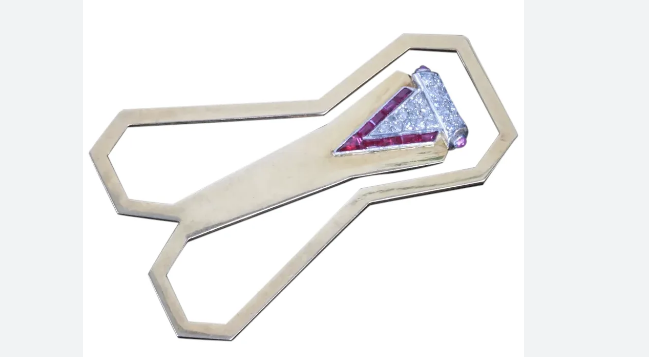
(Asprey, men’s money clip in 18K white gold, diamonds, and rubies, 1930s. Credit: esseg.eu)
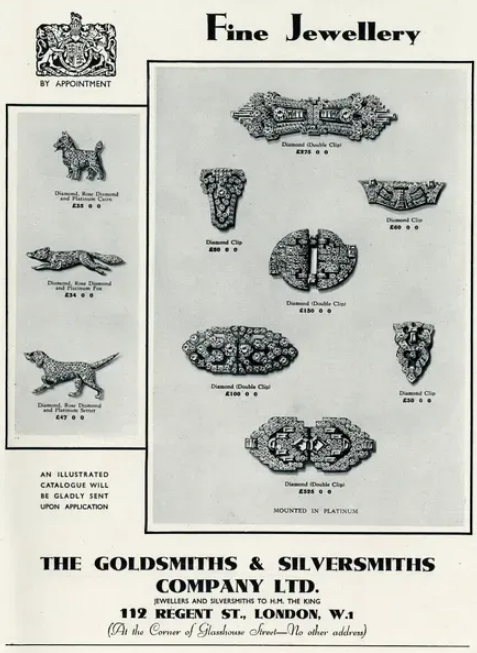
(Asprey, jewelry advertisement, 1930s. Credit by mediastorehouse.com)
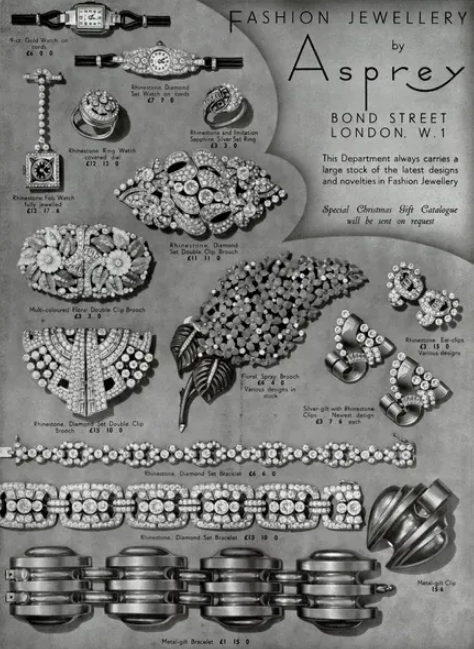
(Asprey, jewelry advertisement, 1930s. Credit by mediastorehouse.com)
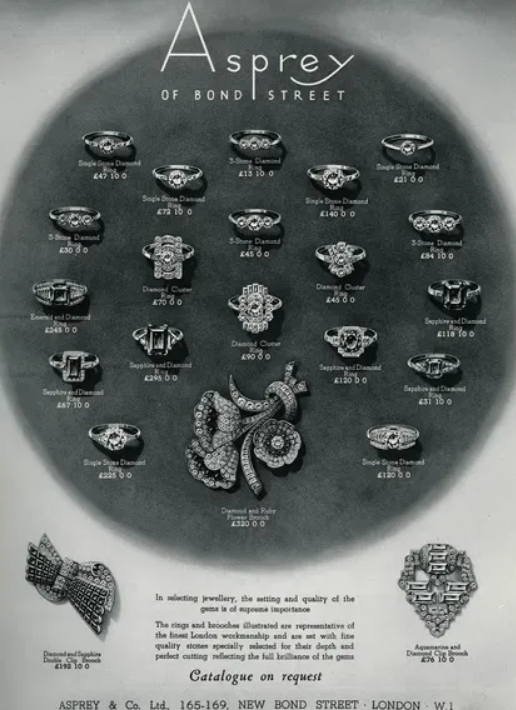
(Asprey, jewelry advertisement, 1930s. Credit by mediastorehouse.com)
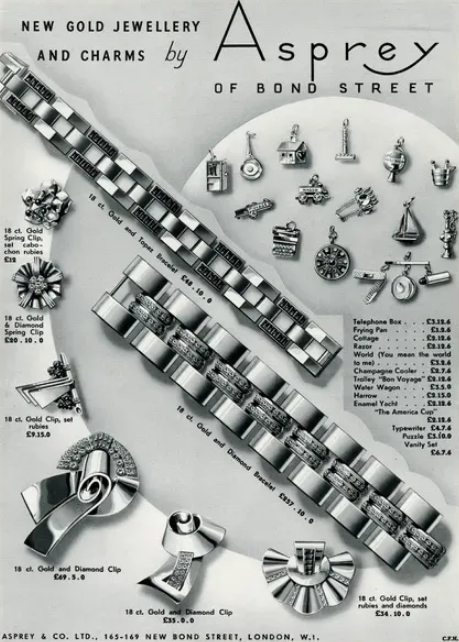
(Asprey, jewelry advertisement, 1930s. Credit by mediastorehouse.com)
In the textiles sector – the original field of founder William Asprey – the Maison specialized in the production of silk and cashmere scarves, stoles, and accessories, both plain and with decorative patterns. These products have been prominently featured in advertisements and catalogs since the 1920s.
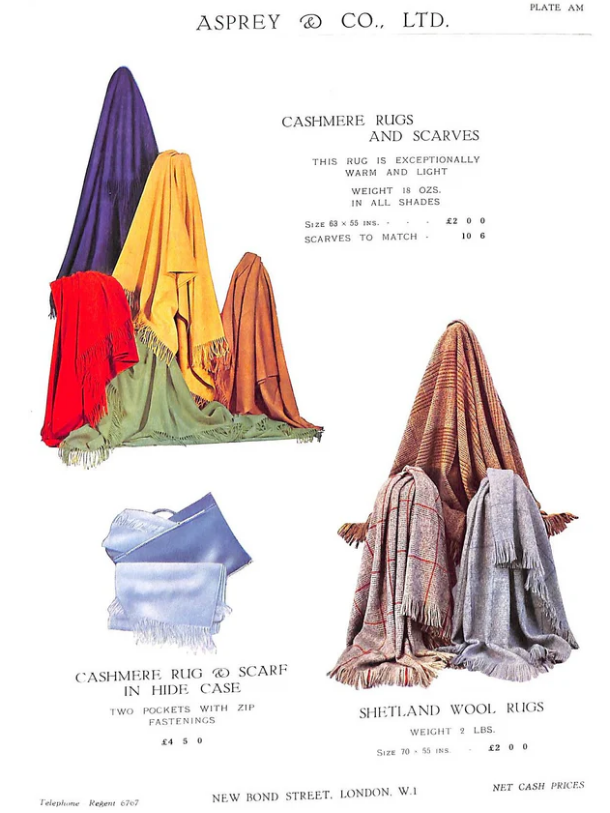
(Asprey, catalog page, 1930s. Credit by thecarycollection.com)
Asprey had and still has a remarkable tradition of craftsmanship in the binding of both old and new books. They often acquired first or special editions that were sold untouched or rebound by specialized in-house masters, who reworked the covers with leather or fabric coverings. They frequently created custom-made cases inlaid with wood, gold, silver, alabaster, and semiprecious stones, even specifically designed to display the books.
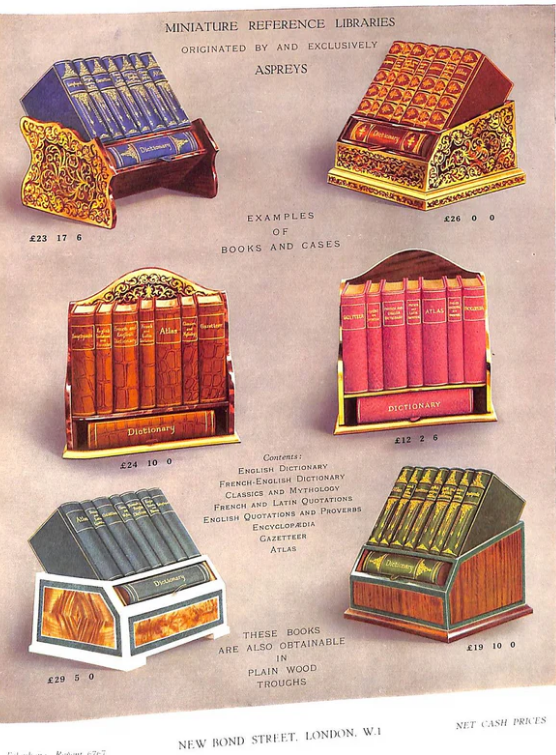
(Asprey dictionary set, 1930s trade catalog page. Credit: thecarycollection.com)
Beauty cases, bags, and travel trunks remain Asprey’s flagship product. Its centuries-old tradition in this artisanal field makes it the most important brand in the history of the planet.
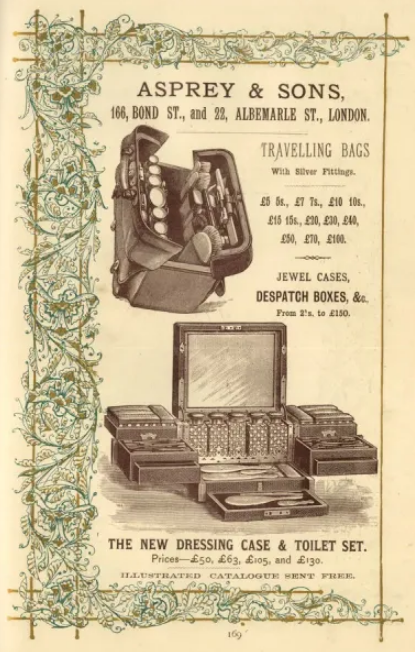
(Asprey, poster, 1920s. Credit by prints-online.com)
Along with beauty cases, Asprey offered multi-functional luggage that could accommodate board games, manicure sets, glassware sets, and cocktail shakers (which was the rage at the time in the 1920s and 1930s).
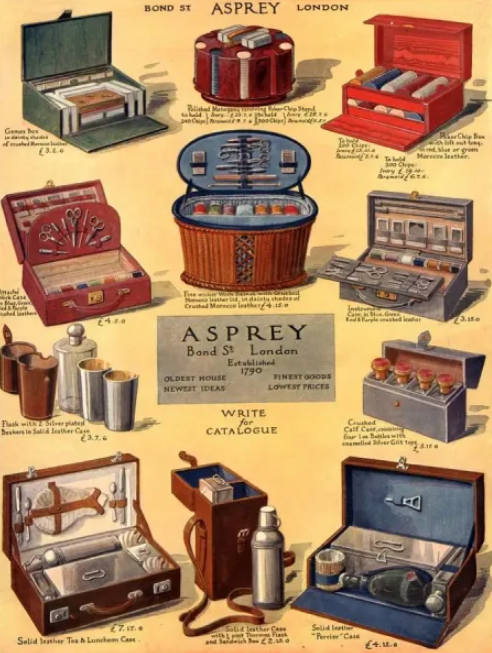
(Asprey, poster, 1920s. Credit by prints-online.com)
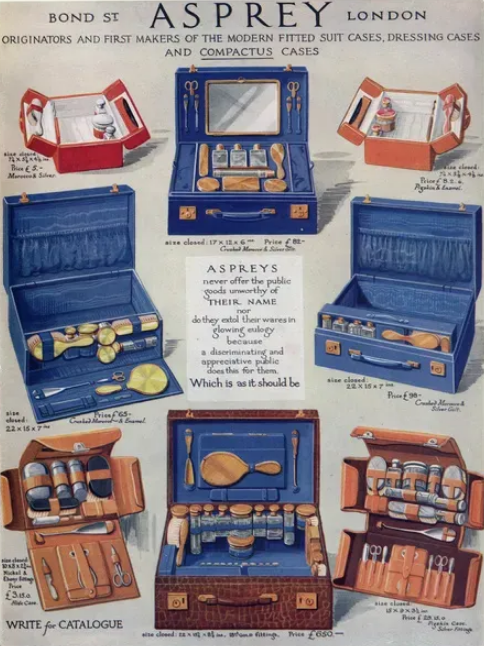
(Asprey, affiche, 1928. Credit by prints-online.com)
In the leather goods sector, in addition to using fine leather for the external lining of boxes, beauty cases, travel bags and trunks, Asprey also expressed itself at the highest level of quality in the production of ladies’ handbags.
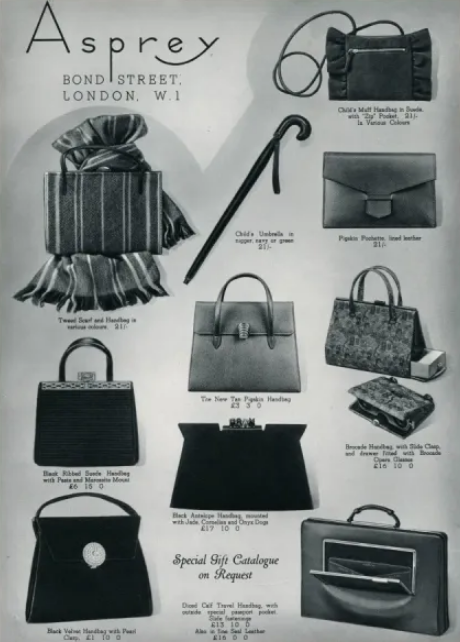
(Asprey, handbag advertisement, 1930s. Credit by mediastorehouse.com)
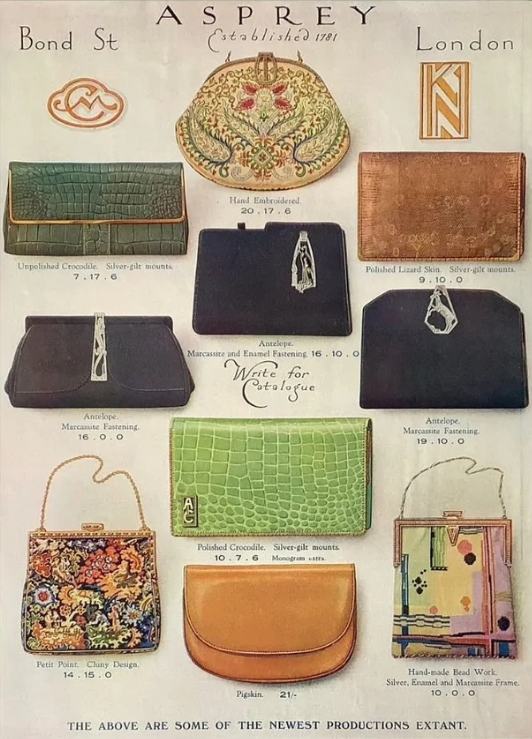
(Asprey, handbag advertisement, 1930s. Credit by etsy.com)
In the Bond Street boutique/emporium, the Maison also offered its elite clientele household objects that were sometimes almost exclusively ornamental (ceramic figurines, trays and display boxes, etc.) and other times a mix of the functional and the decorative (table clocks, calendars, ashtrays, paperweights, etc.).
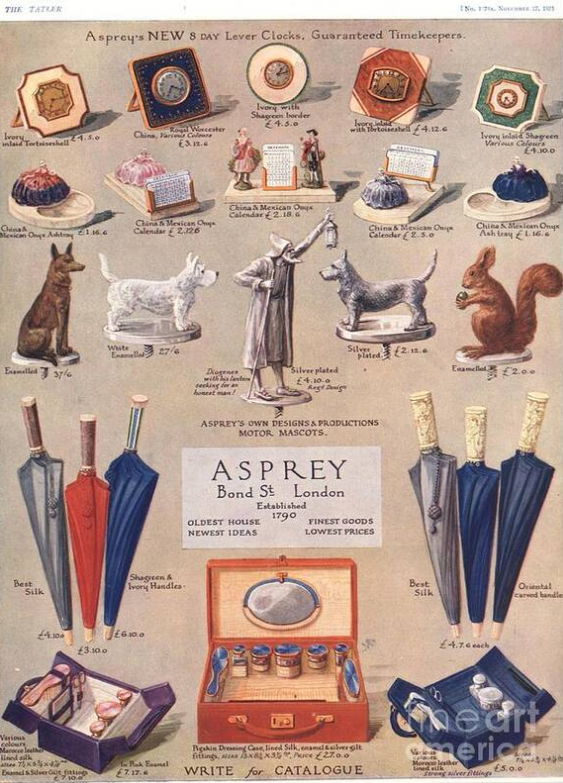
(Asprey, poster, late 1920s. Credit by fineartamerica.com)
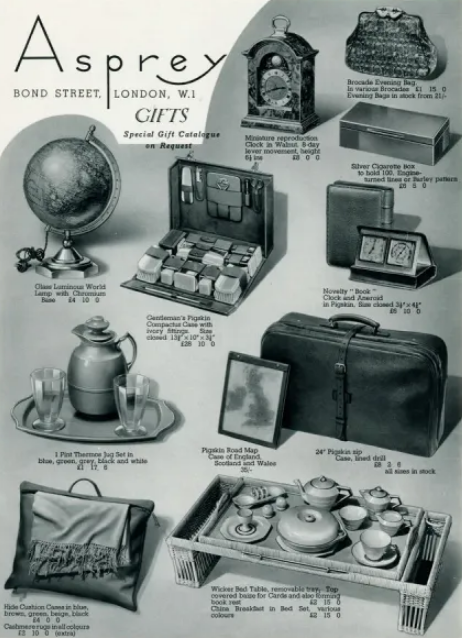
(Asprey, household goods advertisement, 1937. Credit by mediastorehouse.com)
As for the production of silverware and goldsmithing, beyond the sale of jewelry, watches, and sets of plates and cutlery, Asprey also specializes in the manufacturing of small and precious objects such as: lighters, pens, cigarette cases, makeup sets, pencil cases, etc.
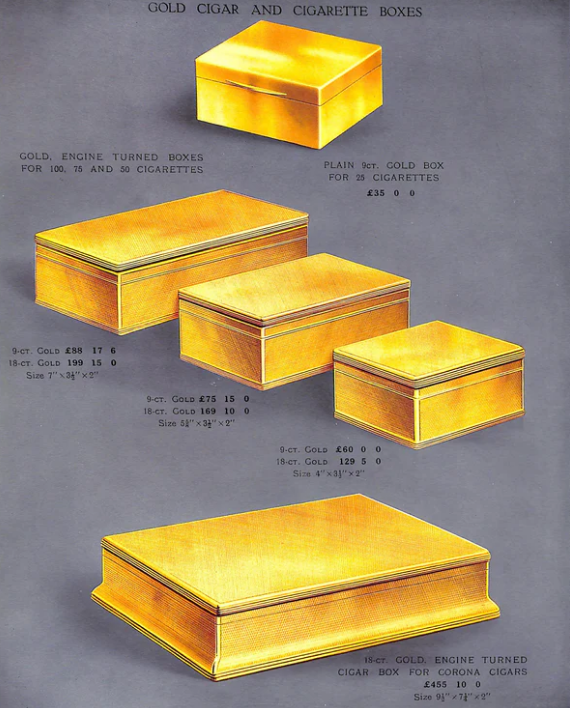
(Asprey, Gold Cigarette and Cigar Box Set, 1930s trade catalog page. Credit: thecarycollection.com)
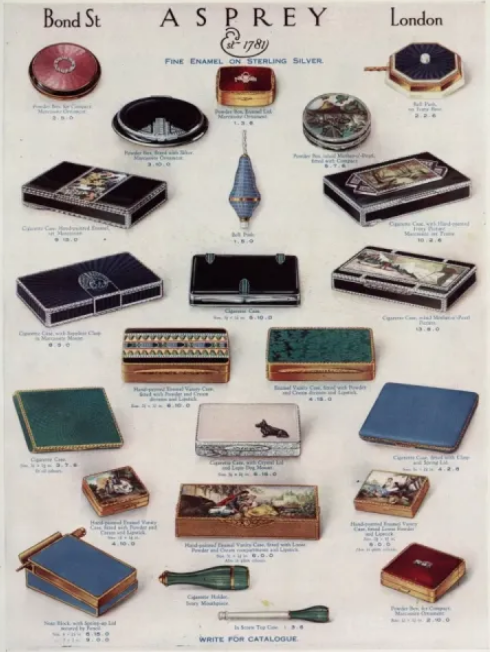
(Asprey, advertisement for cigarette and match cases, 1930s. Credit by prints-online.com)
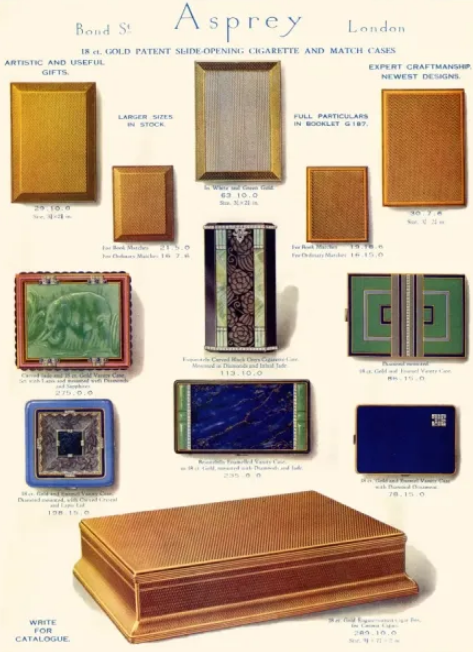
(Asprey, advertisement for cigarette cases, match holders, and tins, 1930s. Credit by prints-online.com)
Even today, Asprey is also famous for its production of polo accessories, which, as is well known, is one of the most elite sports in England and was also played by the male members of the Royal Family. Boots, playing gear, bridles, and saddles were part of the standard equipment and were made entirely in-house by the Bond Street company.
Board games made from the finest woods and leathers (including lambskin and bullhide) were also typical and highly prized.
Asprey, in addition to sets of playing cards with accompanying chips neatly organized in compact and easily transportable boxes, produced and continues to offer exquisite chess sets.
A particularly curious story surrounds the chess set requested by one of the four Beatles, who were Asprey customers and ambassadors throughout the 1960s and 1970s. Guitarist George Harrison, a keen and discreet player, commissioned Asprey to create a chessboard in 1973. The pieces were created by artist and interior designer Robin Crookshank, who used casts of Ringo Starr’s hands (including rings on his fingers) to design all the pieces, which were differentiated by the different positions of the fingers. The drummer apparently learned to play from Harrison during the recording sessions for his 1967 masterpiece “Sgt. Pepper”.
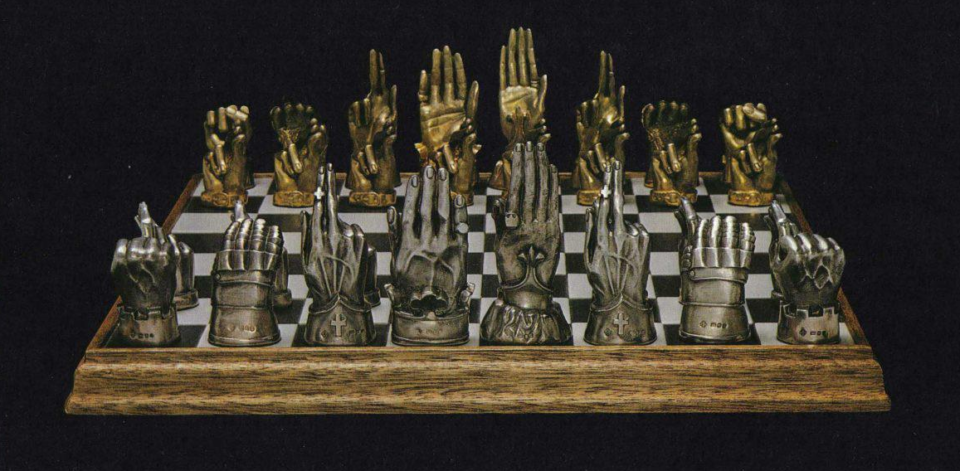
(Asprey, George Harrison’s chessboard, 1973. Credit by reddit.com)
The Beatles had a close and direct relationship with Asprey, so much so that some sequences of the 1965 film “Help!” were filmed by the legendary band inside and outside the Bond Street boutique.
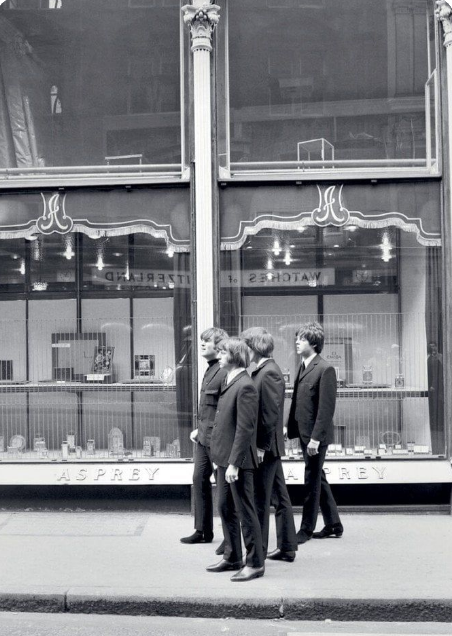
(The Beatles in front of Asprey’s shop windows, 1965. Credit by pinterest.com)
PART III. ASPREY’S “MULTIVERSO” WATCHMAKER
Asprey entered the world of watchmaking early on. His first offerings specialized in table and wall clocks made from a wide variety of materials, including glass, which he artistically crafted into an infinite variety of shapes and colors.
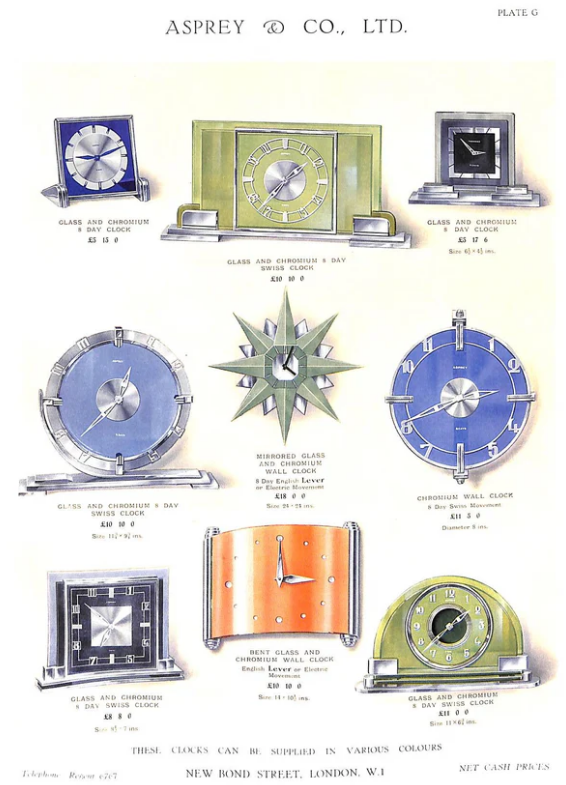
(Asprey, table and wall clocks, 1930s trade catalog page. Credit: thecarycollection.com)
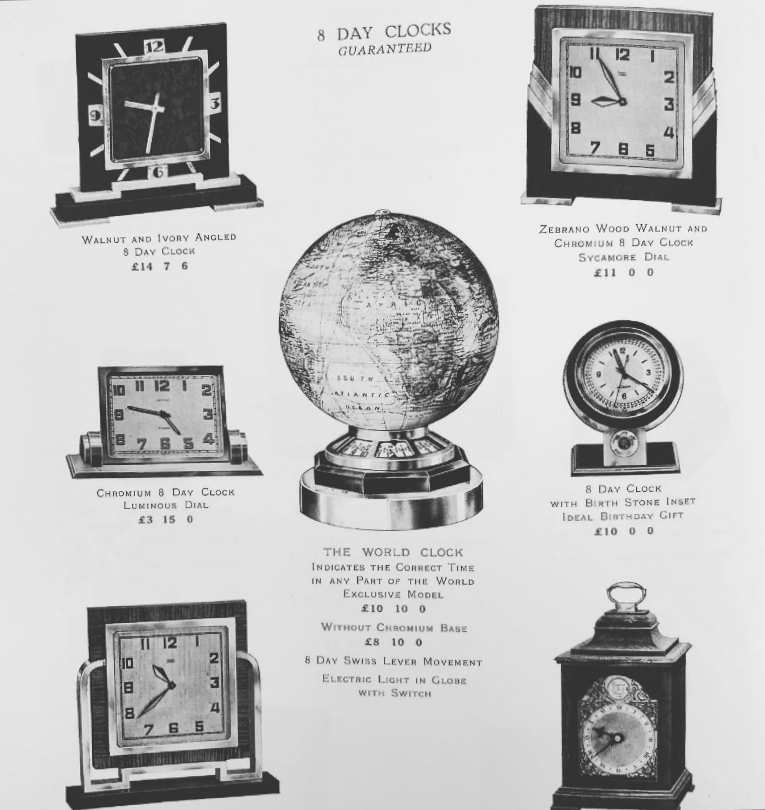
(Asprey, table and wall clocks, commercial catalogue page from the 1930s. Credit by aspreylondonwatches on IG)
Between the 1920s and 1930s, splendid artefacts with precious and often novel shapes and materials stood out in the boutique windows, attracting wealthy passers-by.
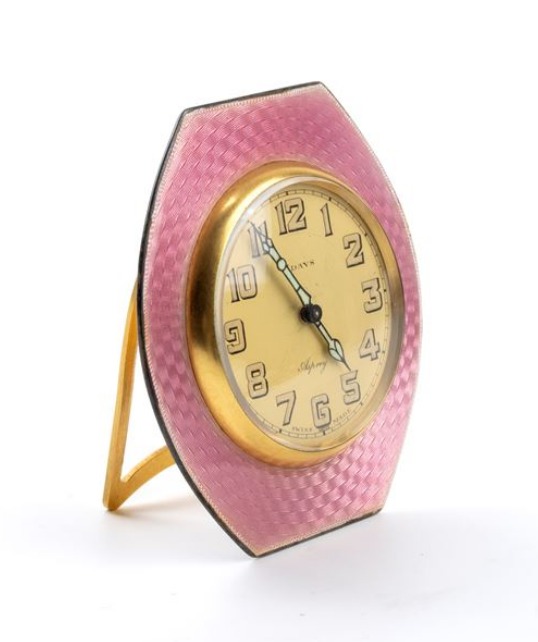
(Asprey, 8-day table clock in silver and enamel, 1930s. Credit by bertolamifineart.com)
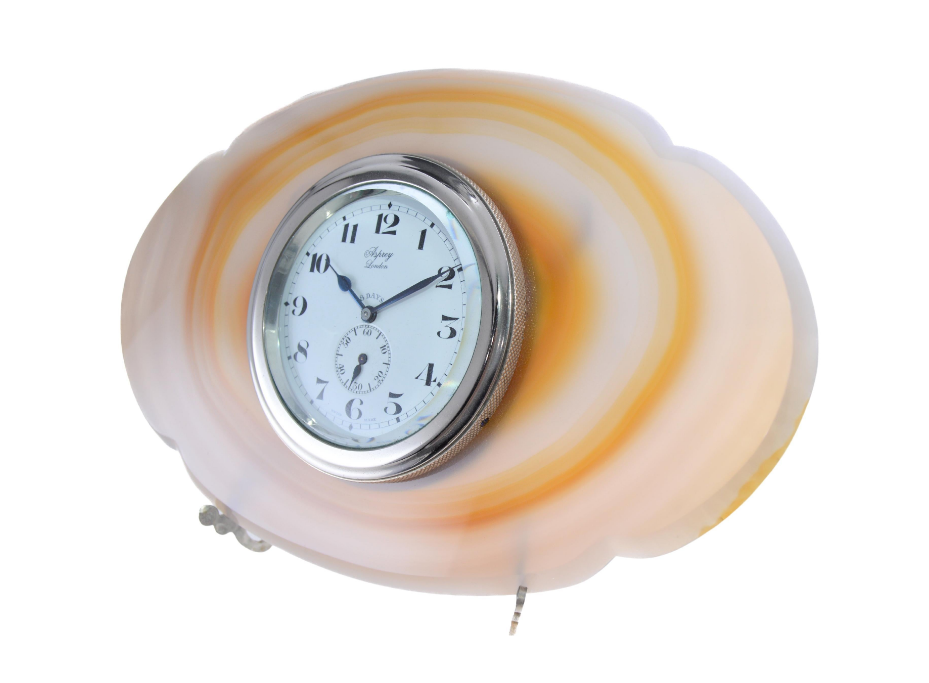
(Asprey, 8-day agate stone table clock, 1930s. Credit by 1stdibis.com)
In terms of watches of various shapes and sizes, Asprey – just like other complementary products – offered an increasingly defined lifestyle proposition in those roaring twenties. Pocket watches, handbag watches, travel watches, necklace watches, brooch watches, and finally wristwatches were featured in advertisements alongside other accessories, conveying a model of exemplary elegance, representative of the English urban elite.
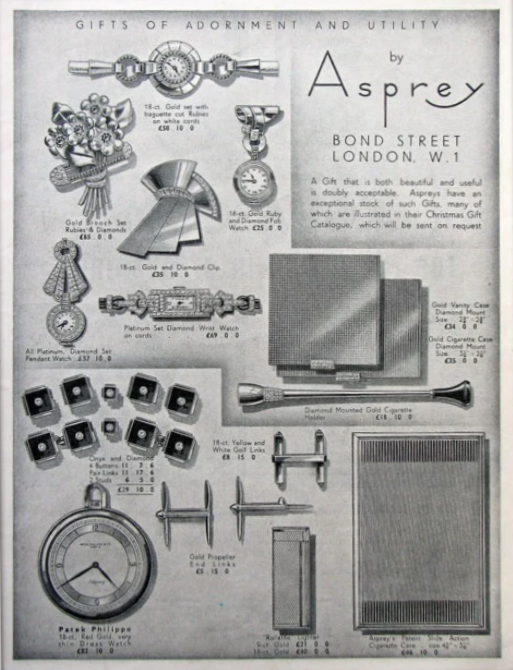
(Asprey, poster, 1930s. Credit by the nostalgia shop.co.uk)
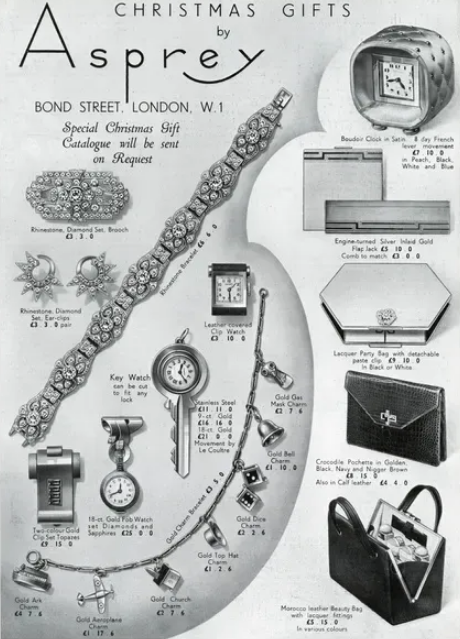
(Asprey, poster, 1930s. Credit by mediastorehouse.com)
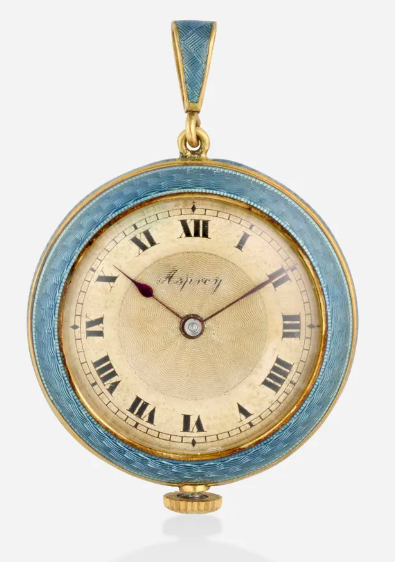
(Asprey, pendant watch, 1930s. Credit: everywatch.com)
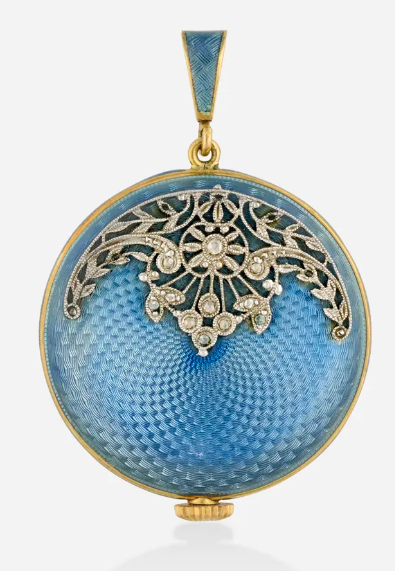
(Asprey, pendant watch, 1930s. Credit: everywatch.com)
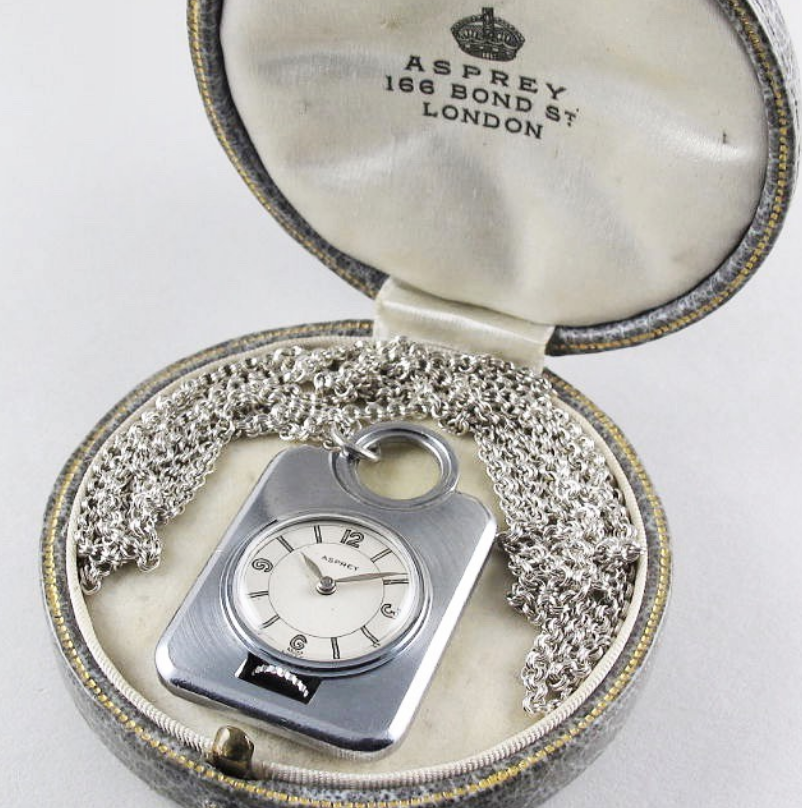
(Asprey, pendant watch with necklace, 1940s. Credit by aspreylondonwatches on IG)
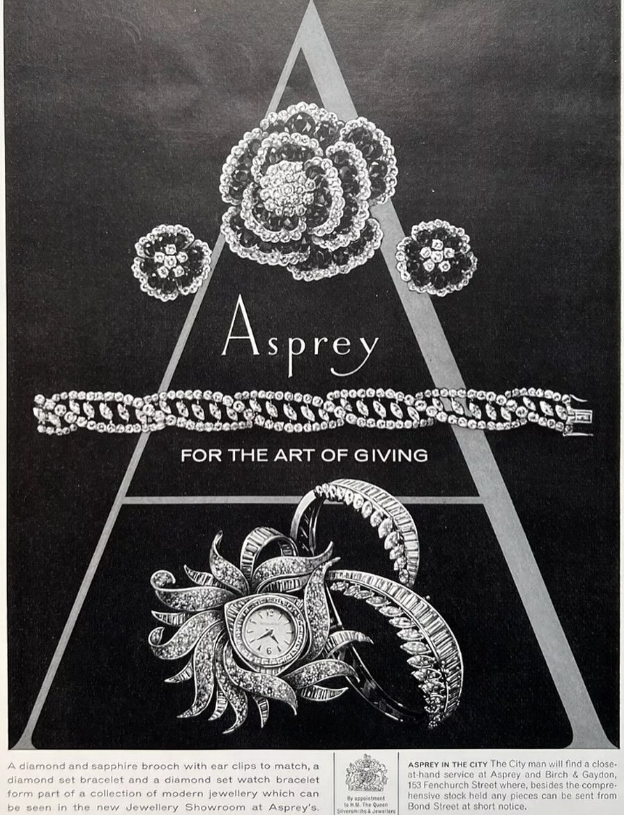
(Asprey, poster, diamond brooch watch, 1940s. Credit by ma_fa_l_da_ on IG)
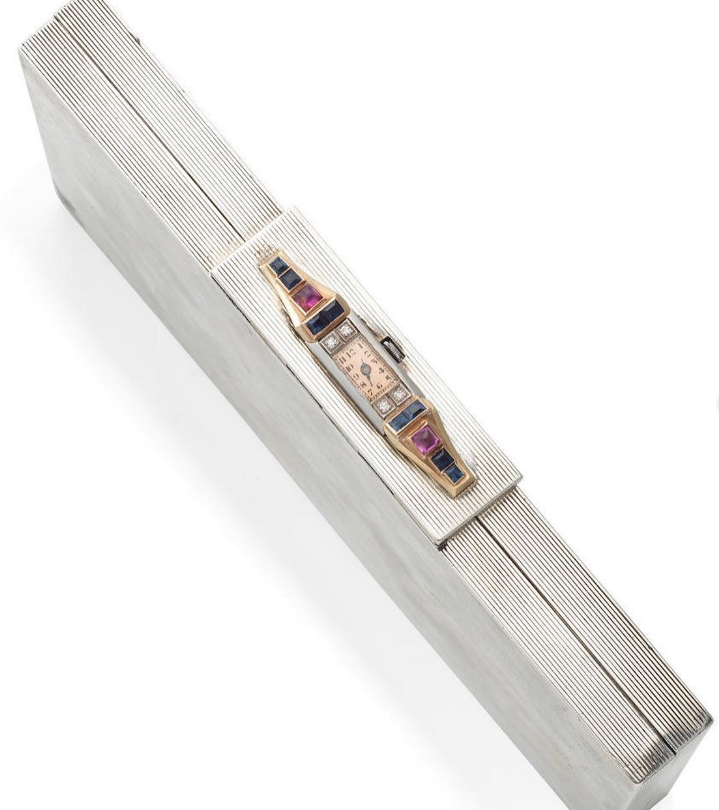
(Asprey, silver box with watch and precious stones, 1930s. Credit by aspreylondonwatches on IG)
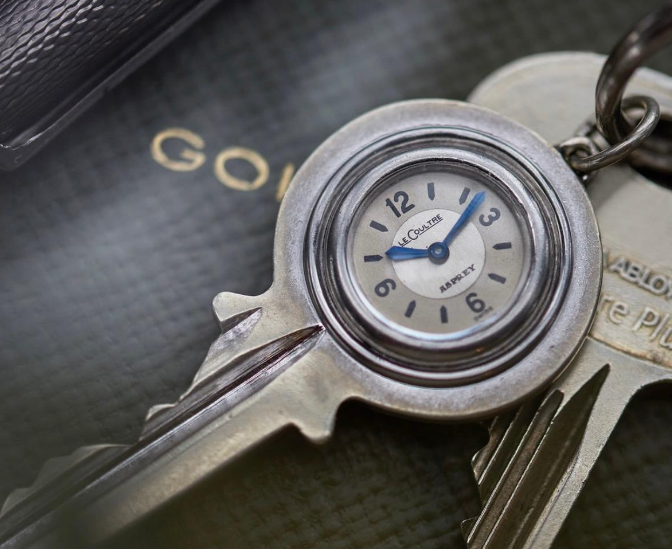
(LeCoultre X Asprey, key watch, 1930s. Credit by a_collected_man on IG)
In a world of ever-evolving technology and economics, the theme of travel and movement implied the use of watches to be carried in a bag, protected by a case. They were prominent in advertisements until the 1950s.
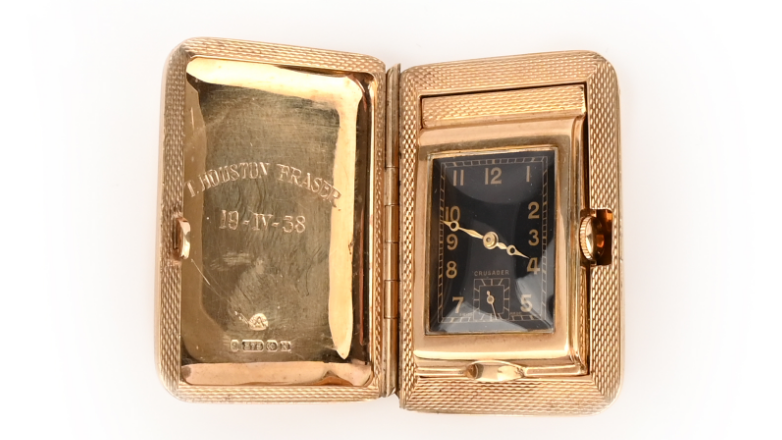
(Asrpey, “Crusader” in 9K yellow gold, 1937. Credit by thesaleroom.com)
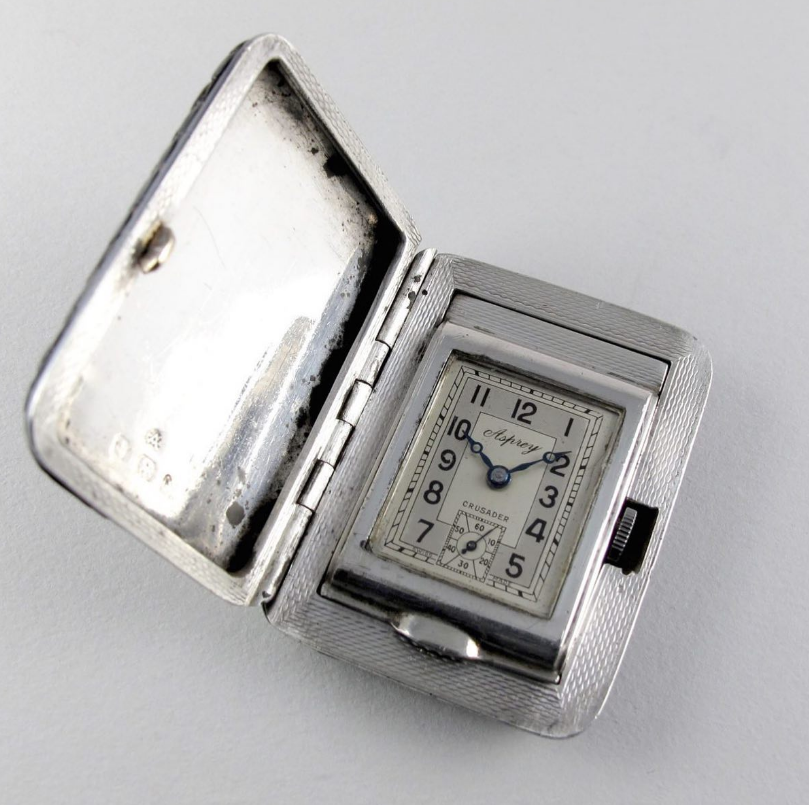
(Asrpey, “Crusader” in silver, 1937. Credit by thesaleroom.com)
In this context, the innovative “Ermeto” produced by Movado could not be missing. In a 1930s advertisement, it was described as “the most practical watch ever invented”.
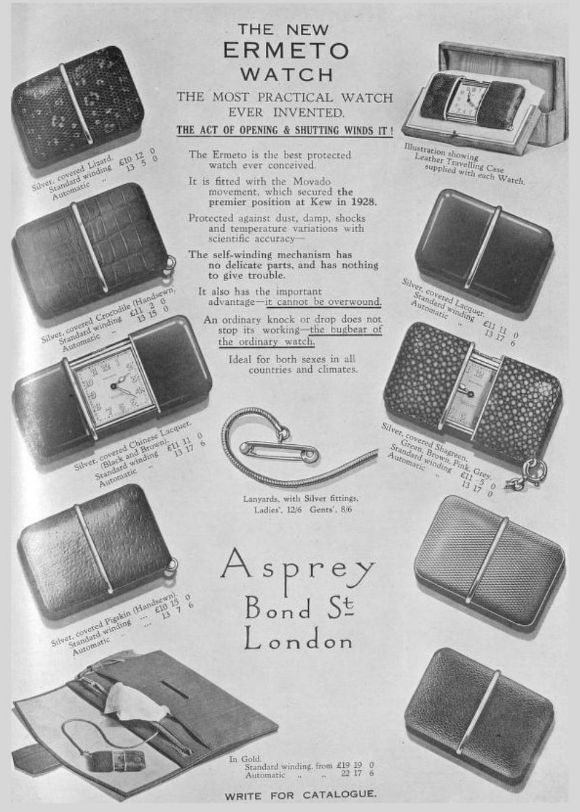
(Asprey, poster of the Movado “Ermeto”, 1930s. Credit by ma_fa_l_da_ on IG)
The wristwatch, for both men and women, evolved in tandem with evolving tastes. Women’s watches, however, at least until the 1960s, remained the “pretext” for creating fabulous jewelry: multifaceted bracelets embellished with diamonds, emeralds, and rubies, with the watch face more or less the central feature of the overall design.
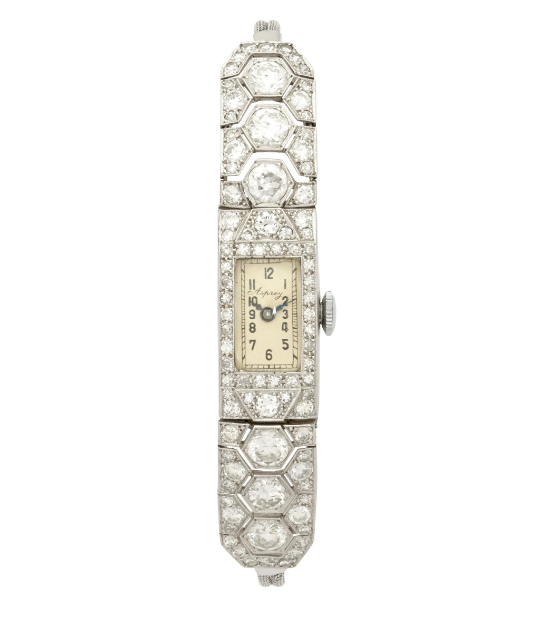
(Asprey, Art Deco diamond cocktail watch, 1930s. Credit: invaluable.com)
The men’s wristwatch – unlike the women’s jewelry watch – appears in advertisements and catalogs as a highly “emancipated” piece. It no longer occupies its place as an accessory, but as an object of its own. As early as the 1930s, posters featured models from different brands side by side in a narrow but coherent “stage space”.
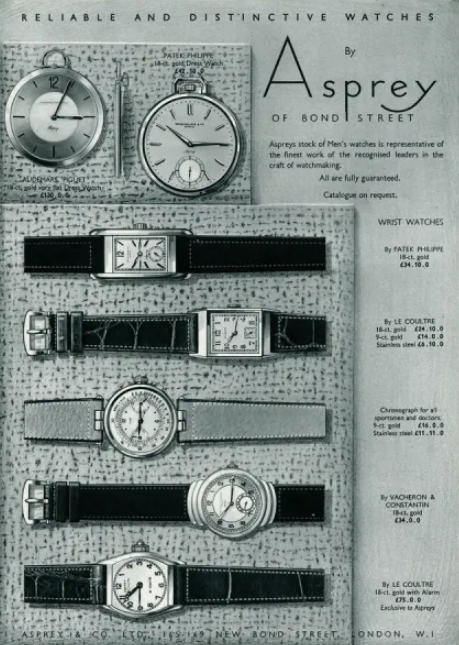
(Asprey, affiche, 1938. Credit by mediastorehouse.com)
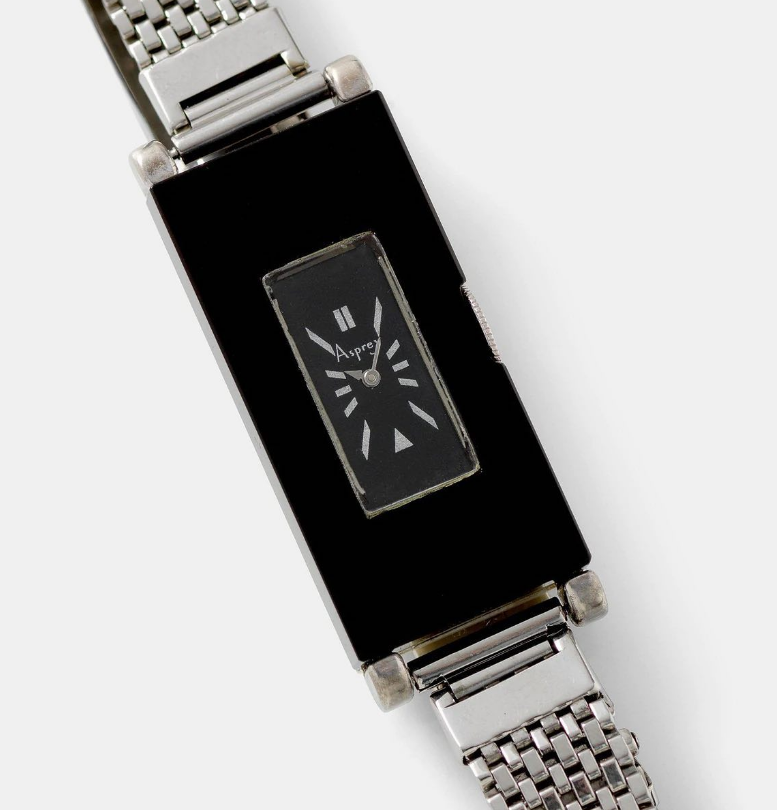
(Asprey, “Domino watch” in ivory and ebony, 1930s. Credit by aspreylondonwatch on IG)
As is tradition for high-end retailers, Asprey also signed the dials of the watches he offered to his customers.
He promoted an in-house line of watches as an assembler of third-party parts (movements, cases, and dials) and placed his signature on the products. These watches, while still of high-quality construction, represented the entry-level segment of the watchmaking offering.
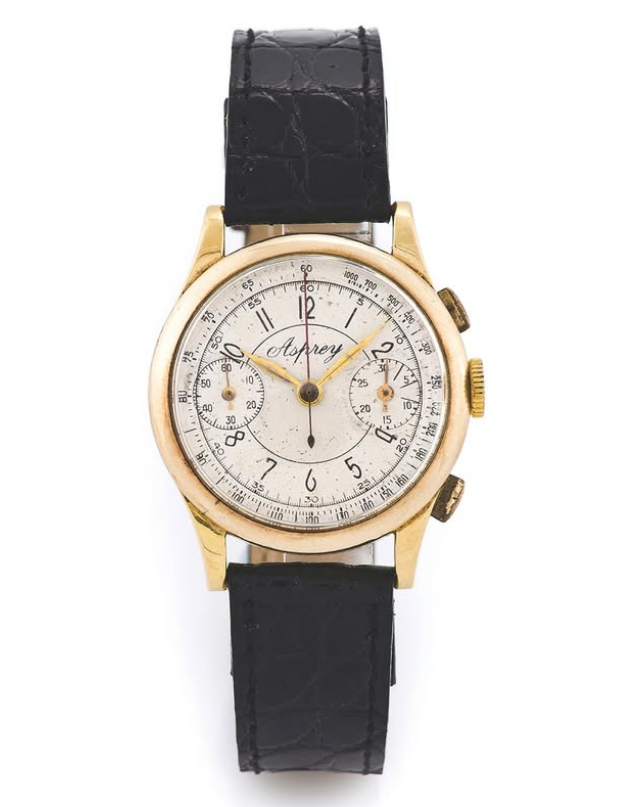
(Asprey, 18K yellow gold chronograph with Valjoux movement, 1940s. Credit: aspreylondonwatch on IG)
The backbone of the watchmaking business, especially from the 1940s to the present day, is closely linked to the licenses it held with brands such as Patek Philippe, Audemars Piguet, Vacheron & Constantin, Jaeger LeCoultre, Piaget, Rolex and a few others.
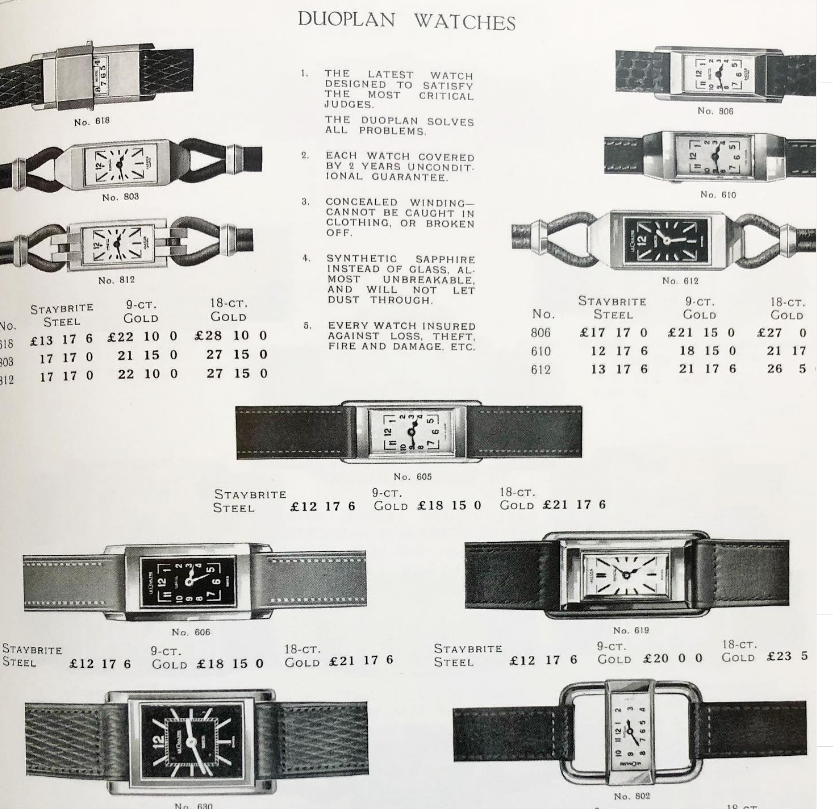
(Asprey, LeCoultre “Duoplan” catalog page, 1930s. Credit by aspreylondonwatch on IG)
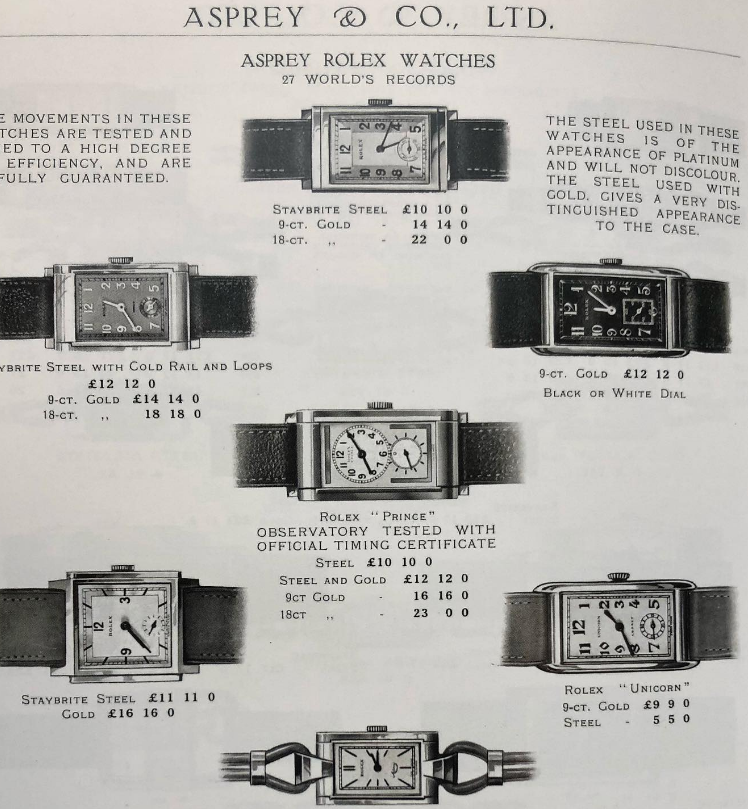
(Asprey, Rolex catalog page, 1930s. Credit by aspreylondonwatch on IG)
On some of the watches from these Maisons distributed by Aspery, it is possible to admire the double-signed on the dial or on the external case back (also accompanied by the signature “Garrard”, a historic London jeweller, annexed to Aspery together with Mappin & Webb from 1990 to 2002).
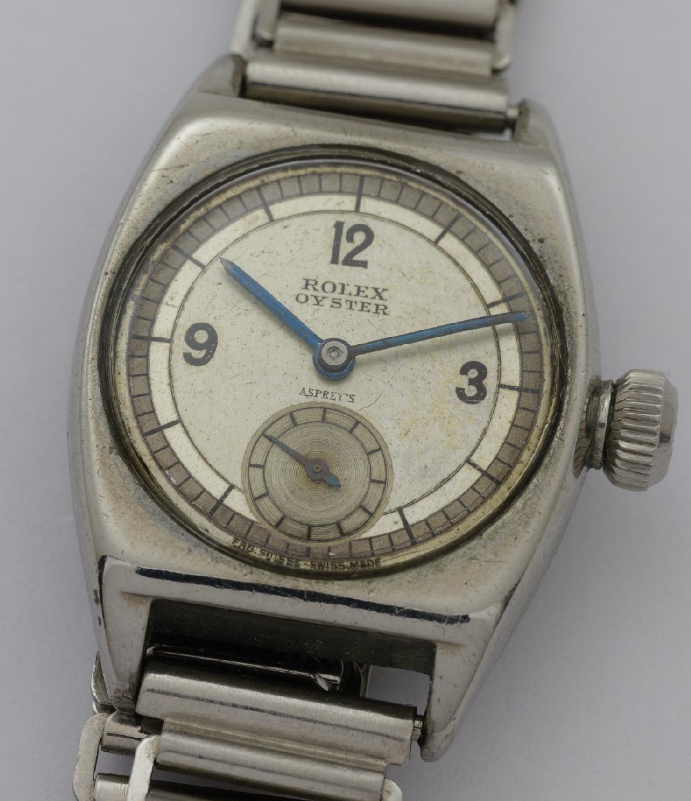
(Rolex X Asprey, 1930s. The Vintageur Collection)
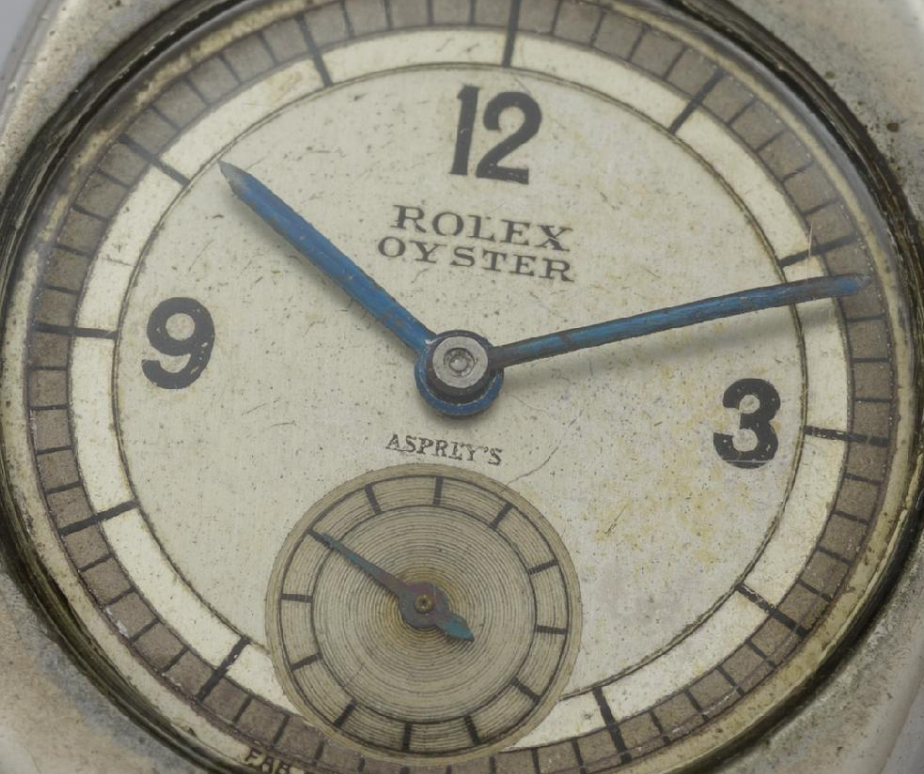
(Rolex X Asprey, 1930s, detail. The Vintageur collection)
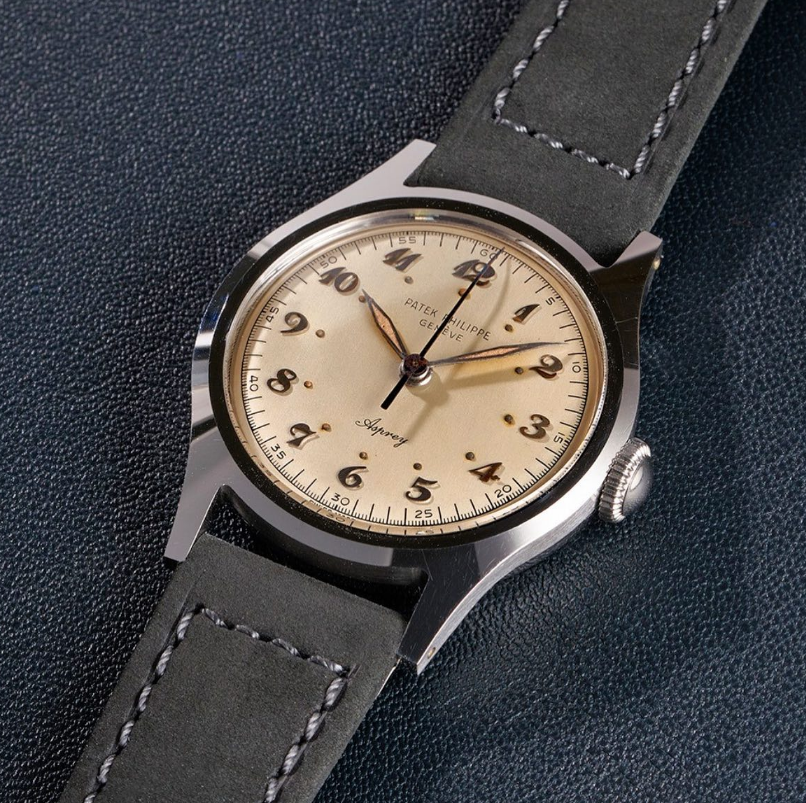
(Patek Philippe X Asprey, reference 565. Credit by aspreylondonwatch on IG)
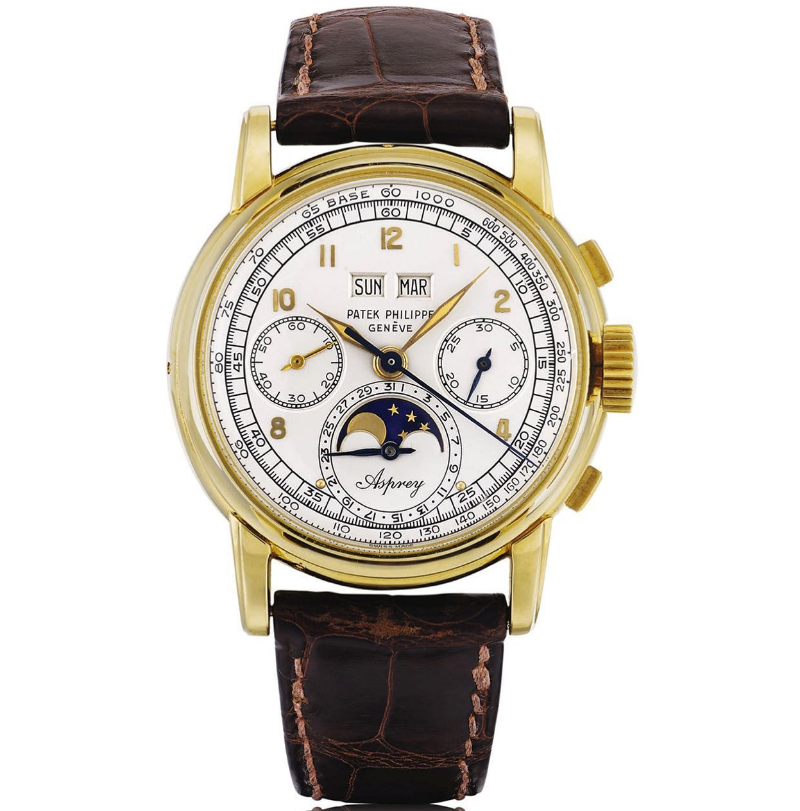
(Patek Philippe X Asprey, reference 2499. Credit by aspreylondonwatch on IG)
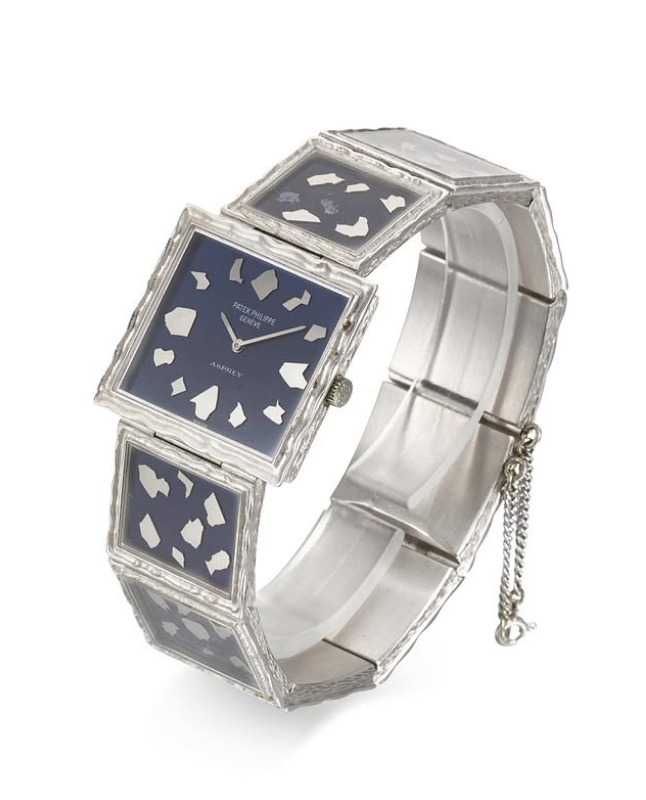
(Patek Philippe X Asprey, rare reference 4121 in white gold. Credit by aspreylondonwatch on IG)
The wristwatch’s central role in the brand’s offerings accelerated even further in the 1970s, when young heirs John and Maurice took over the company and began forging increasingly close relationships with wealthy Middle Eastern oil companies. Asprey began an ambitious expansion in this direction, opening dealerships in Qatar, Kuwait, and especially Oman. Sultan Qaboos of Oman, who ascended the throne in 1970 and is one of the world’s greatest collectors, was able to acquire Asprey, which soon became the supplier of high-end watches to the Omani royal palace. Among the most sought-after brands were Patek Philippe, but above all, Rolex.
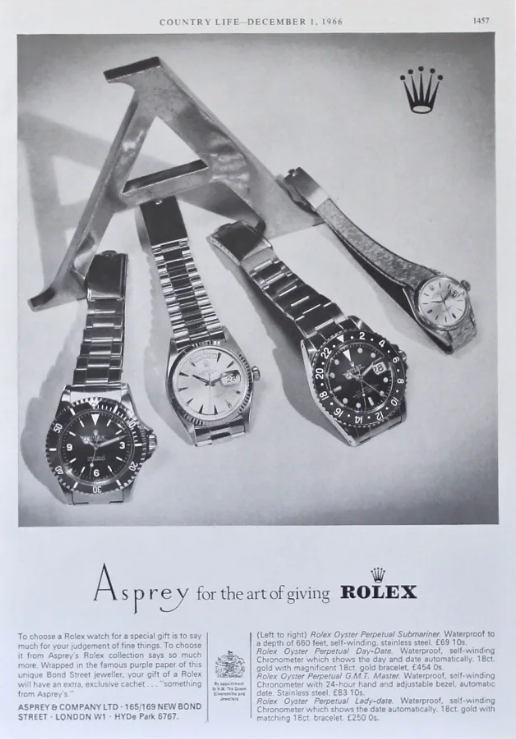
(Asprey, Rolex affiche, 1966. Credit by analogshift.com)
Today, highly prized and sought-after by collectors, the pieces often bear the now-familiar “khanjar” symbol on the dial, the Omani national emblem consisting of two crossed swords with the traditional curved dagger in the center. Asprey, far from England, thus became a supplier of watches to the Ruling House of Oman.
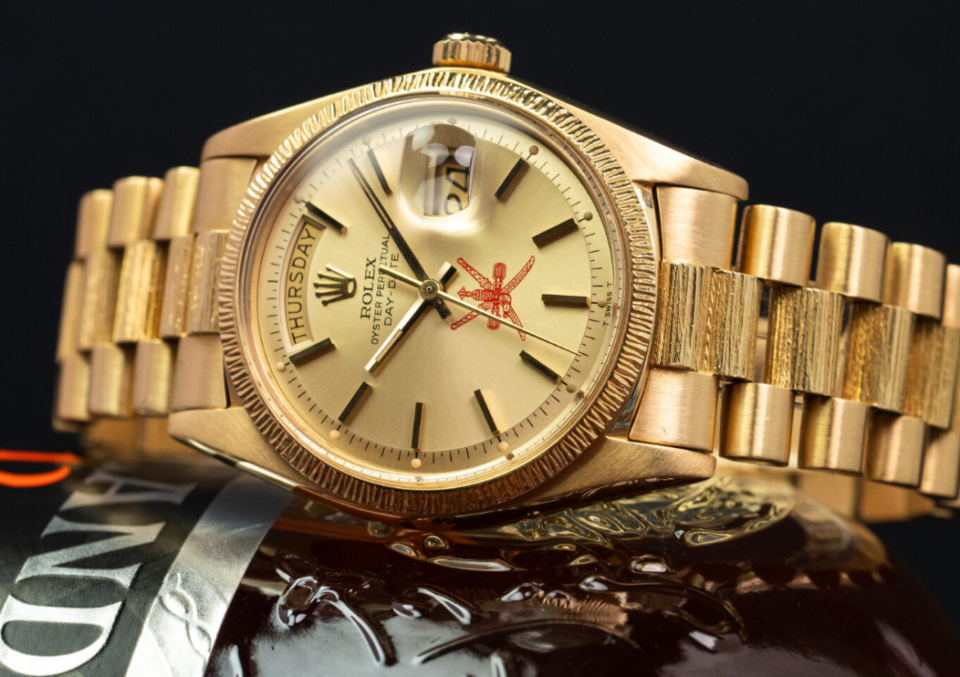
(Rolex Day-Date Ref.1807 sold by Asprey, 1976. Credit by amsterdamvintagewatches.com)
Between the 1970s and 1990s, Asprey further expanded its reach, opening boutiques in Japan and further establishing its position in the Middle East with distribution points in Abu Dhabi and Bahrain. The relationship with Rolex grew ever closer, becoming a true collaboration. In 1999, an exceptional Rolex Cosmograph Daytona ref. 16528 was created in 18K yellow gold, diamonds, and with a customized purple dial, Asprey’s signature color. The outer caseback is engraved with the Aspery & Garrard signature.
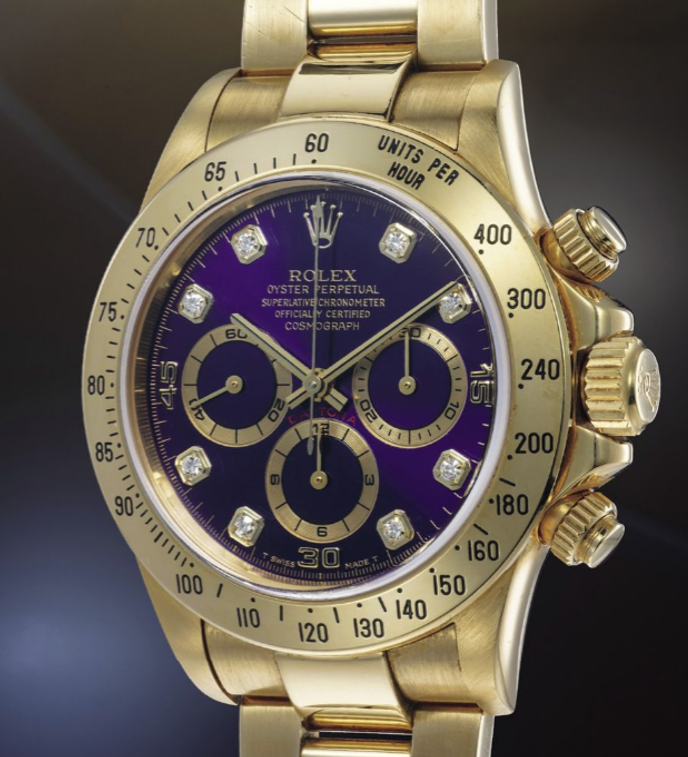
(Rolex X Asprey, Cosmograph Daytona Ref.16528, 1999. Credit by Watchlibrary.org)
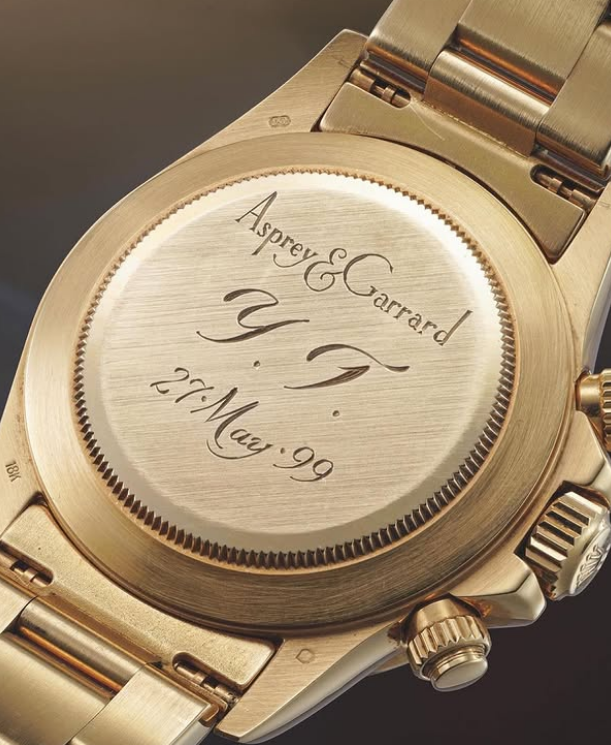
(Rolex X Asprey, Cosmograph Daytona Ref.16528, 1999. Credit by Watchlibrary.org)
The 2000s saw several changes in ownership within luxury groups, until the brand was acquired by Sciens Capital Management and Plainfield Asset Management in 2006.
The new group launched a project of further expansion and permanent consolidation in Japan, the United States, and Switzerland, as well as revising its existing presence in England. Its flagship stores were designed or redesigned by renowned architects such as Norman Robert Foster and Jordan Mozer, the brilliant designer and founder, co-owner, and president of Jordan Mozer & Associates, Ltd. Their work underscored Asprey’s immense prestige, which, combining tradition and innovation, remains today, as it has always been, one of the most recognized luxury brands worldwide.
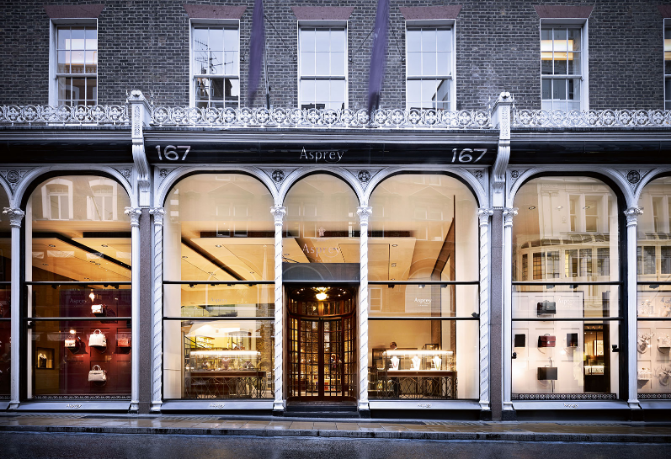
(Asprey boutique in Bond Street, London, today. Credit by watchesbysjx.com)
PART IIII. APPENDIX: GENERAL CATALOGUE OF 1965
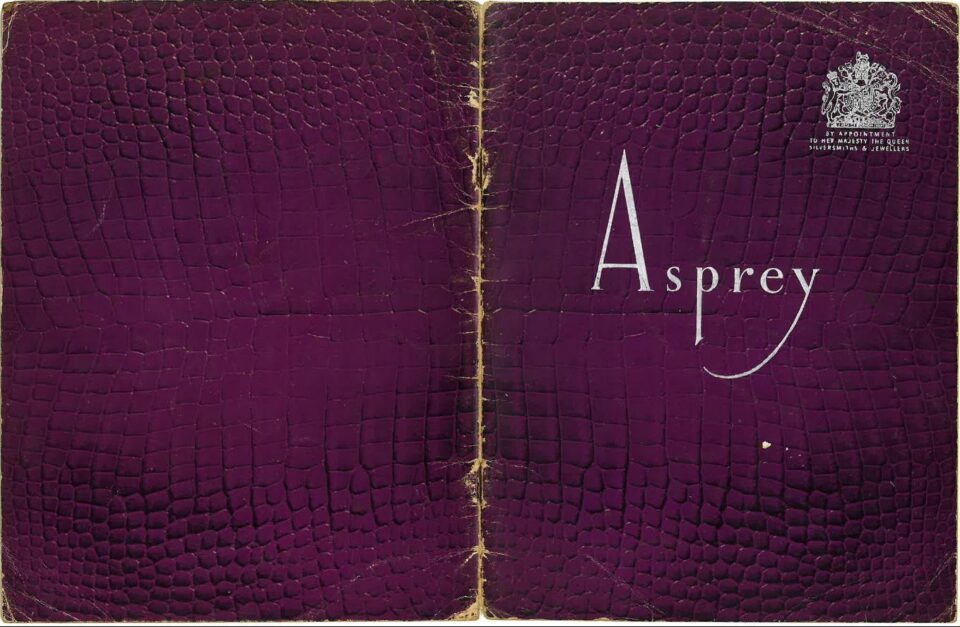
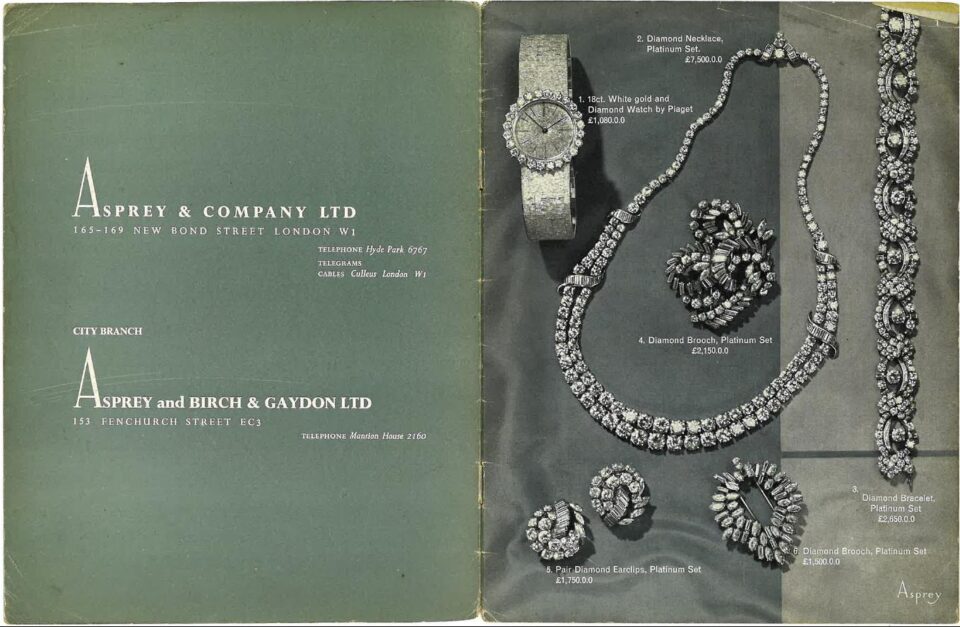
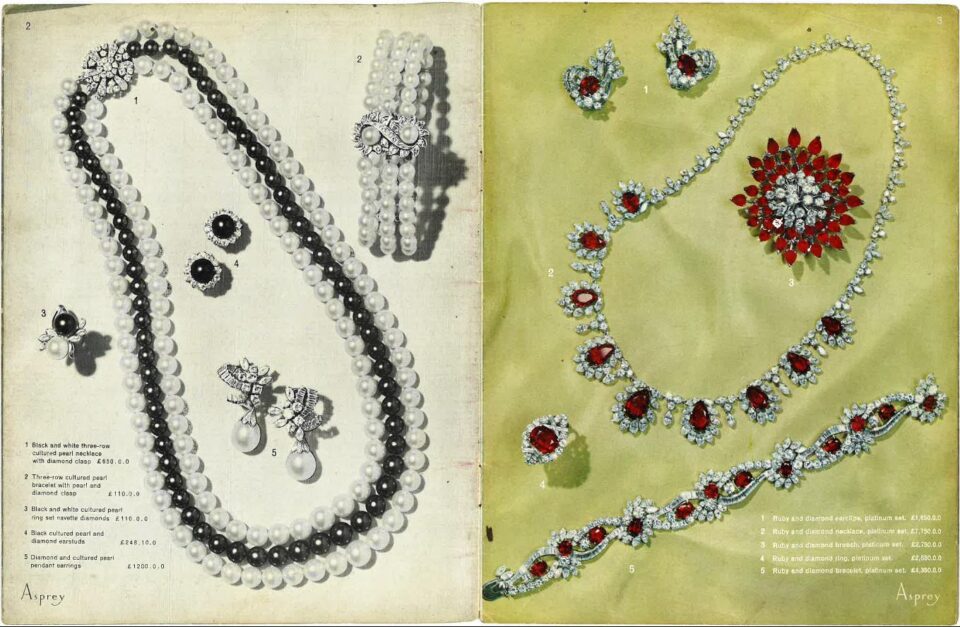
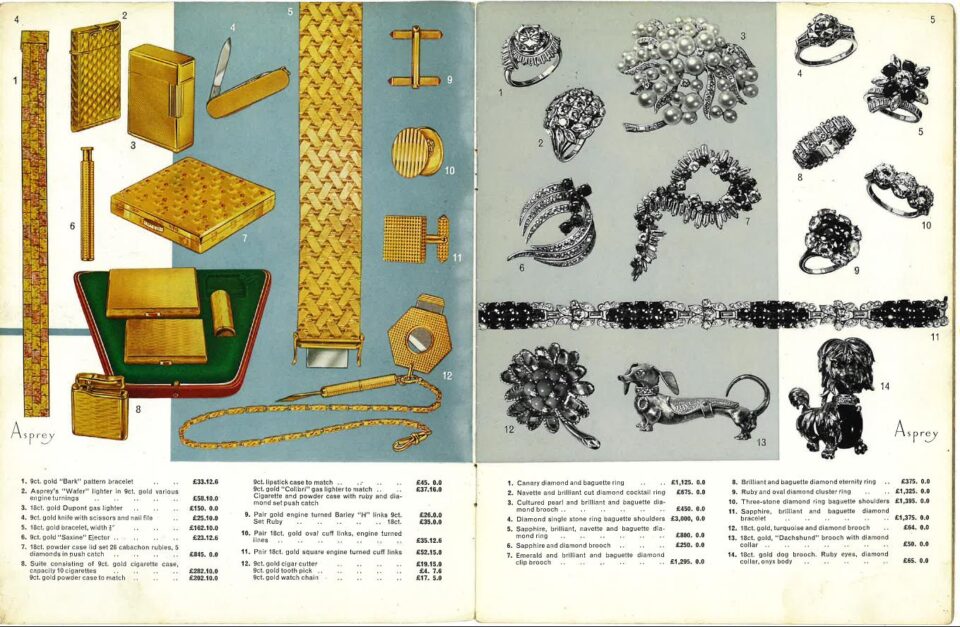
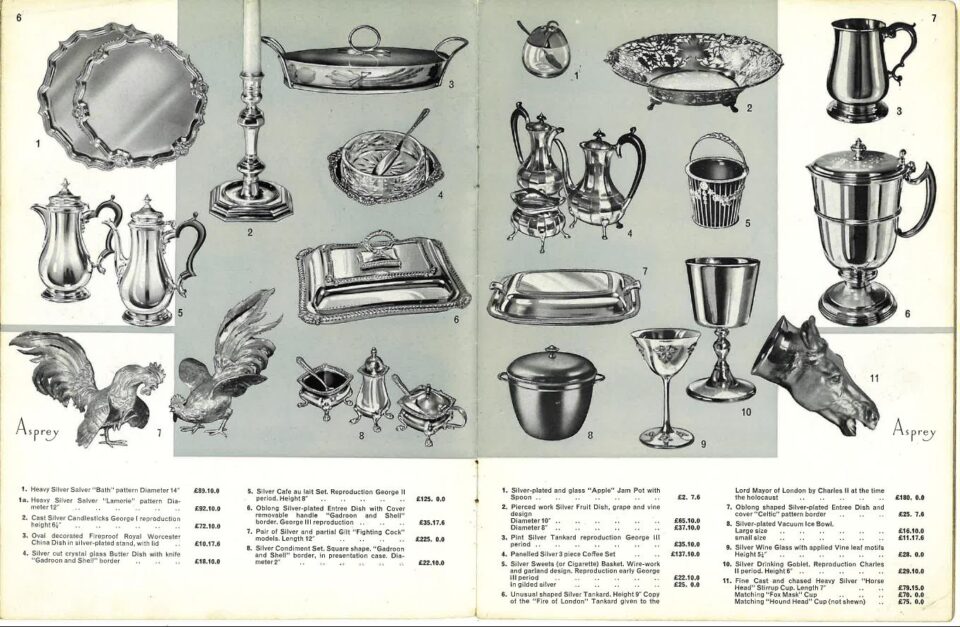
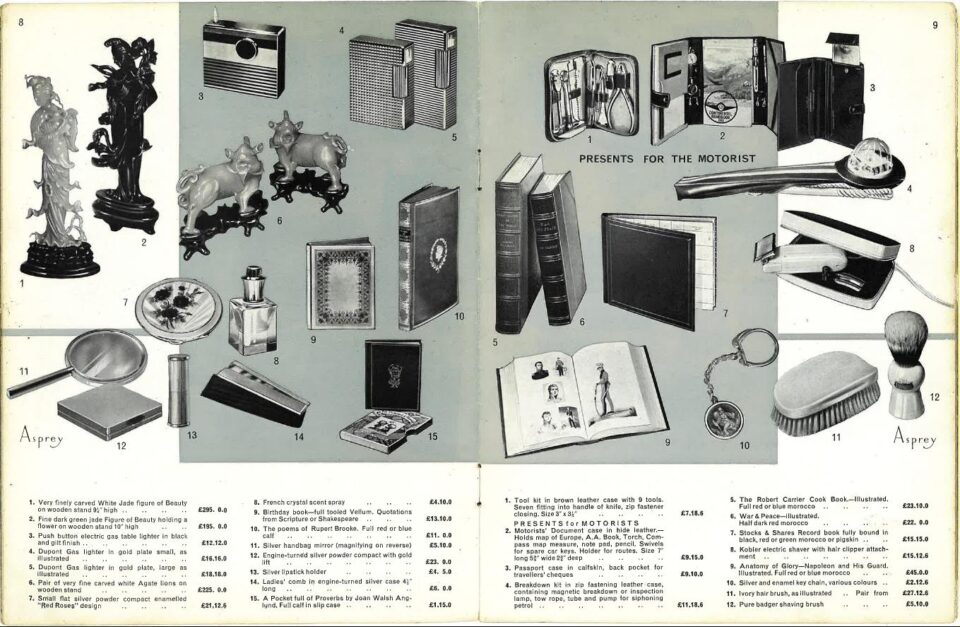
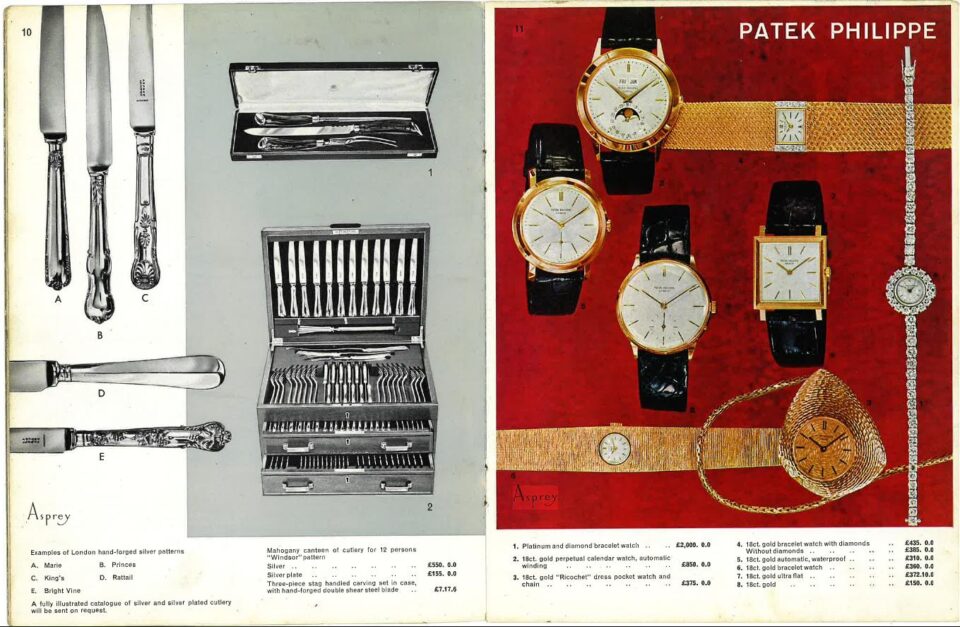
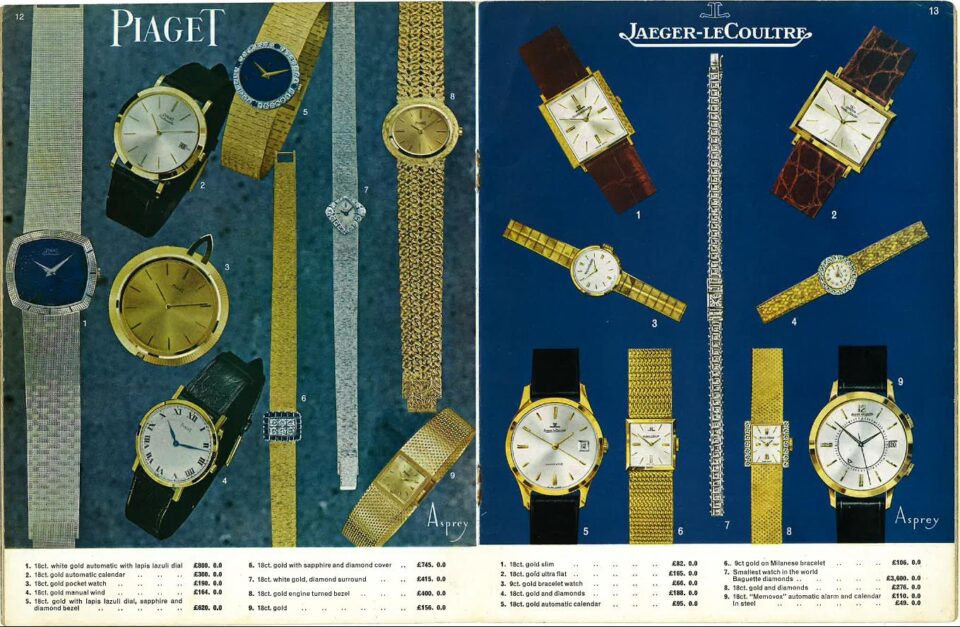
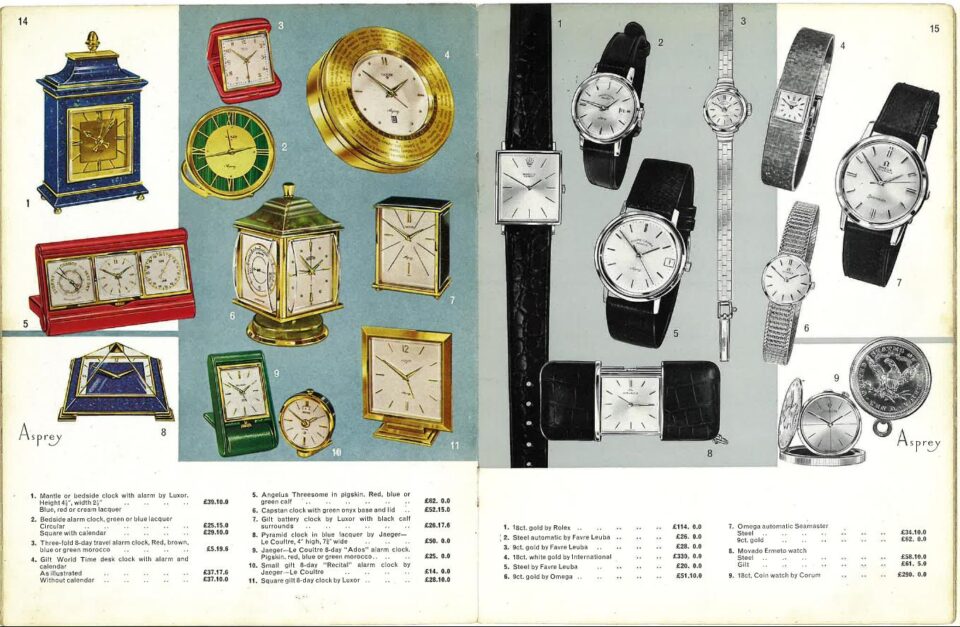
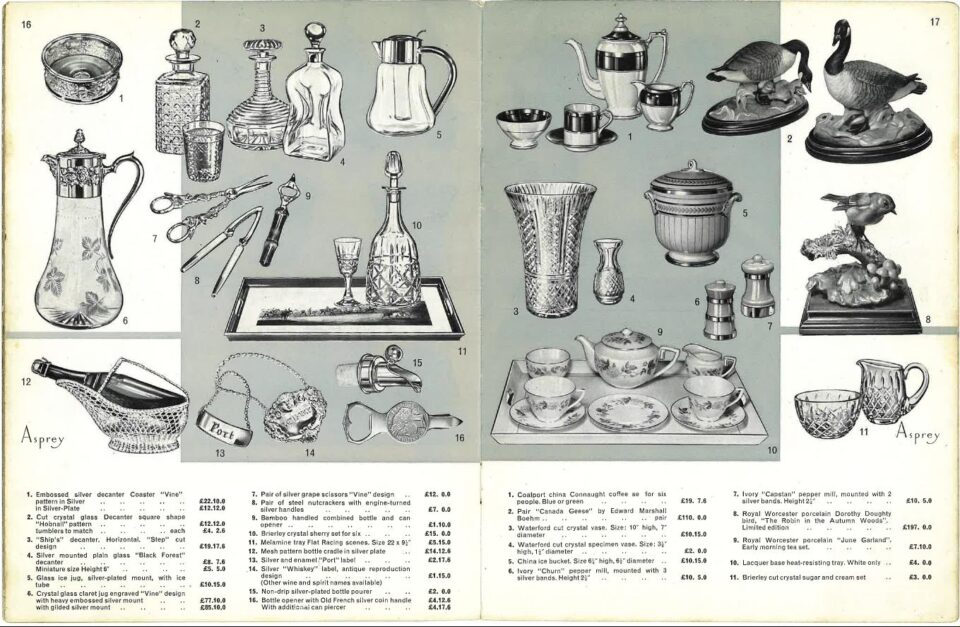
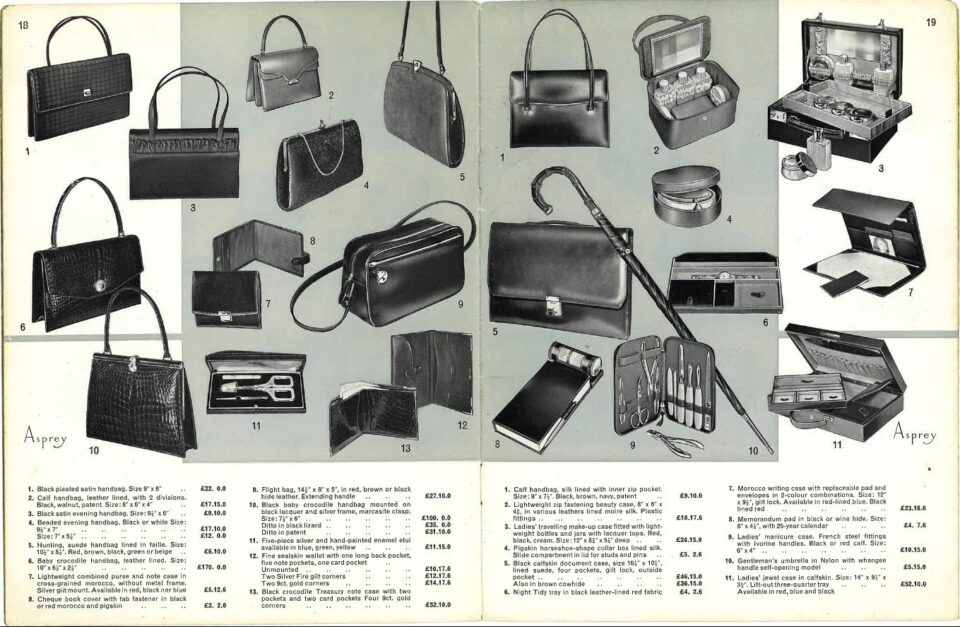
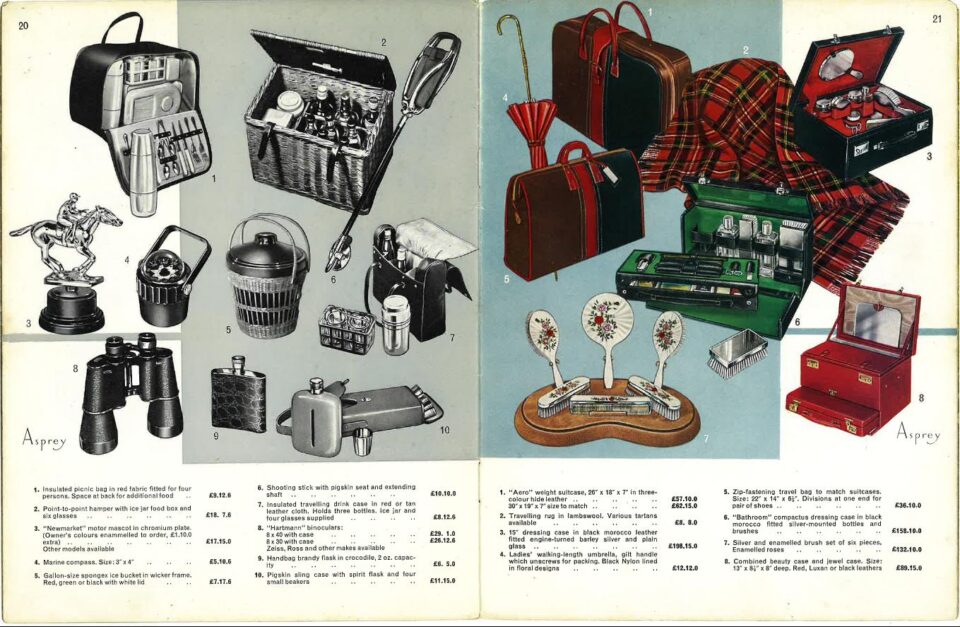
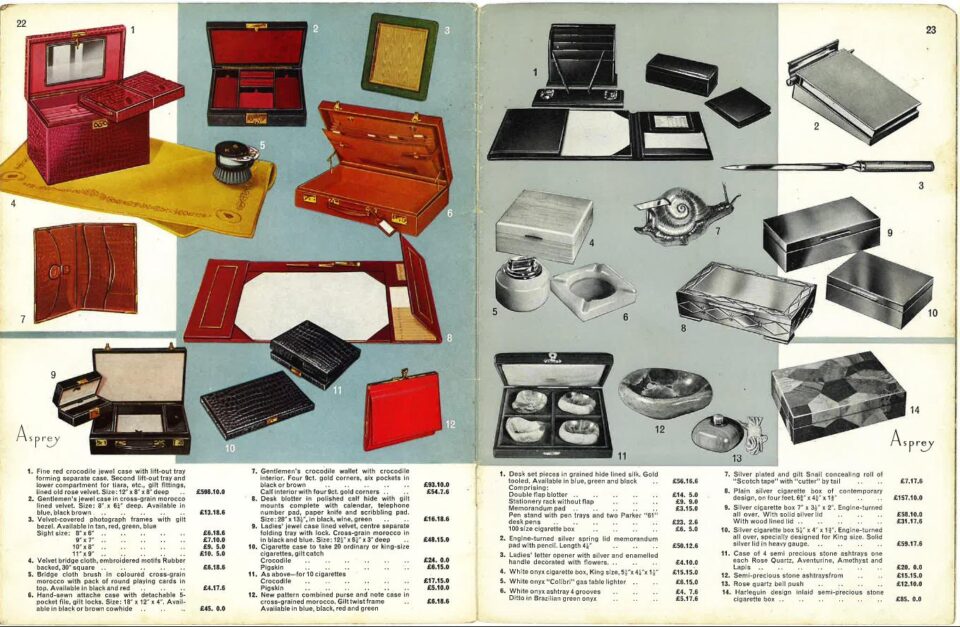
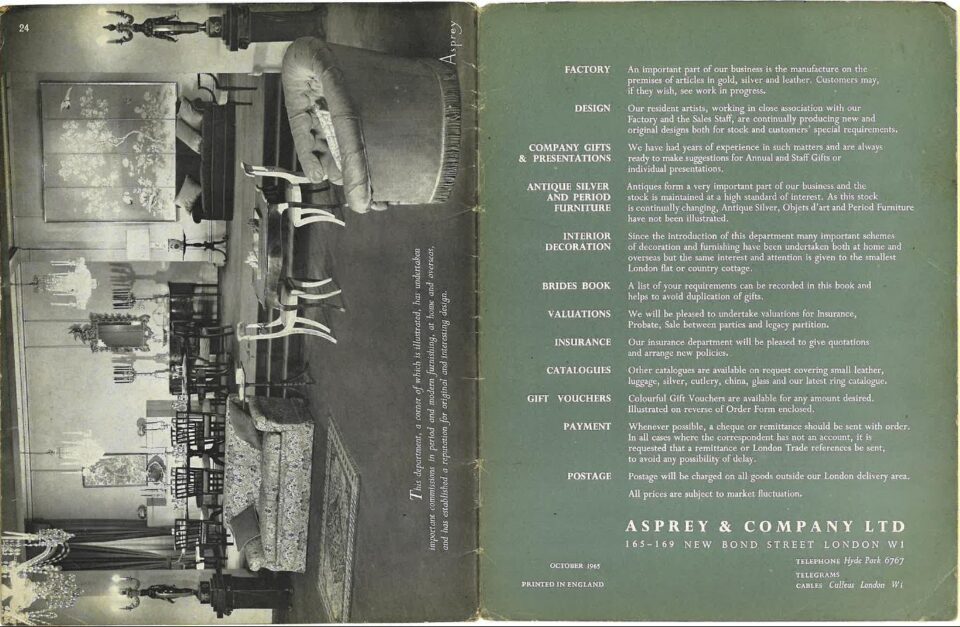
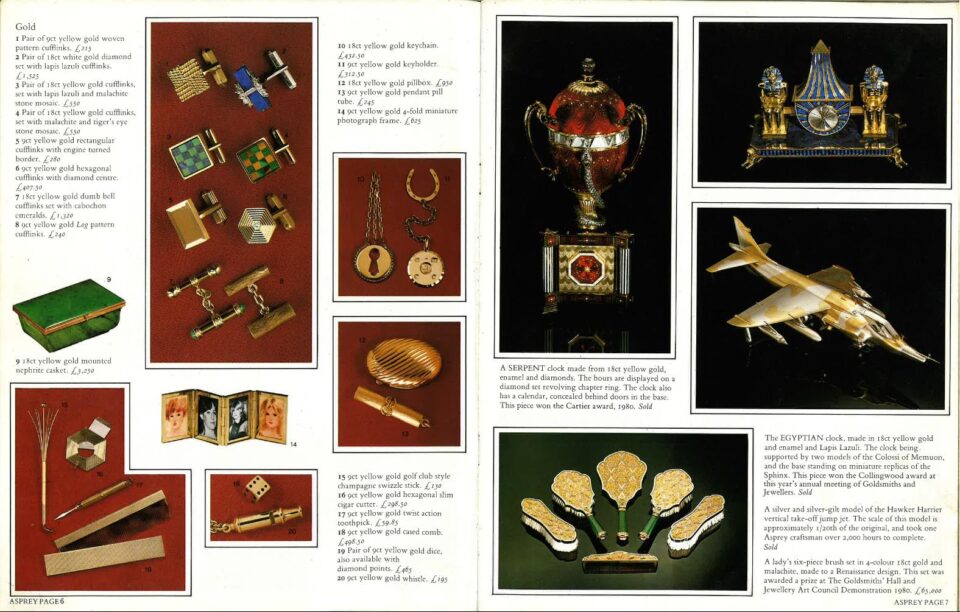
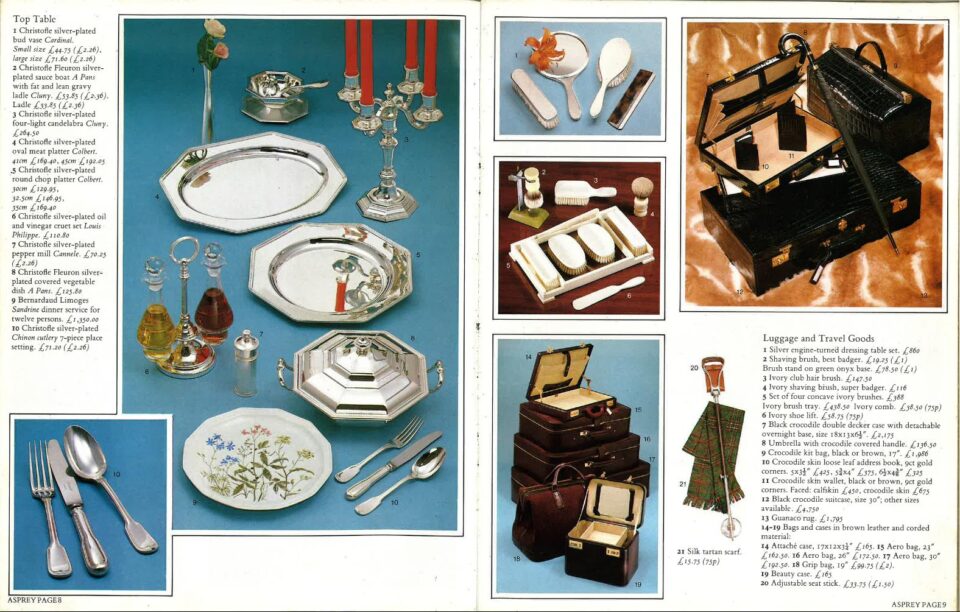
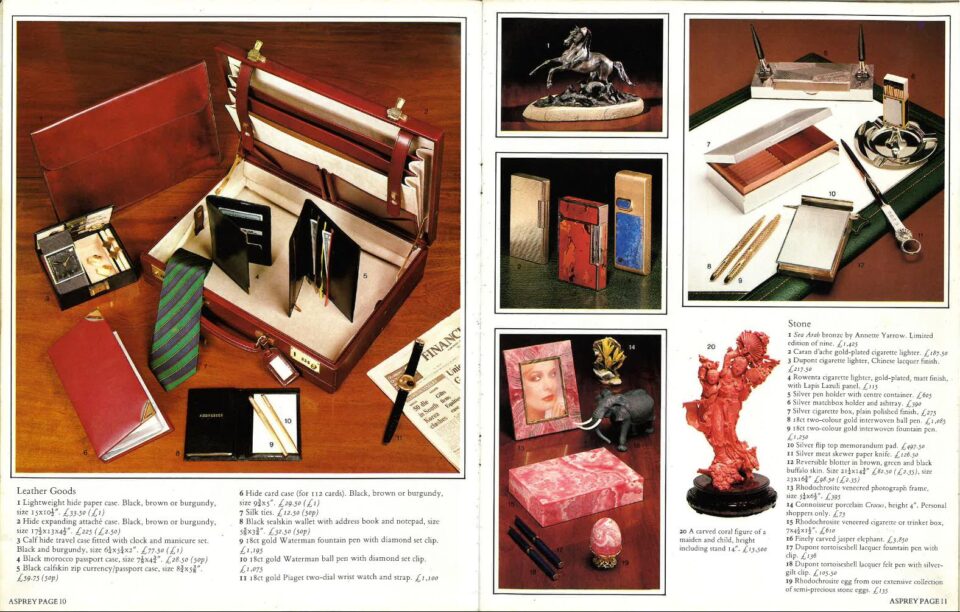
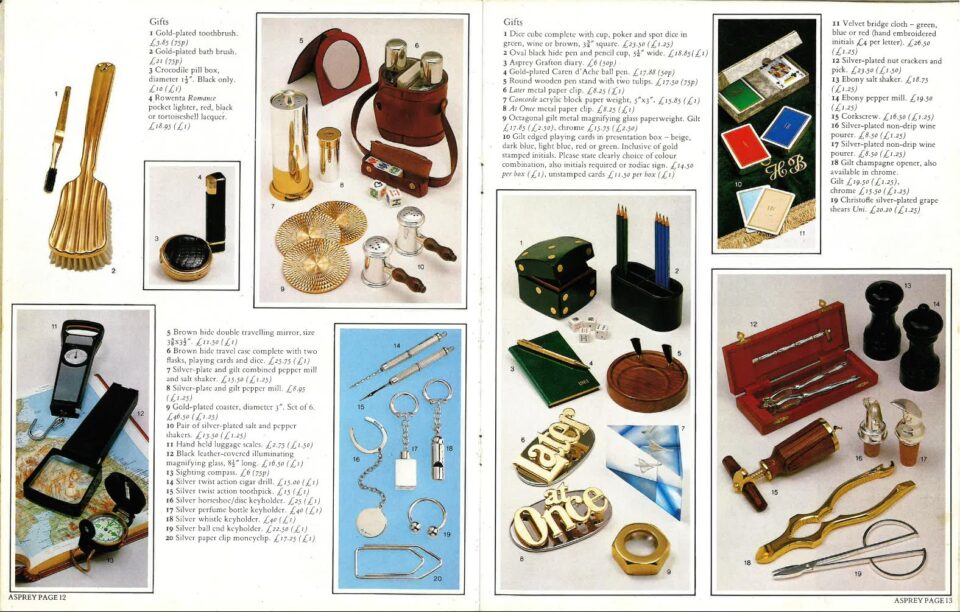
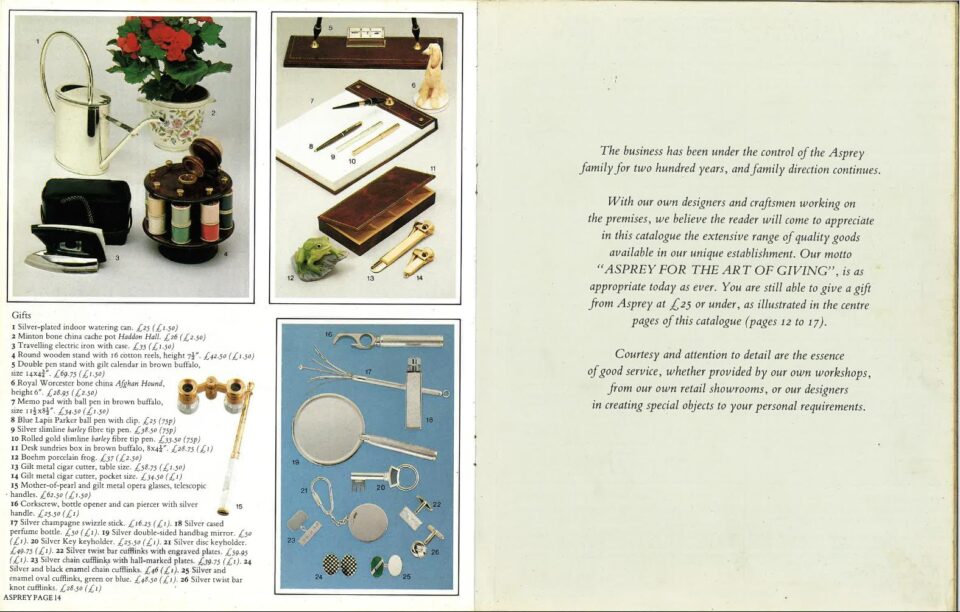
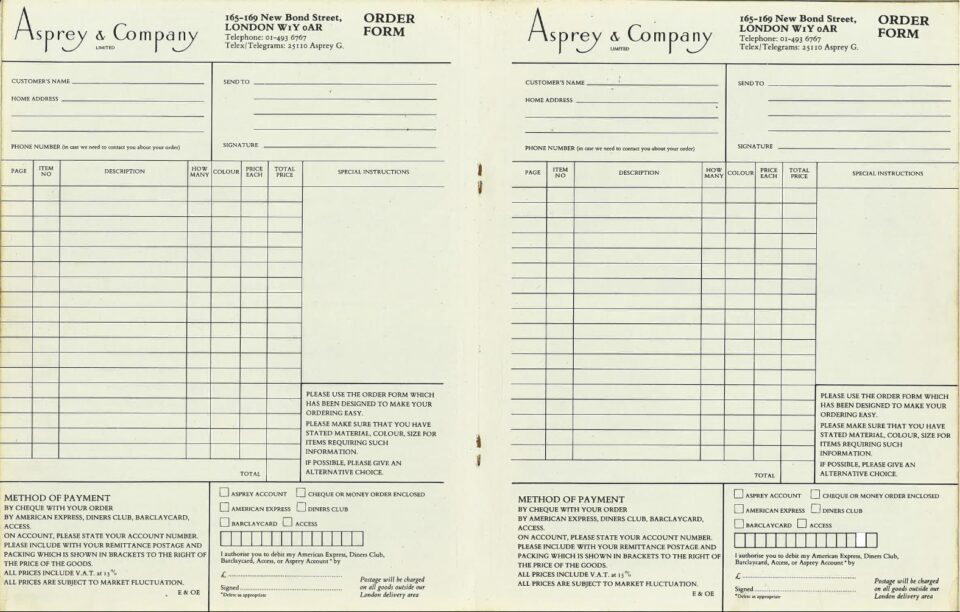
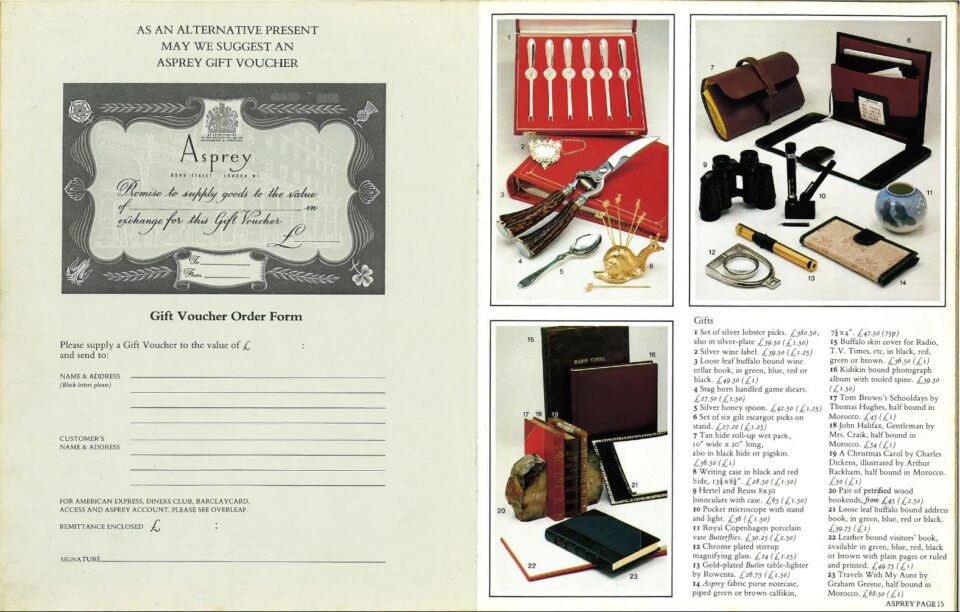
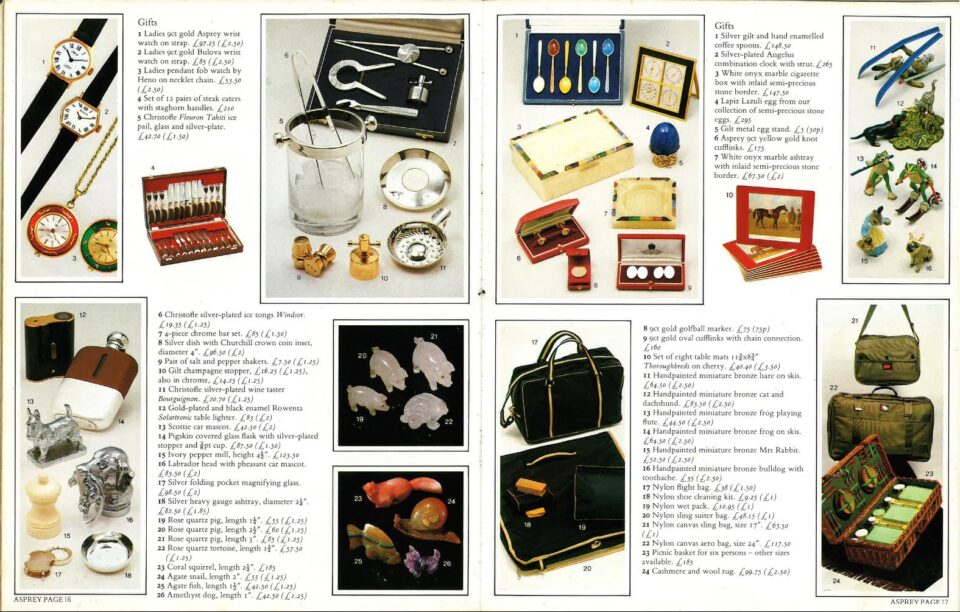
PART V. APPENDIX: GENERAL CATALOGUE OF 1980