SPECIFICATIONS
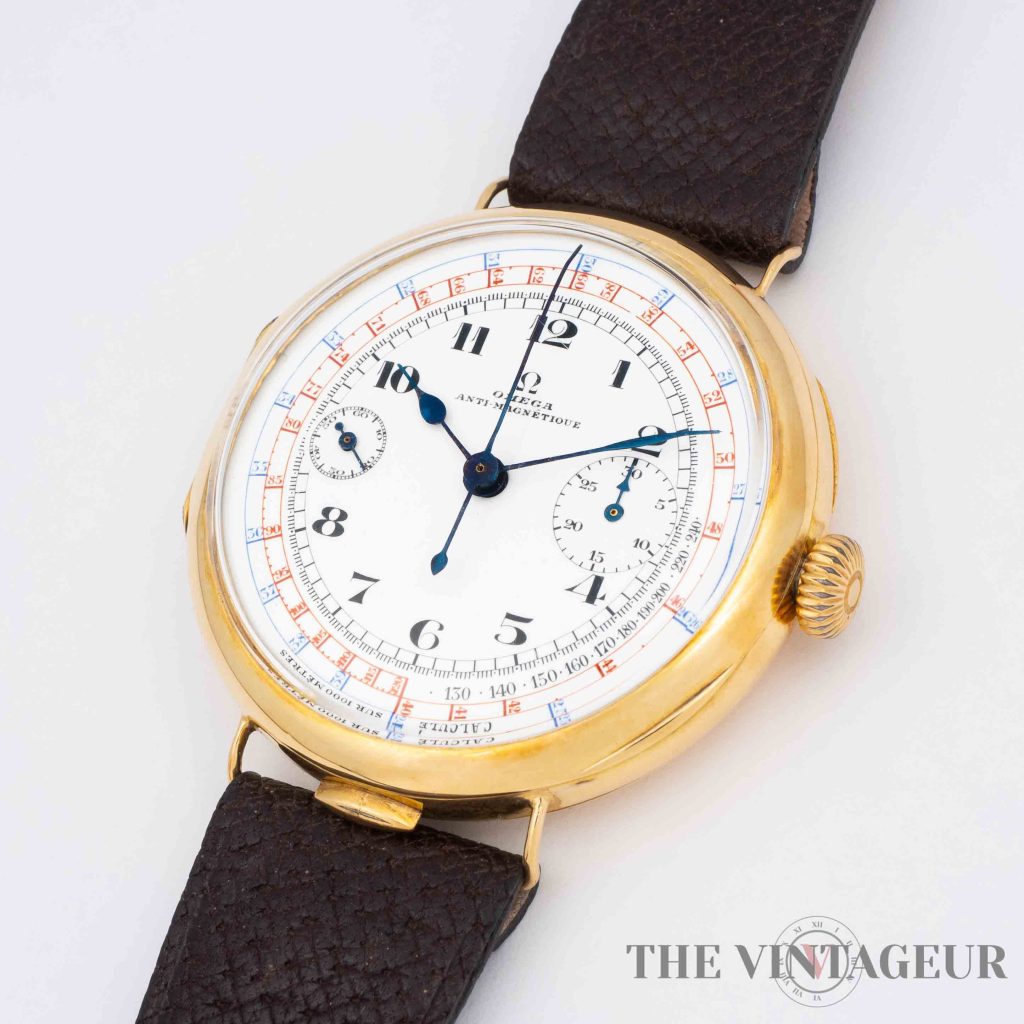
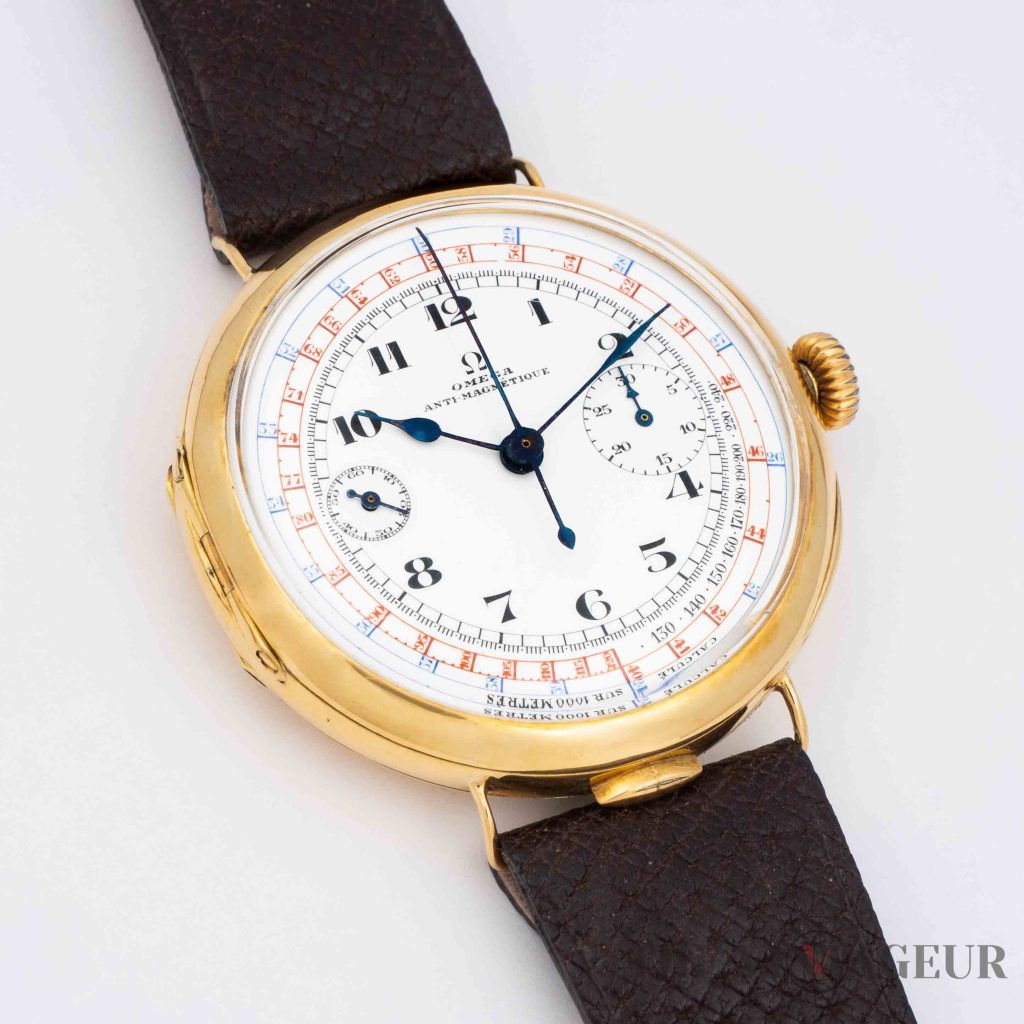
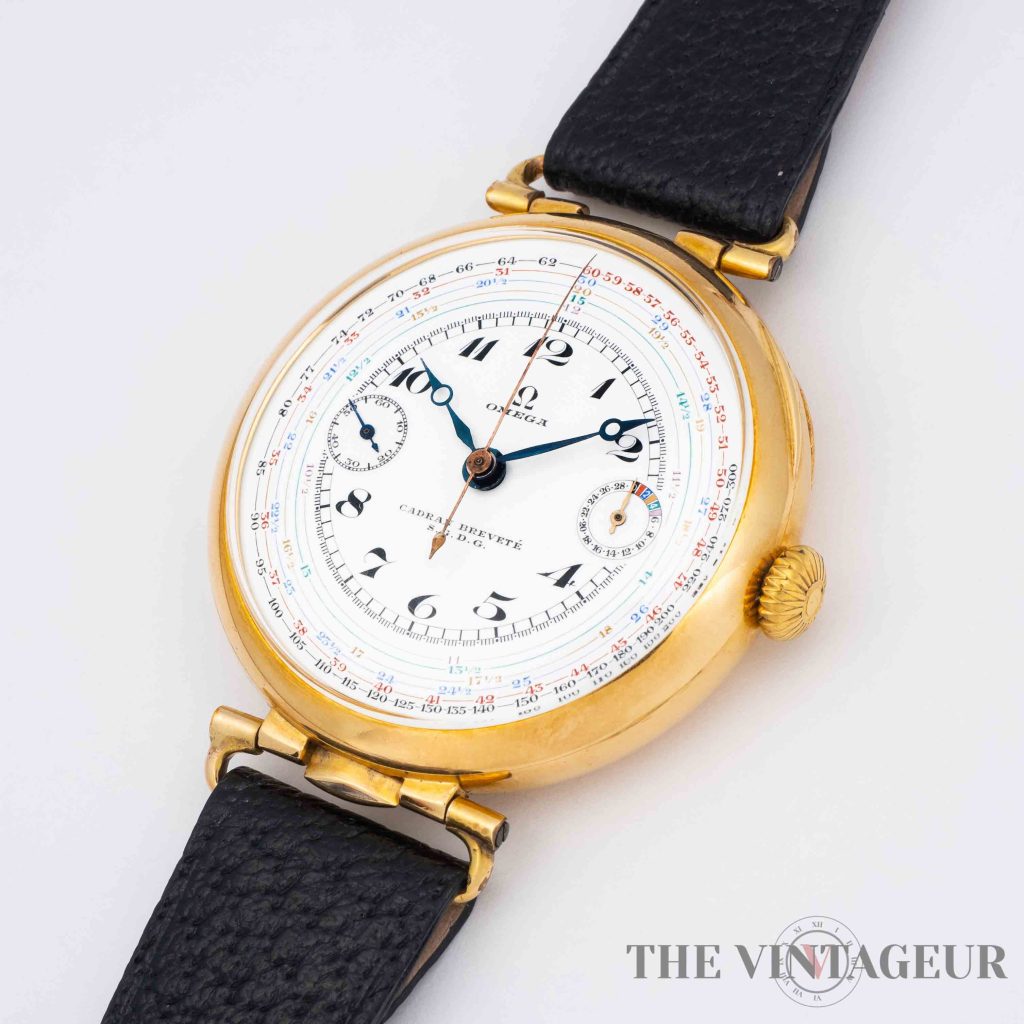
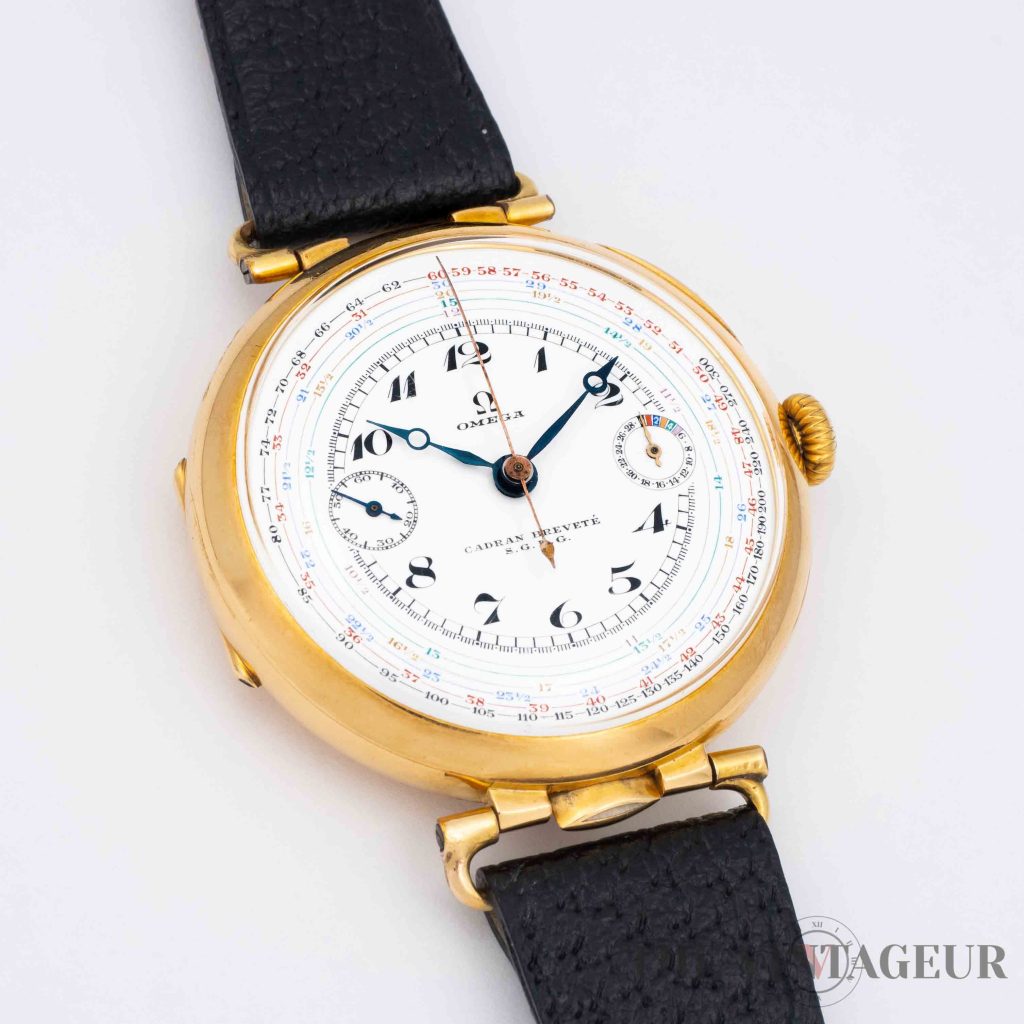
Rare Omega chronograph with a two-tone double-scale dial, a 37.5mm Staybrite steel case, and a manual-winding Omega 33.3 chronograph movement from the 1940s.
Staybrite steel case measuring 37.5mm
Original plastic crystal
Original olive-shaped pushers
Original crown
Manual-winding Omega 33.3 chronograph movement inside
ANALYSIS
In an ideal ranking of the best chronograph calibers ever made, the 33.3 movement, made by Lemania for Omega, certainly ranks high. Along with the subsequent 321s and the family derived from the 861, the 33.3 movement represents the pinnacle of build quality in the late 1930s. A feature that makes it unique and easily recognizable is, first and foremost, the inversion of the position of the balance wheel and its bridge, unlike all other two-pusher chronographs made up until then. The movement, with an 8-column wheel and horizontal clutch, draws its foundation from the proven Lemania 15CHT (also housed in Lemania-branded chronographs). The partnership between Omega and Lemania, however, was almost exclusive, beginning with the 28.9CHRO (Lemania CH13 single-pusher and double-pusher) and continuing with the 33.3CHRO (Lemania CH15) in the late 1930s.
We are therefore talking about a truly rare beauty of micromechanical engineering, highly sought after by collectors.
This Omega has other significant features that make it a truly fascinating watch. Its dial features a warm ochre patina, highlighting the different hues of the two scales: the blue 1000-based tachometric scale, which begins at the edge of the dial and spirals to the center; and the red telemetric scale at the heart of the dial. This configuration is typical of Omegas from this period. Specifically, this piece can be dated precisely to 1941/1942 based on the serial number on the escapement bridge. The hands are flame-hardened and have a classic retro look.
The Staybrite steel case is also very characteristic of this Omega chronograph production. It has a very clean and wide circular structure; it is much larger than the average size among chronographs from other brands from the late 1930s and early 1940s. At 37.5 mm in diameter, it presents a very modern look on the wrist, thanks in part to the beautiful straight lugs that curve sharply. On the right side is the beautiful original winding crown and the typical olive-shaped pushers. Having a large case with a dial layout that maintains a direct link to the past is the reason why collectors love these chronographs.