


HISTORY AND DEVELOPMENT OF ONE OF THE LONGEST-LIVED AND MOST CREATIVE SWISS MAISON
INTRODUCTION
Since the dawn of time, the Jews of Alsace (a northeastern region of France bordering Germany to the east and Switzerland to the south) have been subjected to severe restrictions on individual freedom and, at certain times in history, severe persecution. In the early 19th century, hundreds of Jewish merchants were recorded as having fled those lands and settled in Switzerland. Swiss commercial and civil registers (especially in Neuchâtel and Bern) list the Didisheim family as watchmakers and entrepreneurs as early as 1840. Along with other “lineages” such as the Dreyfus and Bloch families—operating in the Bernese Jura, especially between Saint-Imier and La Chaux-de-Fonds—the Didisheim family represents one of the greatest watchmaking dynasties of all time.
Tracing its complex family tree from what appears to be its founder, a certain Bernard Berlé Diedisheim (1629-1676), and up to 1960-1970, we can identify the original traces of some of the most legendary Maisons in Swiss watchmaking. From the branch of Marc Meyer Diedisheim’s lineage (1779) came the brothers who gave birth to Movado; from that of Aaron Didisheim (1744) came the ancestors of the founders of Vulcain, Solvil & Titus, Ditis and, last but not least, Marvin and Juvenia.

PART I. THE BIRTH OF JUVENIA (1860 – 1910)
Jacques Didisheim was the youngest of seven brothers. Born in 1834 in Hégenheim, Alsace, he was also a watchmaker, having been interested in the family business from a young age. At the age of sixteen, he moved to Geneva to further his studies in micromechanics; it was during these same years that he met and married Fanny Juvenia Goldschmidt. In 1860, he returned to the Jura to establish a small watchmaking workshop in the town of Saint-Imier, which he registered under the name Didisheim Goldschmidt & Co.
However, it was his sons Albert and Bernard who developed the company, establishing its headquarters in La Chaux-de-Fonds in 1882. Under the name Didisheim Goldschmidt Fils & Co, they guided the company through the crucial period of expansion between the late 19th and early 20th centuries.
The pieces from this period include splendid table clocks with marble bases, featuring the timepiece set within a landscape depicting moments of rural or urban daily life. They are unique because the scenes are hand-painted and often feature elementary automatons.
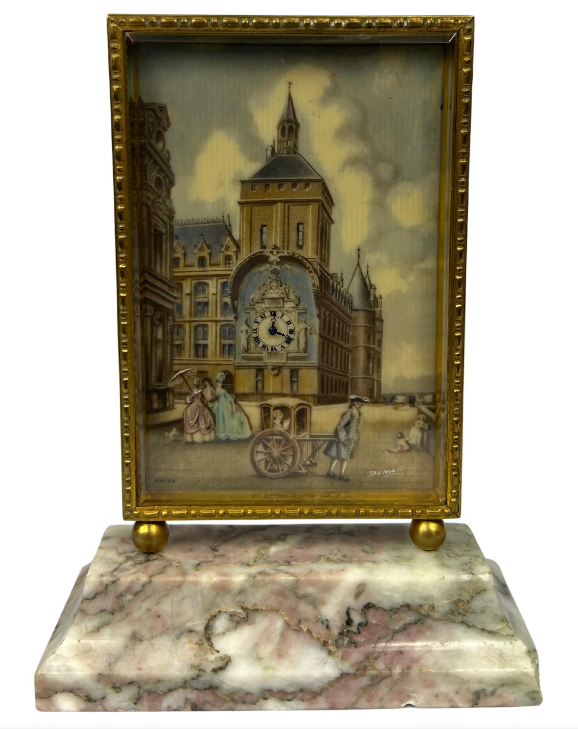
(Painted table clock, Didisheim Goldschmidt Fils & Co. Early 1900s. Credit by 1stDibis.com)

(Painted table clock with automaton, Didisheim Goldschmidt Fils & Co. Early 1900s. Credit by Christies.com.cn)
In 1906, the name Juvenia was born (a tribute from the two sons to their mother) together with a bouquet of other brands registered the same year by Didisheim Goldschmidt Fils & Co. It was officially registered on August 23rd at 4 pm with the registration number 20944.
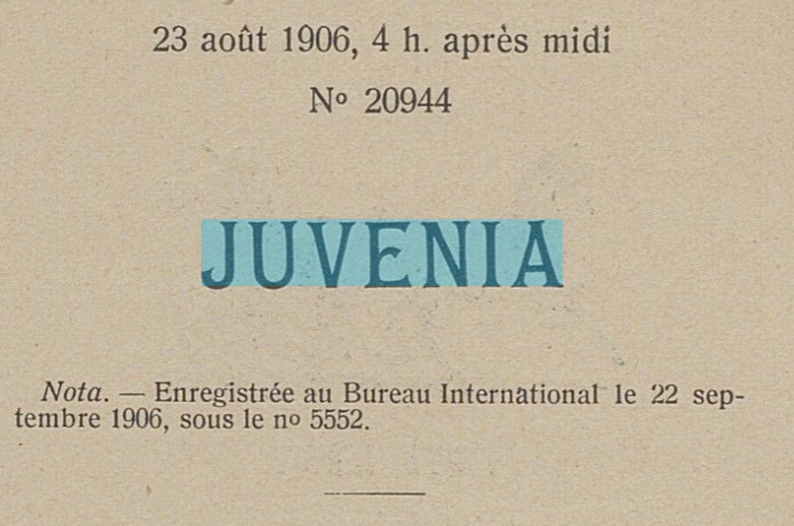
(document of the first deposit of the name Juvenia, 1906. Credit by Watchlibrary.org)
Three years later, on 20 December 1909, the company changed its name to Fabrique d’horlogerie Juvenia Didisheim-Goldschmidt Cie., adding the logo of two lions holding a crowned shield (which will more rarely have a “J” in the centre).

(Document of the registration of the Juvenia name and logo, 1906. Credit by Watchlibrary.org)
As several sources attest, the factory was very active. It advertised various watchmaking creations, as well as “talking machines,” “musical instruments,” “photography instruments,” “works of art,” “silverware and jewelry,” and so on.

(Document from 1910. Credit by E-periodica.ch)
In short, a universe of diverse activities requiring a well-structured corporate organization with multiple levels of branching for the manufacturing and distribution of individual products. This obviously requires specialized personnel who must work in close collaboration with subsidiaries and distributors located in numerous countries. Juvenia is one of the first “global” Swiss companies, reaching every continent and every latitude. Its reach was already incredible around 1910.

(Document from 1910. Credit by E-periodica.ch)
In these early years of the twentieth century, numerous other sub-brands with very different names were credited under the control of Juvenia, which had diversified etymological roots to facilitate a geographically localized distribution: names in Cyrillic, Portuguese, Latin, and English.

(Document from 1910. Credit by E-periodica.ch)
An advertisement from 1910 also promoted other brands, and, at the same time, emphasized the production of “extra-flat” lever escapement watches of various sizes signed “Juvenia”.

(Advertisement from 1910. Credit by Hifi-archiv.info)
The quest for the “extra-thin” pocket watch has been a constant throughout the Maison’s history and has its roots in these early years. Thin watches were designed to improve the weight, usability, and portability of a pocket watch. They were produced both under the Juvenia brand and under one of the many sub-brands, such as “Fiat”, “Polar,” “Fiducia,” “Exelda,” and “Nautilus”.
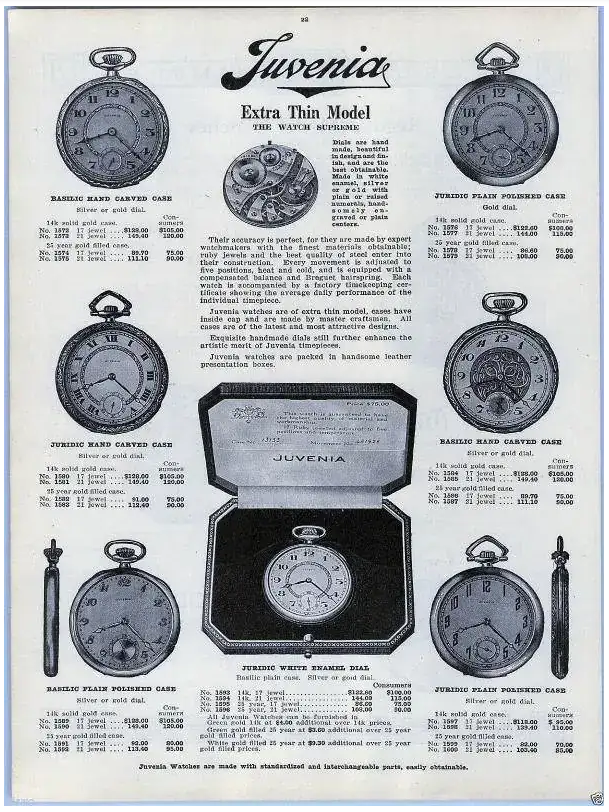
(affiche from 1910. Credit by Relojes-especiales.com)
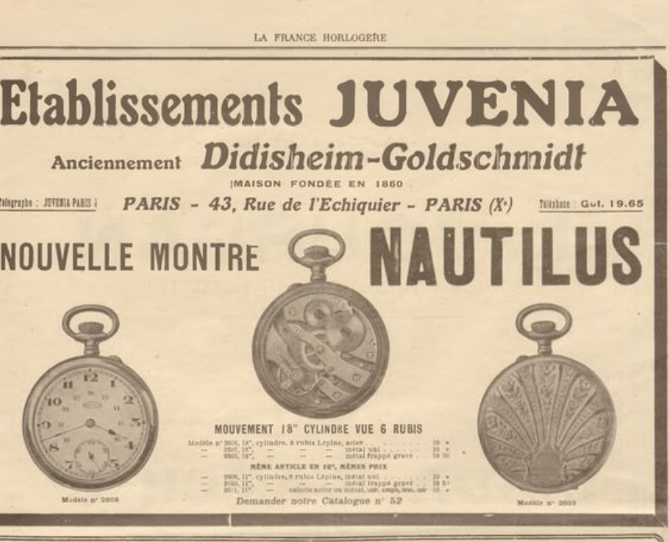
(“Nautilus”, poster from 1910. Credit by Niccoloy on IG)
Juvenia manufactures its own blanks for movements, cases, and dials. It has offices in New York, Madrid, and Paris, and presented the smallest movement ever made at the 1914 Swiss National Exhibition, without a superimposed mechanism (*Duoplan by JLC): just 9.5 mm in diameter and 2.5 mm thick. It received awards for its creativity and built a worldwide reputation for its ability to combine aesthetics and quality.
These were the years of Art Nouveau, an internationally significant artistic and decorative movement that emerged between the late 19th and early 20th centuries. Born in reaction to the historicist eclecticism dominant in the 19th century, it represented a conscious attempt to define an original aesthetic language, based on organic forms and sinuous lines, inspired by nature and the new possibilities offered by industrial materials. Many Swiss watchmaking houses follow this artistic and cultural path, but Juvenia is undoubtedly one of the leading players. It produces gold or silver watches decorated with hand-painted plant or animal motifs and with differently shaped cases, finished with colored stones or enamels of the highest quality.

(Juvenia watch in gilded silver and malachite, early 1900s. Credit: Ebay.com)
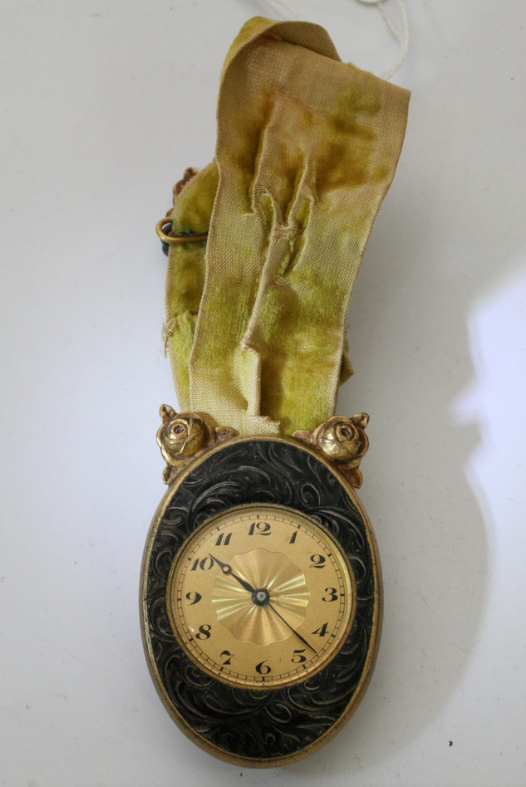
(Juvenia gilt-silver brooch watch, 1910s. Credit by The-saleroom.com)
The workshops from which these small masterpieces emerged were located at the accredited headquarters in La Chaux-de-Fonds at 58 Rue Léopold Robert. This is the heart of the Swiss city. It is a lively street, full of merchants and boutiques of all kinds. With its tree-lined avenue, it is the city’s main artery, a connecting point between east and west, and a direct exit from it.

(Postcard from the early 1900s. Credit by Ak-fundus.ch)
Today, many of the beautiful buildings we see in that postcard no longer exist. In their place are tall, anonymous buildings built between the 1950s and 1980s. At 58 Rue Léopold Robert, there is now an impersonal bank and a depressing doctor’s office.

(Today’s facade of the building at 58 Rue Léopold Robert, La Chaux-de-Fonds. Credit by Googlemaps.com)
But let’s leave the present and nostalgically return to the early 1900s, where Juvenia’s creative consolidation began.
PART II. JUVENIA: ART DECO AND INNOVATION (1920 – 1930)
The 1920s and 1930s were a period of great splendor for the Maison. Its approach was dynamic, focusing on both aesthetics and the mechanical technology of the time. The production of watches was endless in terms of shapes, materials, decorations, and movements. From women’s ring watches to handbag and travel watches; from table watches to wristwatches. Juvenia successfully capitalized on this unique moment of great creativity in the world of watchmaking, not just in Switzerland.
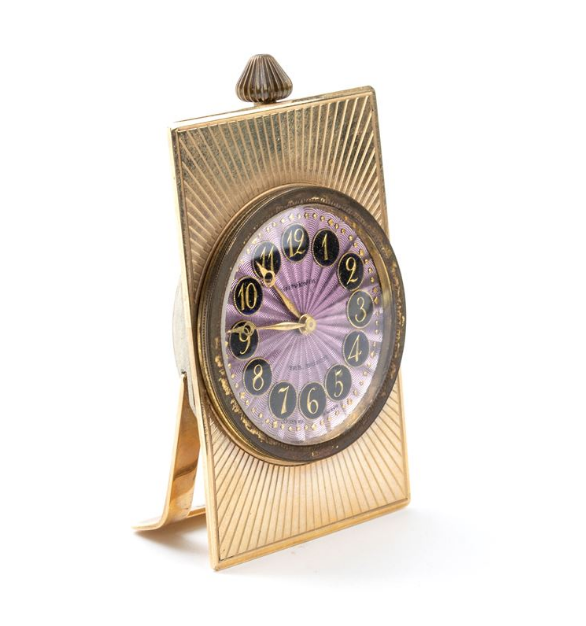
(Juvenia desk clock, ca. 1925. Credit by Topofabio1 on IG)
Europe, pervaded by a modernist and technological spirit, gave rise to Art Deco in the 1920s and 1930s. Art Nouveau and Art Deco are both artistic styles that emerged almost simultaneously, but differ significantly in their aesthetic and conceptual approaches. While the former, as mentioned, draws inspiration from natural elements translated into soft, sinuous lines, Art Deco is more influenced by the Cubist and Futurist avant-garde movements that quickly blossomed across the Old Continent, centered in France, and which were influenced by tribal art and art of Near Eastern inspiration. Art Deco adopts a geometric and symmetrical language, characterized by pure, stylized forms, often inspired by mechanics and speed. There was also a true revolution in the materials used for manufacturing and craftsmanship, with a preference for steel and chrome, as well as innovative materials like Bakelite, which allowed for greater expressive possibilities in intense and contrasting colors.
It was in this context that the extraordinary watches produced by Juvenia were born between the 1920s and 1930s, and again until the very early 1940s.
Among the most significant productions, both in terms of the quality of the workmanship and the number of pieces released on the market, are certainly the travel and handbag watches with decorated protective covers, which were often equipped with a ring to also serve as a pendant to be worn around the neck.

(Travel and handbag watch, 925 sterling silver and polychrome enamel, 1925. Credit by Treasurefinejewlry.com)
The Maison’s creatives are always seeking new inspiration from the vast array of aesthetic solutions offered by Art Deco. Between the late 1920s and the early 1930s, a pendant clock with an enameled case and barrel shape was released, inspired by the Parisian “Le Trianon” theater and its façade, designed in 1894 by architect Edouard Jean Niermans (the theater suffered a serious fire on the night of February 17, 1900, but the façade miraculously remained intact).

(Juvenia “Le Trianon” pendant watch, ca. 1925. Credit: Boldtimepieces.co.uk)
It is in this creative context that Junenia produces a series of splendid, small pocket watches with a silver “bivalve” cover, a precursor to the “Sport” line of models. The dial, hinged to the case for easy removal, is highly distinctive and innovative. The layouts, with radium numerals and hands, are beautiful and distinctive; the “shells” are decorated in a wide variety of ways, and can be covered in leather or decorated with colored enamels.

(Juvenia pocket watch with yellow enamel covers, mid-1920s. Credit: Ebay.com)
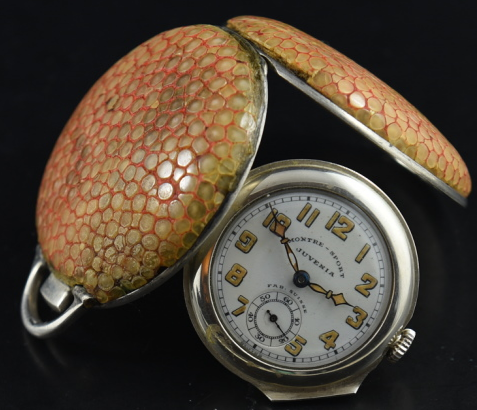
(Juvenia pocket watch with stingray leather covers, mid 1920s. Credit by Watchestobuy.com)
During this time period, polychrome enamel decorations reached heights rarely reached before. Juvenia was a master of this technique, developing these techniques even on very rare globe-shaped necklace watches, sought-after today by collectors.
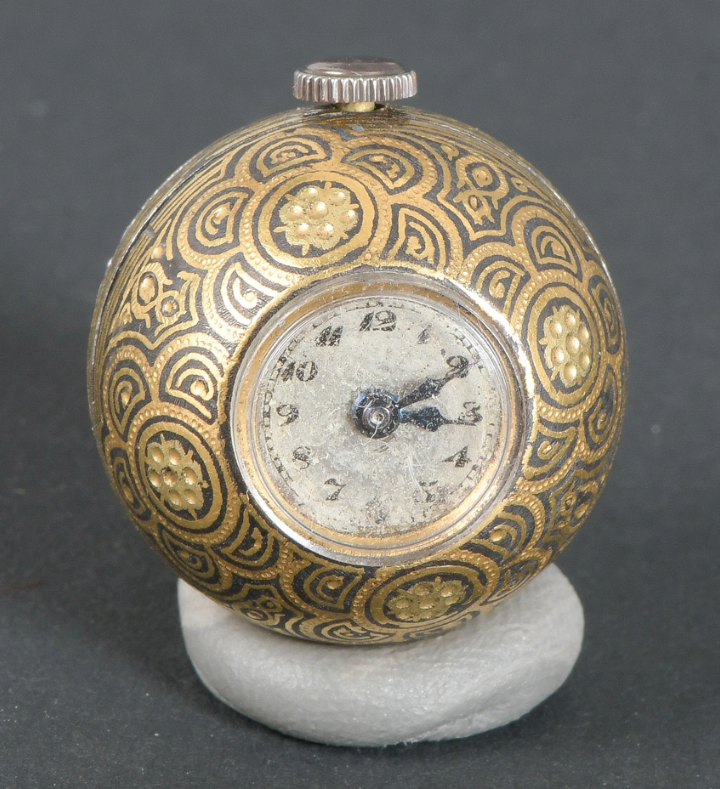
(Juvenia globe-shaped pendant clock, 1930. Credit by The-saleroom.com)
Between the 18th and 19th centuries, enameled spherical necklace watches (or pendant watches) represented the pinnacle of horological elegance and miniaturization. This trend later developed in the 1940s, particularly in France and Switzerland, where upper-class women loved to flaunt necklaces of every shape and color, fueling the pendant watch market. This spherical shape remained very popular well beyond that era, and decorative variations on the floral theme were studied and created, with flower-shaped silver cases embellished with petals framing the dial.

(“Lotus” Juvenia, 1930s. Credit by Thevintageur.com)
The 925 gold-plated silver case is a true masterpiece. It features a curved shape divided into two sections. The exterior often features a refined guilloche pattern: in this case, red enamel is applied to the surface, making the composition shimmer and transparent with its splendid burgundy and bright red highlights.

(“Lotus” Juvenia, 1930s. Credit by Thevintageur.com)
This extraordinary patented case comes from the workshops of the important Berthoud & Cie. SA manufacturer, active in Bienne since 1931 (registered trademark “B&C”). The interior of these pieces features the Juvenia signature, serial number, the Swiss 0.925 silver symbol (the duck), and the Didisheim-Goldschmidt Fils & Cie. / Juvenia (“DG”) mark. A true masterpiece of craftsmanship, manufacturing expertise, and creativity. The caliber is mounted at the base of the very tall case, and to reach the dial, the casemakers added a cylindrical module inside it, through which passes the very elongated axis that reaches the hands on the opposite side. Another incredible technical solution that makes this piece even more special.
Some timepieces from this period fully embody the essence of Art Deco, such as this particular pocket watch.

(Juvenia, rhomboid-shaped pocket watch, 1930s. Credit by The Vintageur.com)
It is a watch with a square case, but arranged in a rhomboidal pattern. The metal case, with sharp yet soft angles, is embellished with reptile leather inserts on each of its four sides. The same leather is used as a pendant cord for easy removal from the pocket. The original crown protrudes from the edge of the case, blending in with it so as not to spoil the splendid, elegant, and regular geometric shape of the case.
The diamond-shaped dial is a spectacular Art Deco piece. It features a two-tone mirrored surface with Roman numerals at the four corners and black pad-printed quadrangular indexes. The hands are flame-blued and have a pseudo-Breguet shape, with small quadrangular loops that echo the shape of the indexes and the overall layout of the dial and case. The dial is protected by a highly interesting glass: it is domed on the inside, yet flat on the outside. This structure enhances the visibility of the entire dial in all its typically Art Deco beauty.
At the center of this stunning dial is the signature of Walser Wald, a prominent Argentine jeweler and retailer based in Buenos Aires. His signature can be seen on several Universal Geneve Compurs and many Patek Philippe watches from the 1930s. Walser Wald, in fact, was Patek Philippe’s agent in Argentina during that decade and is considered one of the leading importers and dealers of Swiss haute horlogerie watches throughout South America during that period.

(Juvenia, rhomboid-shaped pocket watch, 1930s. Credit by The Vintageur.com)
Inside the case, beneath the dial, is Juvenia’s rare in-house-produced caliber, the Model 899, launched in 1935 and registered under design patent number 55816 along with the Model 898.

(Patent filing for the 898 and 899 movements. Credit by Watch-movements-archive.com)
Juvenia generally used standard forinutra calibers, but had a very limited production of entirely in-house movements. This movement is manually wound, has 16 jewels, and a frequency of 18,000 vibrations per hour. It is an 11-ligne movement (22 mm in diameter), but Juvenia also produced 15-ligne versions with the same architecture, which it housed in another highly successful timepiece, the “Sport” model.
During the second half of the 1930s, travel clock production peaked. These were comfortable, functional objects, suited to the evolution of rail and naval communications, as well as the ever-increasing demand for cars.
The most successful model was the Juvenia “Sport”, launched in 1939, as evidenced by many advertisements of the time.
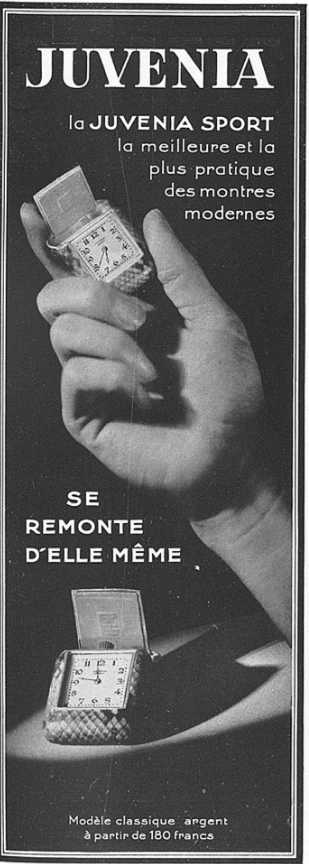
(Affiche, Juvenia “Sport”, 1939. Credit by Hifi-archiv.info)
It is a highly practical and innovative watch, featuring a patented snap-open case that preserves the dial under all conditions and, more importantly, allows for automatic winding of the movement by opening and closing the case using the oversized winding crown at 12 o’clock.
The first Swiss patent for this design was filed by Juvenia well before its market launch: on August 15, 1930, under the number 141603, and published two months later.
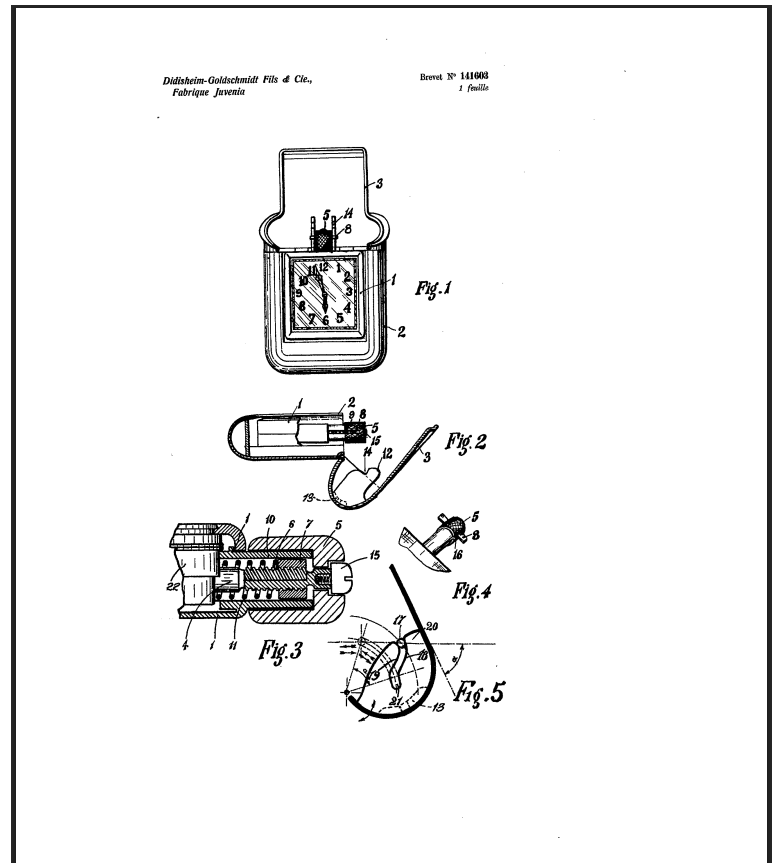
(Patent No. 141603 for a watch that can be recharged by closing and opening a lid, 1930. Credit by Espacenet.com)
It was the era of the dazzling success of the Movado Ermeto and its enormous extra-continental distribution, and Juvenia reached the same market with this equally innovative winning product.

(Juvenia Sport in 935 silver with hammered decoration, late 1930s. Credit by Seasicksilver.com)

(Juvenia Sport in 935 silver and enamel, late 1930s. Credit by Juvenia.ch)
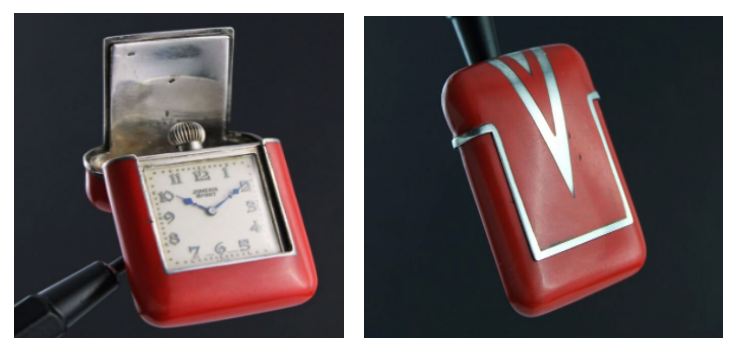
(Juvenia Sport in 935 silver and enamel, late 1930s. Credit by Alexandrelandre.com)
A model launched later by Juvenia under the “Fiat” brand features a structure consisting of two protective leather-covered shells that open like a book. It’s a cheaper, simplified version of the same Juvenia watches, sharing their architectural and structural styling, albeit without the automatic winding feature.
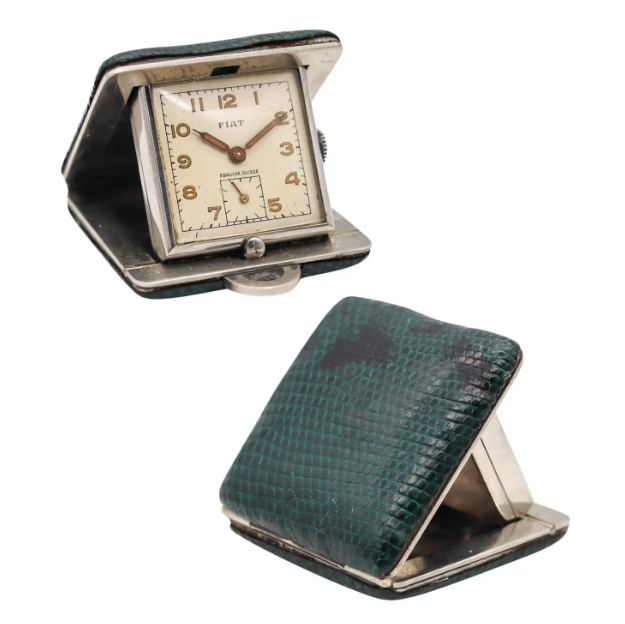
(Travel clock signed “Fiat” by Juvenia, 1940s. Credit: 1stdibs.com)
PART III. JUVENIA: THE WRISTWATCH BETWEEN “MYSTERY” AND CREATIVITY (1940)
In the early 1940s—led by Bernard and Albert, and joined by Charles Didisheim in 1910—Juvenia enjoyed a period of creative and economic splendor. Its products were sold from New York to Cairo. Its distribution network was highly ramified, with branches in the world’s major cities and authorized dealers spread across every latitude and longitude, all the way to Bangkok.

(Advertisement for Thai retailer Teck Ann in Bangkok, 1951. Credit by Watchlibrary.org)
For years, Juvenia has been one of the most active players in the Swiss watchmaking world. A significant portion of its production is dedicated to small women’s wristwatches. Many of the early advertisements from these years featured watches whose cases, almost always gold, were conceived as miniature sculptures. A model with a cylindrical case and glass (pictured, the one with the black dial) is today a very rare and sought-after piece among enthusiasts of the brand and beyond.

(Affiche, Juvenia, 1939/1940. Credit by Hifi-archiv.info)
To further enhance its market appeal, Juvenia soon began naming its watches after their shapes and/or aesthetics. The “Atlantide” model, part of the “Cord” collection, with its distinctive “double hand” case, is an excellent example.
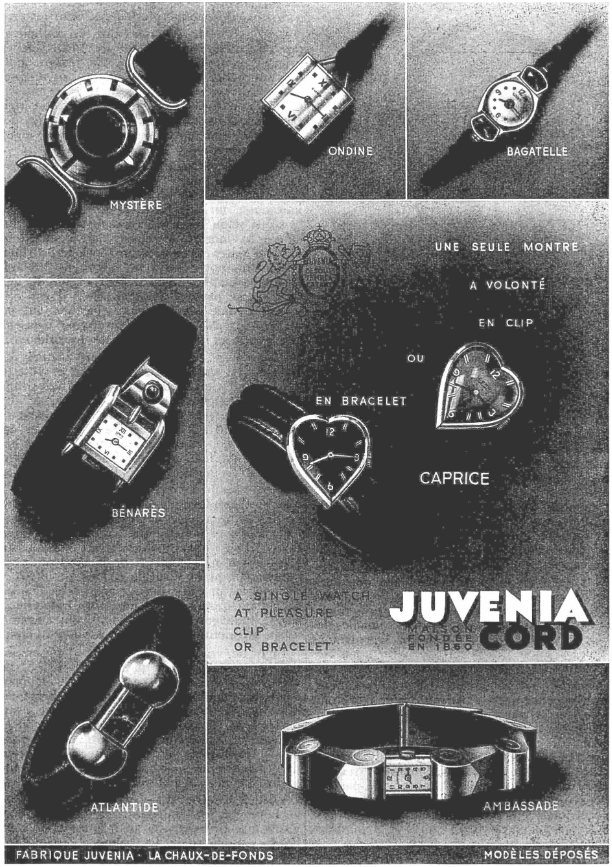
(Affiche, Juvenia, 1942. Credit by Hifi-archiv.info)
The Maison’s flagship model in the first half of the 1940s was undoubtedly the “Mystère”. It remained so for a long time to come. Juvenia enjoyed unprecedented commercial success upon its launch in 1942.
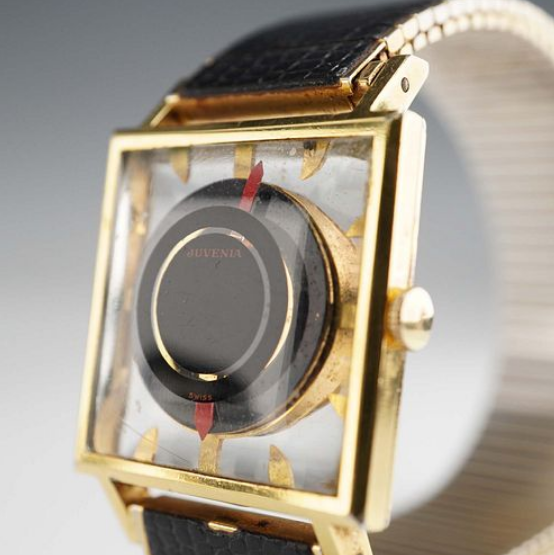
(Juvenia “Mystère”, mid 1950s. Believe by Bidsquare.com)
It quickly became an iconic model of the Maison and was released in many variations starting from the 1950s, especially in terms of the size and shape of the cases, which were mostly gold-plated, with black discs and hands/pointers in a vivid red.

(Affiche, Juvenia “Mystère”, 1950. Credit by Hifi-archiv.info)
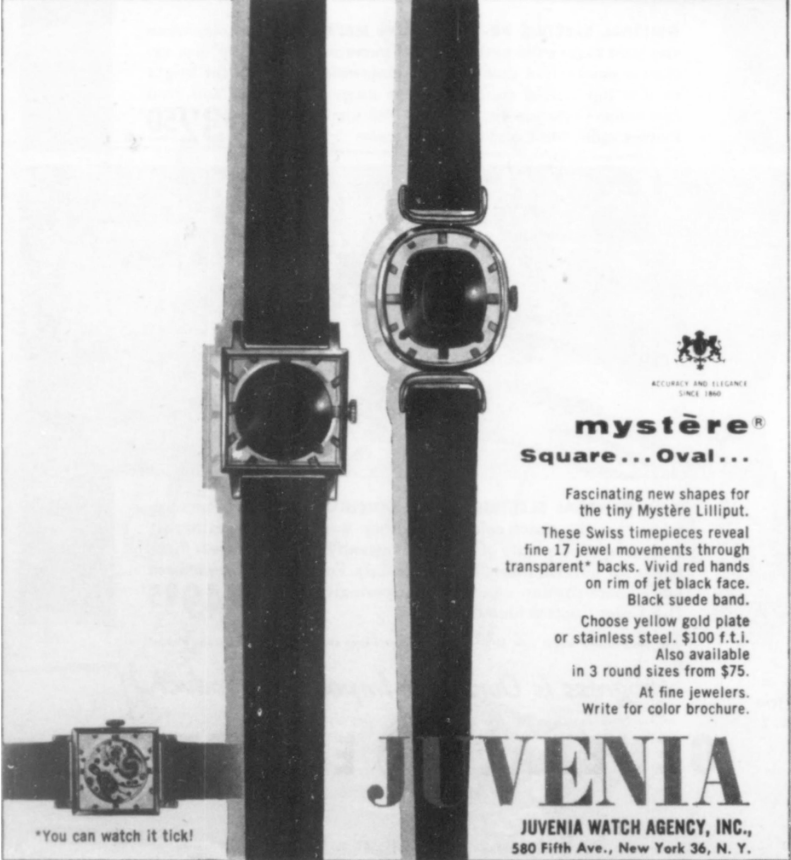
(Affiche, Juvenia “Mystère”, 1955. Credit by Hifi-archiv.info)
Juvenia was among the first companies to attempt to create a mystery watch. Some sources incorrectly date the “Mystère” to be released in 1945/1947. The preceding advertisement is taken from publication no. 41 of October 15, 1942, of “La Federation Horlogere Suisse” and depicts (top left) the very first model. This chronological discrepancy is -I believe – due to the fact that the patent referenced in these sources, that of E.A. Stucky, dates back to 1956. This patent was filed in Switzerland on September 29 of that year on behalf of Juvenia and subsequently registered under no. 2,886,942 in the USA in 1957 and subsequently published in May 1959 (see red box).
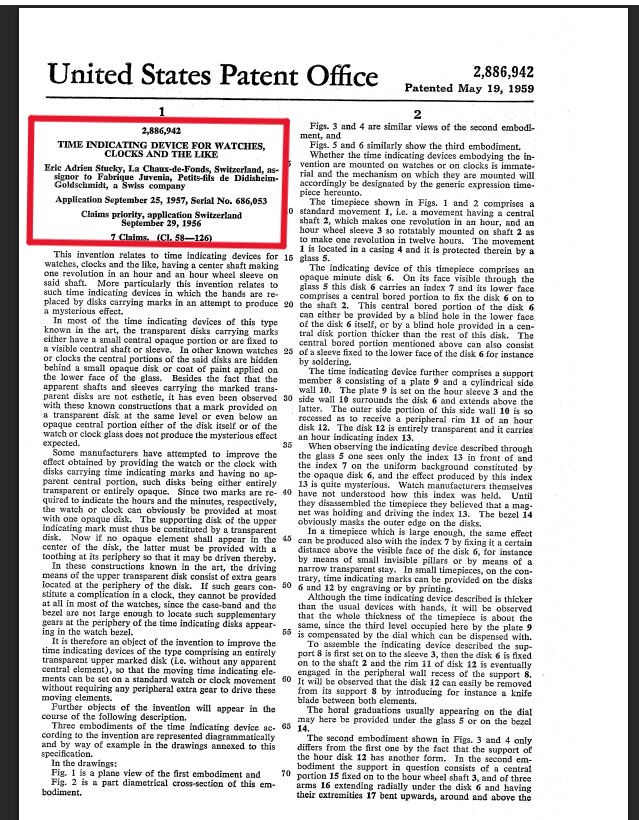
(E.A.Stucky, US Patent No. 2,886,942 for Mystery Watch, 1959. Credit by Espacenet.com)
Below is the drawing of the invention.
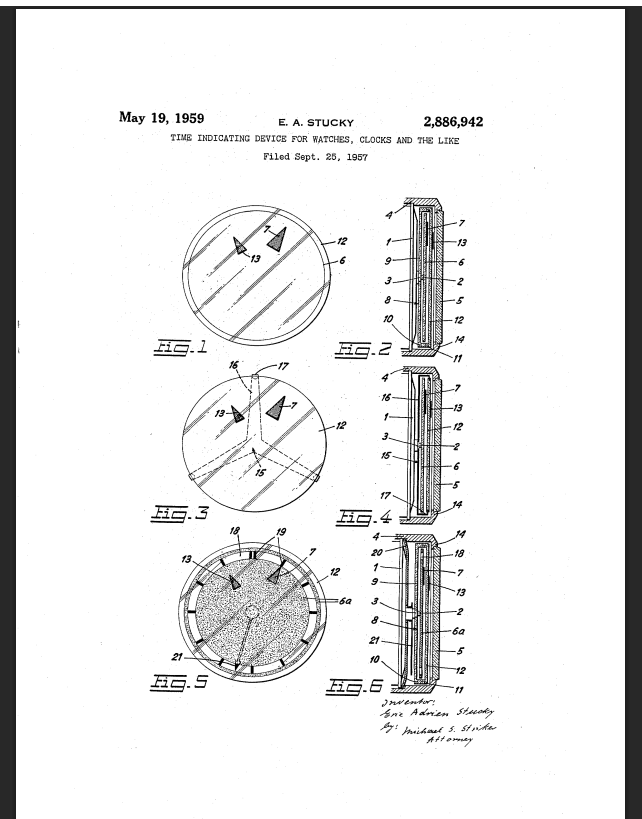
(E.A.Stucky, US Patent No. 2,886,942 for Mystery Watch, 1959. Credit by Espacenet.com)
In reality, the reference patents are much older and are signed by the inventor Nathan Hammer, who as early as 1939 had filed a patent for a pocket or travel watch that indicated the time through the juxtaposition of discs (US patent no. 2,202,581 published on May 28, 1940).

(Nathan Hammer, U.S. Patent No. 2,202,581 for a Mystery Travel Clock, 1940. Credit Espacenet.com)
Another patent by Hammer dates back to a few years later, this time applying the concept of juxtaposed discs to a wristwatch (US patent no. 3,380,171 filed in 1944 and published the following year).
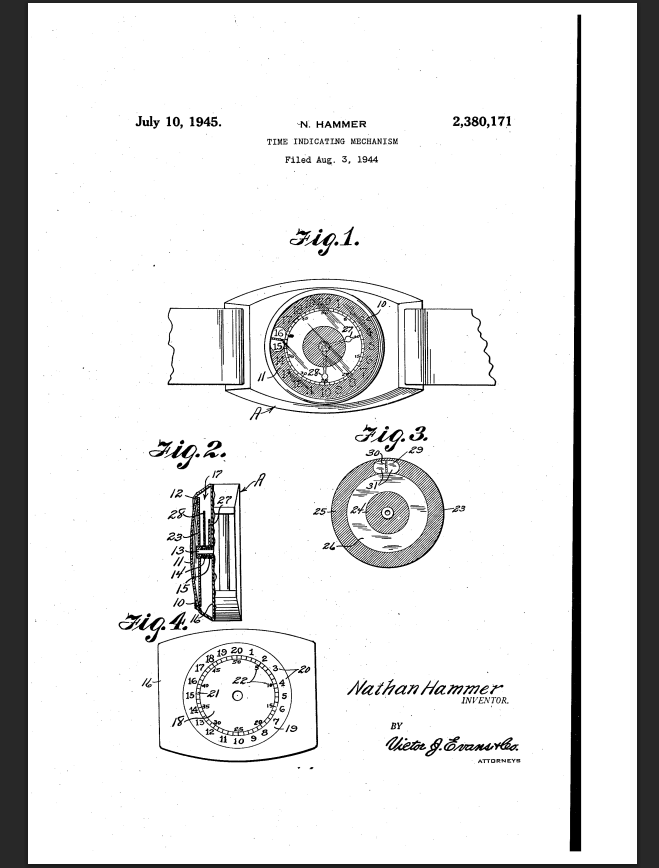
(Nathan Hammer, U.S. Patent No. 2,380,171 for a Mystery Wristwatch, 1945. Credit Espacenet.com)
Both of these patents are cited at the bottom of E.A. Stucky’s later filing, suggesting that Juvenia certainly drew on Hammer’s inventions for the 1942 launch of its first “Mystère.”
Moreover, Juvenia produced two more mystery clock models in the mid-1940s, this time for travel or desk clocks, just as Hammer’s 1940 U.S. Patent No. 2,202,581 claims: the “Lucky Guy” and the “Presage”.
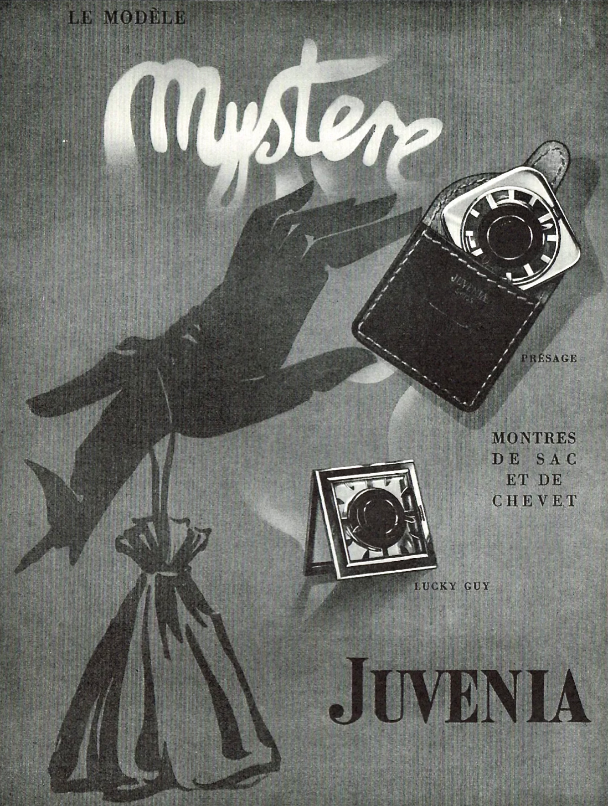
(Affiche, Juvenia “Presage” and “Lucky Guy”, late 1940s. Credit by Ecygallery.com)

(Juvenia “Presage”, late 1940s. Credit by Ecygallery.com)
COMING SOON: THE GREAT HISTORY OF JUVENIA PART II (1940-1970)