


MOVADO AND A L’EMERAUDE, THE PIONEERS OF DOUBLE SIGNED WATCHES
INTRODUCTION
In the universe of vintage watchmaking, strange things happen. This is well known. It is not a world that is always consistent with itself, and we are used to navigating its bizarre inconsistencies through study. Perhaps the beauty of vintage watchmaking lies precisely in this. I cannot say for sure, but this high degree of unpredictability makes us euphoric.
In this context, it also happens that one of the most important Swiss jewelers is completely forgotten by time. This should not surprise us. So let us try to remedy that.
All of us enthusiasts and collectors are drawn to the double signature that we sometimes find on the dials of timepieces. Renowned and important jewelers, from across the oceans to the heart of Europe, occasionally placed their signatures on the dials of watches: either on its own or overlapping with that of the producing Maison. This adds value for a collector because it makes the item even more special, exclusive, and rare.
If we explore this wooded landscape, we will certainly encounter some watches signed by Turler, Tiffany, or even Cartier. However, in the underbrush, it is possible to discover (or rediscover) some important jewelers that have also distributed and commercialized highly significant and historic brands, and who have affixed their signatures to their products.
Today, we will talk about A L’Emeraude in Lausanne, Switzerland..

(View of Lausanne, chromolithograph by Alfred Guedson, 1858. Credit: Historical Dictionary of Switzerland)
Lausanne has been and continues to be an urban center of great importance for Switzerland. The capital of the Vaud canton, it is situated on the northern shore of Lake Geneva and extends from its shores (Ouchy port) to the Jorat forests (Les Rapes). At the dawn of our story – in the early 1900s – its population numbered around 47,000 inhabitants (mostly French-speaking), making it the fifth-largest city in present-day Switzerland, after Geneva, Zurich, Basel, and Bern. In this city characterized by a jumble of low buildings and small winding streets, Jacques Schwob was born in 1878.
PART I: JACQUES SCHWOB AND THE FOUNDATION OF A L’EMERAUDE

(Birth registry of Jacques Schwob. Credit: Geni.com)
Just over thirty years old, the young Jacques, who had already gained previous experience as an apprentice jeweler in various local shops, decided on the eve of Christmas 1909 to open his boutique at the newly inaugurated Galeries Saint-François in the heart of the city. Thus began the story of A L’Emeraude.

(Affiche/Label A L’Emeraude, 1909. Credit: Emeraude.ch)
The Galeries Saint-François were the new attraction in the city, and many merchants and businesses were eager to get in. Jacques’s attempt, along with his wife Aline, was successful, and “A l’Emeraude Jeweller-Goldsmith” (after his wife’s surname) was born.
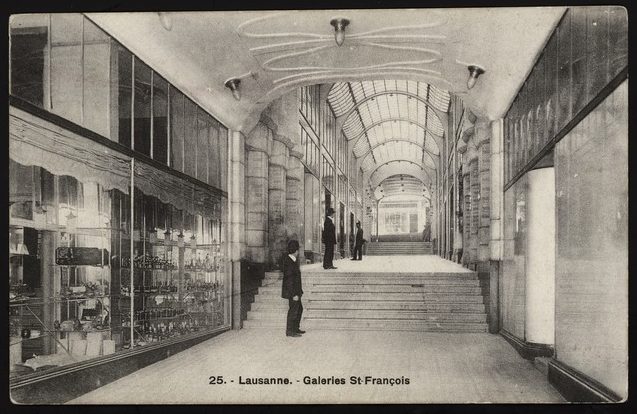
(Interior photograph of the Galleria Saint-François in the 1930s. Credit: Lausanna.ch)

(Photograph of the main facade of the Galleria Saint-François today. Credit: Google Maps)
J. Schwob was very active within the local community, and his boutique became a venue for high-level cultural exchanges: musicians, writers, academics, and artists, but also bankers and merchants gathered there. An intellectual audience serving not only business interests but also the cultural development of the city of Lausanne.
By the end of the 1910s, the boutique needed to expand as the reputation of A L’Emeraude began to grow, echoing beyond the canton and resonating throughout Switzerland. Schwob received very important clients from all over Europe and beyond. Thus, in 1919, the jewelry store—having increasingly expanded its watch offerings—moved to number 6 Place Saint-François, adjacent to another prestigious jeweler: Junod.
PART II: LAUSANNE, A CONSTELLATION OF RENOWNED WATCHMAKERS
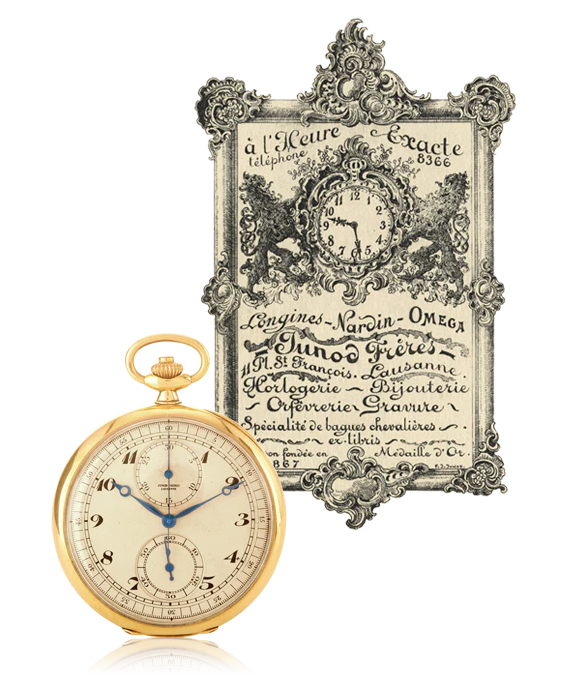
(Affiche/Label Junod ca. 1900. Credit: Junod-Lausanna.ch)
Junod had a great tradition and was very renowned in Lausanne, having been founded very early in 1889 by watchmaker Ami Junod Pattus under the name “A. Junod et Fils” at number 7 Rue Centrale. In 1914, Ami Junod’s sons, Robert and Fernand, purchased the building at number 8 Place Saint-François – in the heart of the city – and opened a wonderful new watch and jewelry shop there, which dealt with brands such as Longines, Ulysse Nardin, and Omega.

(Facade of Junod jewelry store, 1926. Credit: Watchonista.com)
From that moment on, Junod has always remained in that splendid location. Today, it is still active and one of the most important watchmakers in the canton, selling brands such as Blancpain, Chopard, Omega, and Jaeger-LeCoultre. On the upper floor of the store, there is also a museum inaugurated in 2005, showcasing over 500 watches preserved by the family over 150 years of history (including the very first Jaeger-LeCoultre Reverso watch).

(Photograph of the facade of the Junod boutique today. Credit: Junod-Lausanna.ch)
Thus, in 1919, A L’Emeraude and Junod, side by side, were pioneers in creating an irresistible attraction for the most important Maisons that wanted to distribute their high-quality products. Within a few years, even though they were not located on the more well-known and famous Rue du Rhône in Geneva, other significant watch and jewelry stores began to emerge around Place Saint-François in Lausanne, including Grumser, at 11 Rue Saint-François, which has offered brands including Omega and Audemars Piguet since 1926 (the jewelry and watch shop Christ now operates at that same address).
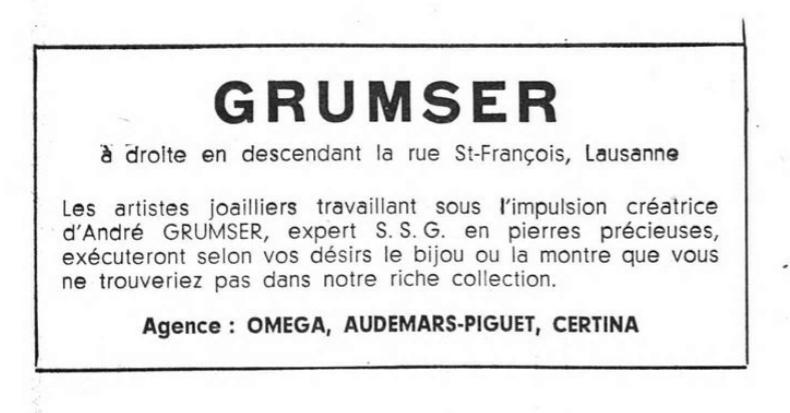
(Affiche of Grumser, 1965. Credit: Gazzette de Lausanne)
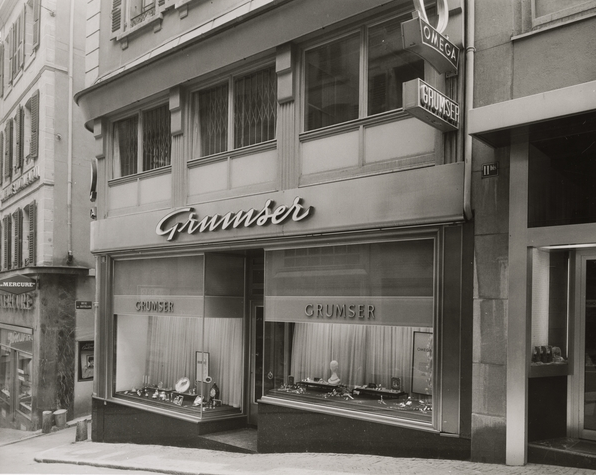
(Photograph of the facade of Grumser boutique, circa 1960. Credit: Lausanne.ch)
Much later, Bucherer also found its place in the city, establishing an important boutique at Rue de Bourg 1, just a few meters from Judon and steps away from where Grumser was once located.
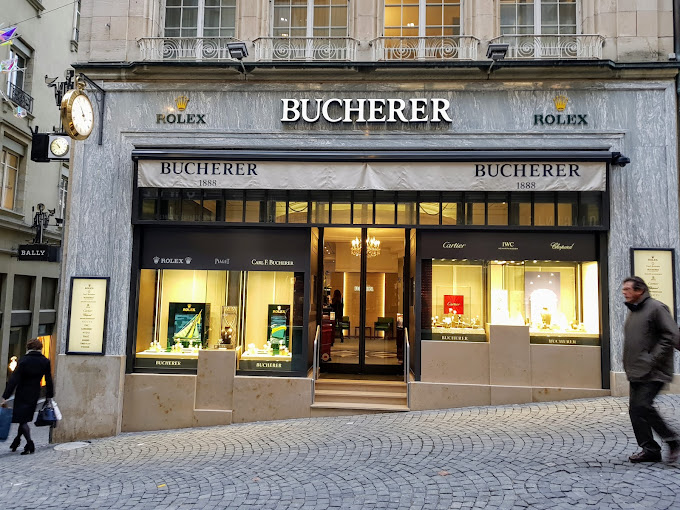
(Photograph of the facade of Bucherer’s boutique in Lausanne. Credit: Google Maps)
In this thriving context, A L’Emeraude continues to maintain its position as the gravitational center. Founder and owner Jacques Schwob is joined by his brother Edmond. The two appear to maintain a close partnership until 1930, when Edmond leaves the company to independently manage another jewelry store, Au Diademe, in the Galerie Saint-François.
The commercial registers record Edmond Schwob’s registration of the name Au Diademe on Christmas Eve, 1930.

(Lausanne Commercial Register entry, 1931. Credit: E-Periodica.org
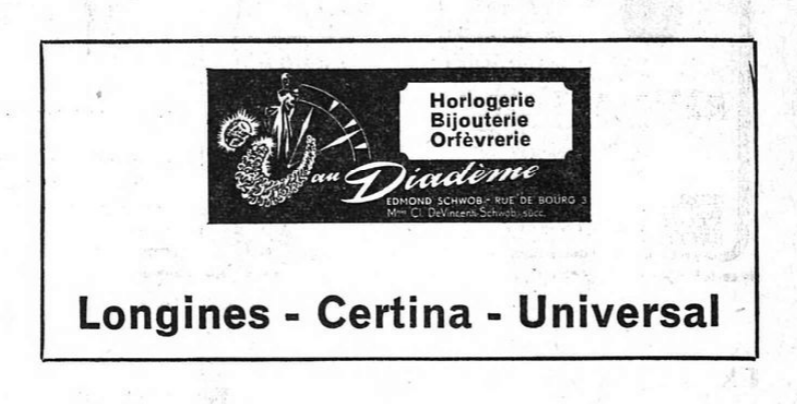
(Affiche Au Diademe, 1965. Credit: Gazzette de Lausanne)
Like A L’Emeraude, Au Diademe also took a pioneering role in signing watch dials. While its scope was certainly more limited than that of elder brother Jacques – who dealt with prestigious, high-profile Maisons – their approach to marketing timepieces was identical. The Au Diademe boutique sold watches by Solvil, Certina, Marvin, Longines, as well as Ulysse Nardin and Universal Genève. For the latter in particular, we find abundant evidence of double-signed watches, especially from the 1950s and 1960s.
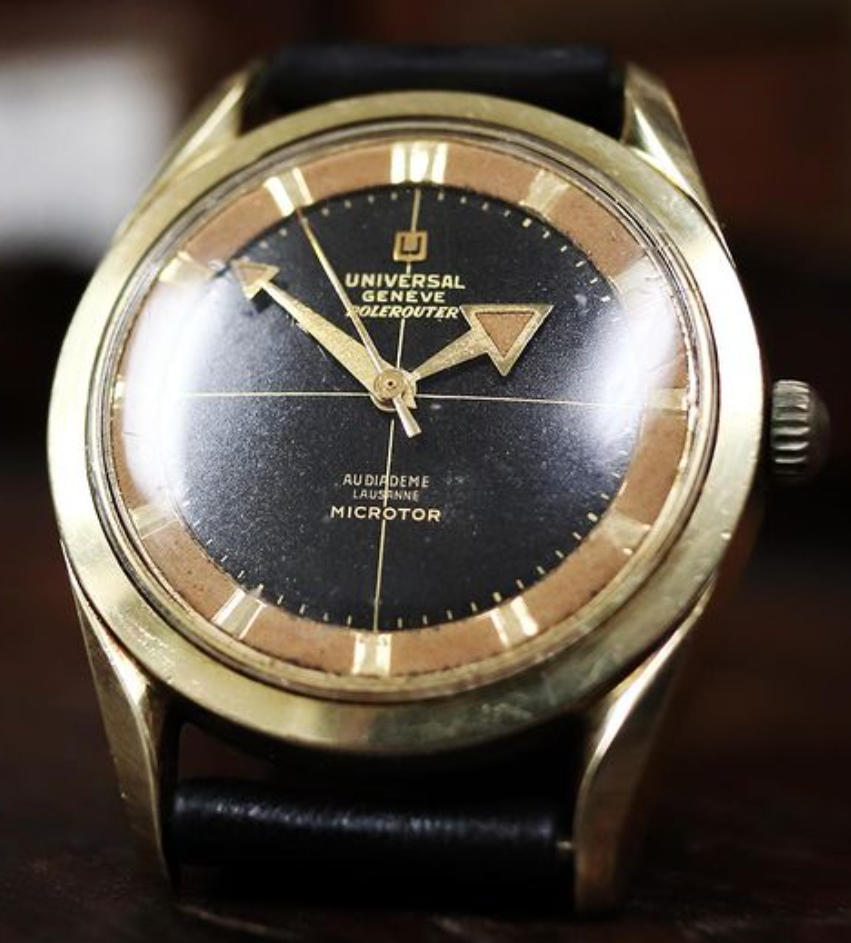
(Example of Universal Genève Polerouter double signed Au Diademe Lausanne. Credit: Universalgenevepolerouter.com)
In the small yet significant city of Lausanne, a constellation of high-end watch retailers was taking shape-each competing for market share within mere meters of one another, all orbiting around A L’Emeraude as their gravitational center.
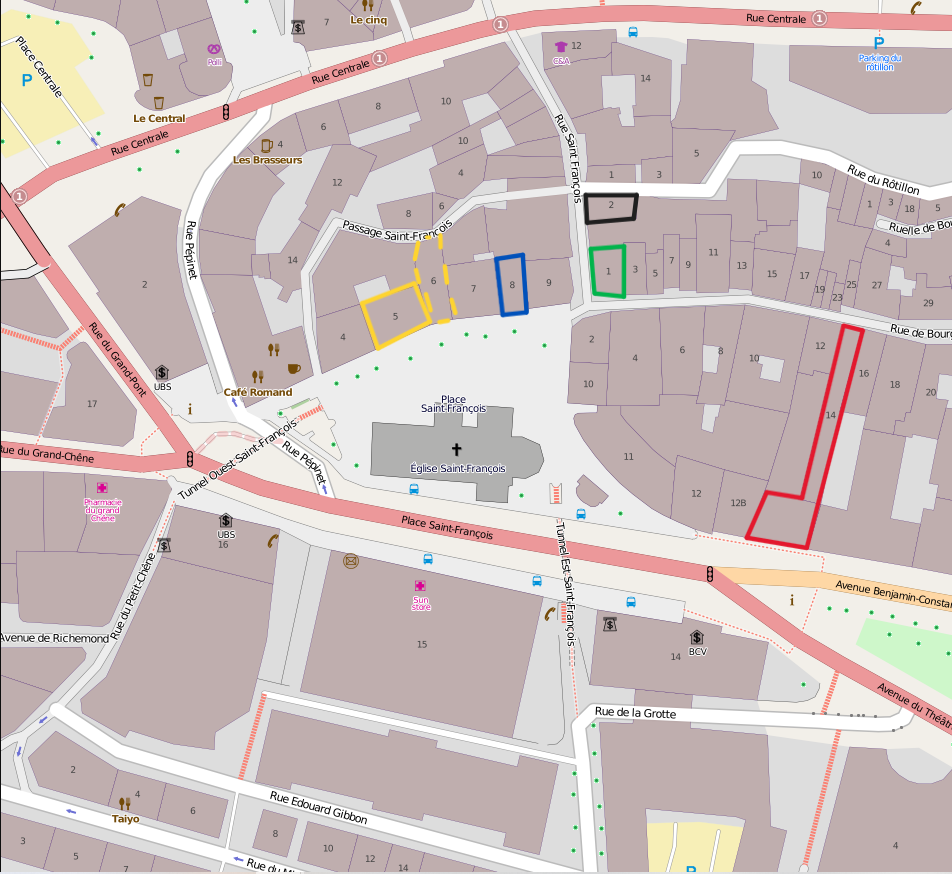
(A Inter-temporal Map of Central Lausanne (Left to Right): in yellow A’LEmeraude; in blue Junod; in green Bucherer; in black Grumser; in red Au Diademe at Galerie Saint-François)
PART III: THE RISE OF A L’EMERAUDE
In 1919, J. Schwob – whose prominence as an active civic personality in Lausanne continued to grow – was appointed to appraise the collection of Princess Lobanoff de Rostoff, who had died without being able to bequeath her famous and valuable collection of jewelry and watches to any heirs. Among the appraisal committee members sat a man who would become J. Schwob’s close friend: the renowned Paul Ditisheim – watchmaker, inventor, founder of Solvil & Titus, and moreover, a relative of the dynastic Ditisheim branch that established Movado.
The beautifully published document below contains all the details regarding this significant event, which directly involved the founder of A L’Emeraude.

(1919 document extracted from Revue Internationale de l’Horlogerie. Credit: Watchlibrary.ch)
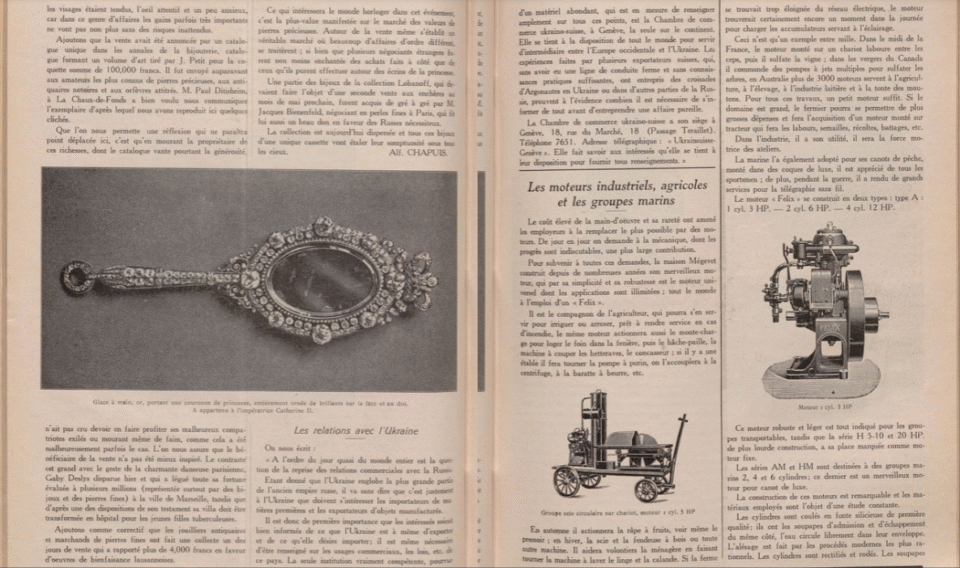
(1919 document extracted from Revue Internationale de l’Horlogerie. Credit: Watchlibrary.ch)
On March 16, 1925 at 8:00 AM, brothers Jacques and Edmond Schwob officially registered the A L’Emeraude name under entry number 58520.
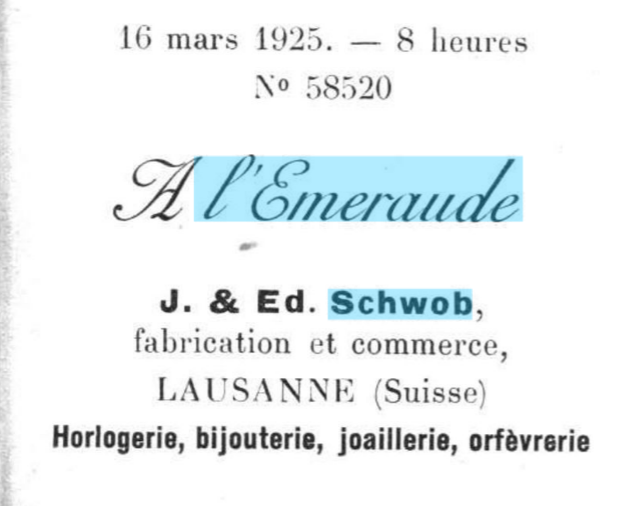
(Trade name registry entry for A L’Emeraude, March 16, 1925. Credit: Watchlibrary.ch)
The following year, the boutique relocated to a larger adjacent building at 5 Place Saint-François, featuring two floors.
A L’Emeraude experienced substantial growth from the late 1920s through the subsequent two decades. Among its earliest manufacturing clients were Patek Philippe and Movado, with whom it cultivated privileged relationships over the years. The maison offered timepieces of every variety: from pocket watches to wristwatches, ranging from simple time-only models in steel or precious materials and gemstones to grand complications.
To expand its offerings and capture market share, J. Schwob secured distribution rights for brands including Mido, Cyma-Tavannes, Jaeger-LeCoultre, Girard-Perregaux, and Audemars Piguet.

(Photograph of A L’Emeraude’s boutique at 5 Place Saint-François. Credit: Emeraude.ch)
As early as the 1920s, A L’Emeraude innovatively began imprinting its name on the dials of watches it distributed – a pioneering practice that served dual purposes: functioning as early brand marketing while simultaneously certifying quality.
The earliest documented examples appear on pocket watches, particularly those manufactured by Patek Philippe, Cyma, and notably Movado.
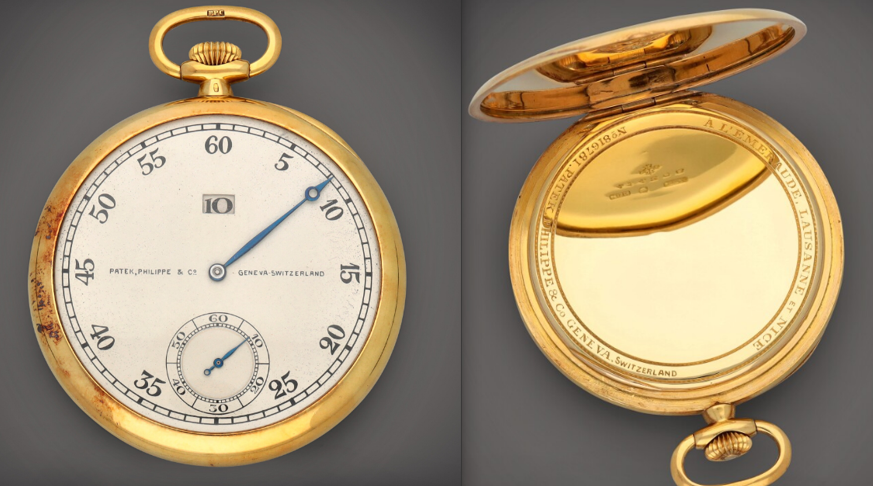
(Patek Philippe pocket watch featuring A L’Emeraude signature on interior caseback, 1927. Credit: Sothebys.com)
As mentioned, Cyma watches were among the first to feature double signatures – this time prominently displayed on the dial itself.

(1930 Cyma watch featuring “A L’Emeraude Lausanne” co-branding on dial. Credit: Kaplans.se)
While numerous double-signed Cyma examples exist (both pocket and wristwatches), archival records confirm Movado as the most frequently documented and historically significant partner in this practice.
PART IV: MOVADO FOR A L’EMERAUDE
While Cyma occupied the mid-range segment, Movado – alongside Patek Philippe – served as Schwob’s premier partner in haute horlogerie. The volume of A L’Emeraude-signed timepieces produced by Achille Ditesheim’s La Chaux-de-Fonds manufacture (est. 1881) dwarfs all other collaborators, suggesting possible exclusive distribution rights for the entire canton of Vaud and potentially neighboring regions.
This collaboration dates to the 1910s – contemporaneous with A L’Emeraude’s founding – when early dials still featured Movado’s “Sureté” sub-brand (registered May 18, 1893 by L.A. & J. Ditesheim under deposit no. 6416) alongside the retailer’s signature.
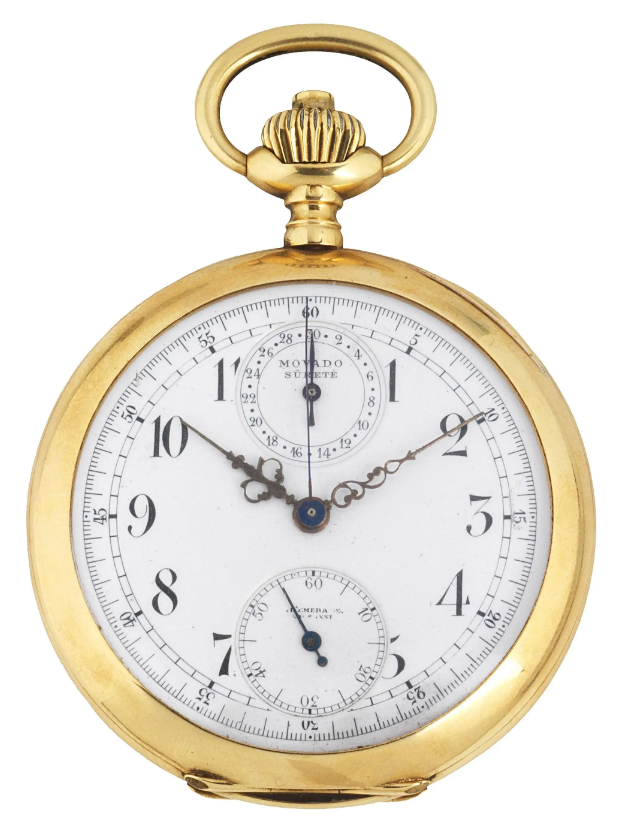
(Ca.1910 Movado chronograph featuring “Sureté” branding and A L’Emeraude retailer signature on sub-dial. Credit: Watchauctions.co.uk)
The quality of the Movado products proposed and signed by A L’Emeraude is of the highest quality imaginable. Pocket watches with cases in yellow gold or white gold, set with precious stones and with dials in mother-of-pearl or coloured tampography (in blue/blue). It is probable to think that Movado produced for the now famous watchmaking of Lausanne also pieces on commission, that is, watches, which Movado did not have in its catalogue and which were intended for prestigious clients of Jacques Schwob.
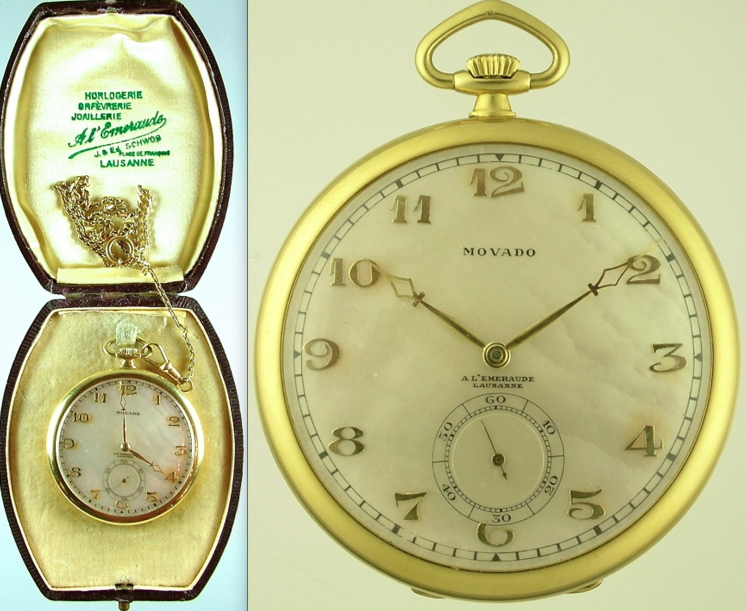
(Movado with mother-of-pearl dial signed A L’Emeraude, 1920 ca. Credit from Antiquewatches.ch)
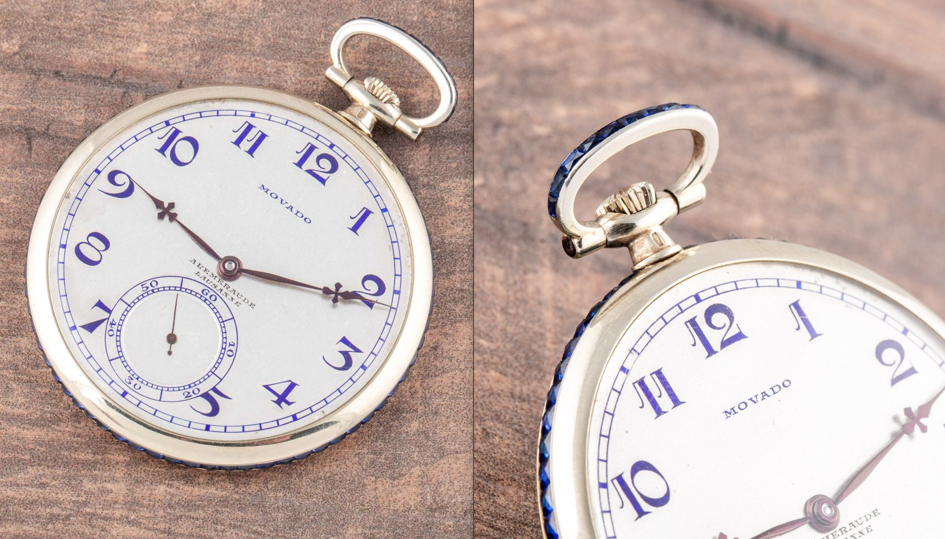
(Movado in white gold and sapphires signed A L’Emeraude, 1920 approx. Credit by Casowatches.com)
Together with the canonical pocket and table watches of classic style and precious materials, A L’Emeraude enriched its proposal to mark time Movado with many objects intended for women, such as this rare watch-ring.
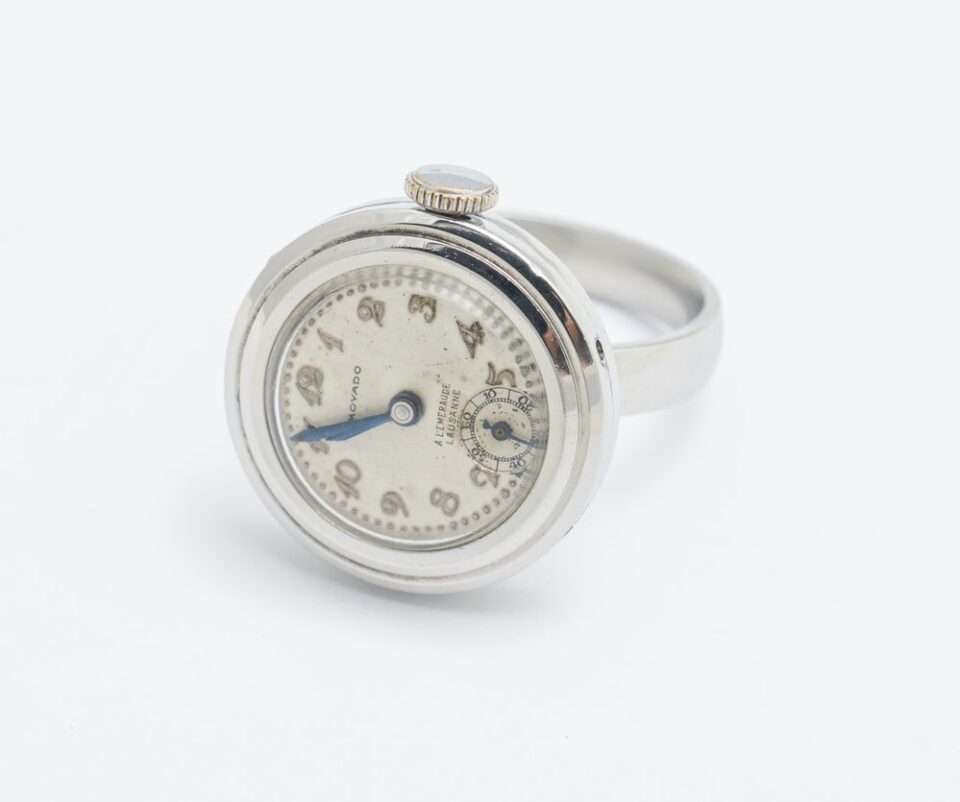
(Movado, watch-ring signed A L’Emeraude, 1930’s. Credit by Arsvalue.com)
The Schwob brothers were also interested and intrigued by the technological developments that crossed the world of watchmaking between the two wars. In addition to having signed some rare Rolls marketed since September 1930 by Blancpain on the patent of the automatic caliber with slide and micro-spheres ATO (Lèon Hatot), A L’Emeraude also put his name on the innovative Movado Ermeto patented in 1926. A time of immediate commercial success in Europe and the USA.

(Movado Ermeto signed A L’Emeraude, circa 1930. Credit by Tijdloos.nl)
This very close collaboration between Movado and A L’Emeraude also catalyzes the marketing of wristwatches in Lausanne. Since the mid ’10s, double-signed men’s and women’s watches have survived to the present day, what it tells of Schwob’s forerunner in putting the signature of his watch on the dials of the watches produced by Movado. A true pioneer on this subject. Not many European jewellery and watchmaking companies adopted this approach on the eve of WWI.
Due to their construction and the materials used, the wristwatches of that time which have come down to us are often deficient in terms of conditions. The cases, a kind of curvex and structured on two pieces that connected by pressure, had several weak points and were easily attacked by dust and moisture. What’s more, the non-enamel dials of the first generation had a very porous base and had a thinly laid pad printing. All this means that the wristwatches of the ’10s and ’20s produced by Movado and marketed by A L’Emeraude available today are few and rare.

(Movado with meander bezel signed A L’Emeraude, 1915 ca. Credit by The Vintage Collector on IG)
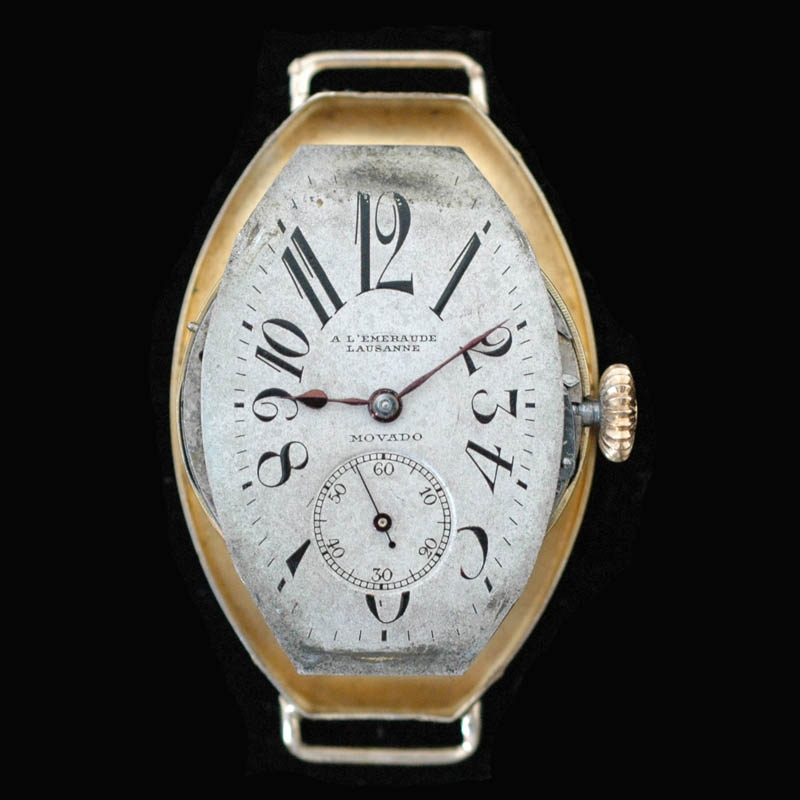
(Movado Curvex in yellow gold Ref.5092 signed A L’Emeraude, detail, 1915 ca. Credit by Rocksandclocks.nl)
A L’Emeraude continued to market and sign Movado watches at least until the end of the 1940s, or even after its founder’s death on 16 April 1943. Jacques Schwob prepared – a few days before his departure – the passing of A L’Emeraude into the hands of his wife Aline. She returned to file the renewal of the company name in February 1945.
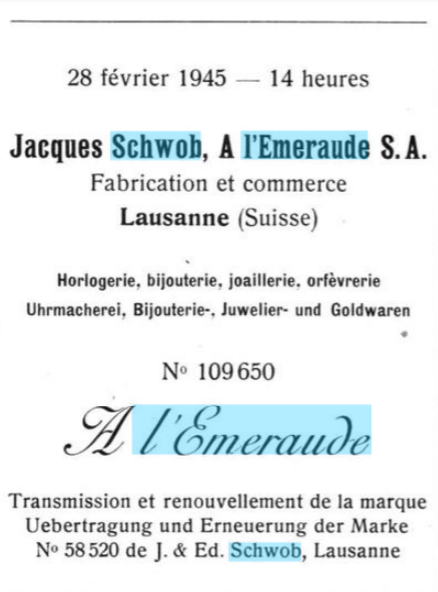
(Register for the renewal of the name A L’Emeraude, 1945. Credit by Watchlibrary.ch)
The distribution of Movado watches did not stop, it still continued in the mid-40s. Rare but censited some models of Movado automatic first generation (“Tempomatic”) signed by the watchmaking of Lausanne.

(Movado Automatic Sport Ref.16152, cal.220, 1947-1948. Credit by Balloon.com)
PART V: EMERAUDE, TODAY AS IT IS
A L’Emeraude does not stop its development and between the 50s and 60s it continues under the lucid guidance of Aline Schwob. The watchmaking is claimed in many Swiss newspapers, especially those of Lausanne, and takes as iconographic symbol an emerald.
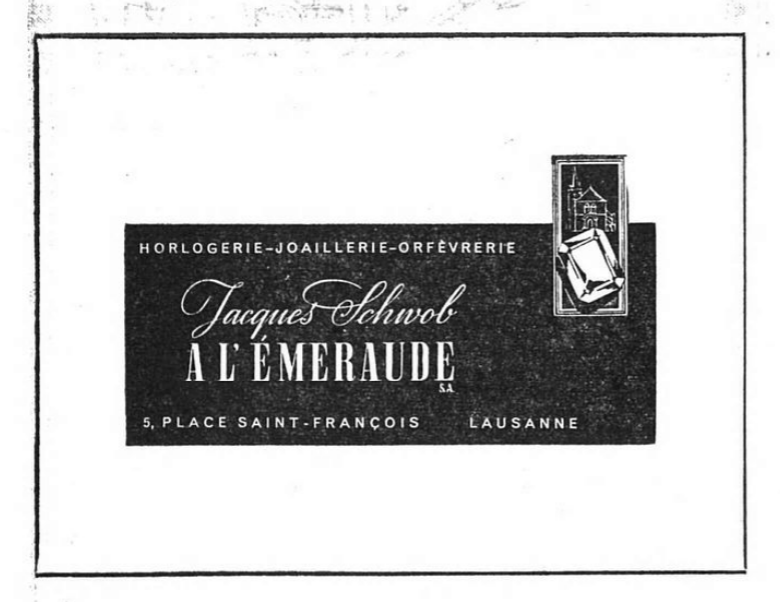
(A L’Emeraude, affiche, 1965. Credi by Watchlibrary.com)
At the end of the 1970s, the widow Aline Schowob gave the property to master watchmaker Edoardo Hölzl. In the same years, the historic boutique moved to 12 Place Saint-François, a few dozen meters from the old location.
In 2004 the company passed under the ownership of the Cremers family, who renewed again the boutique with a major restoration and renovation between 2016 and 2017.

Today, as then, A l’Emeraude is one of the most important watchmakers in Switzerland and beyond. A global reference point for lovers and collectors of fine watchmaking. Continuity and quality have served its Heritage. His signature on some great masterpieces of the past is the imprint that deserved to be rediscovered.
PART VI: THE MOVADO OF THE VINTAGEUR
This is a simply amazing watch. One of the rarest Movado watches you can be lucky enough to see.

Let’s start with your beautiful quadrant. It first of all presents below at 6 o’clock the double signature of the Lausanne jewelry store founded by Jaques Schwob. At 12 o’clock there is the signature Movado Chronometre. The dial has a finely brushed silver background with vertical movement. The conspicuous presence of the Radio on indices and spheres has given a splendid and warm patina that covers the surface evenly. Time, in almost 100 years, has used this dial as a canvas on which to paint. It is very rare to find a dial of this quality up to our days.
The overall layout of the dial is that typical of the second half of the 20’s, with the peripheral minuterie to “Chemin de fer” and the Arabic numbering by the square and pointed font at the hours. The numbers are covered by its original Radio, which has been beautifully preserved in its muddy green color. The spheres are in style “a Cathedral” (or “wing of fly”), and present a distribution “to basins” to contain the heavy luminescent paste on their wide surface.
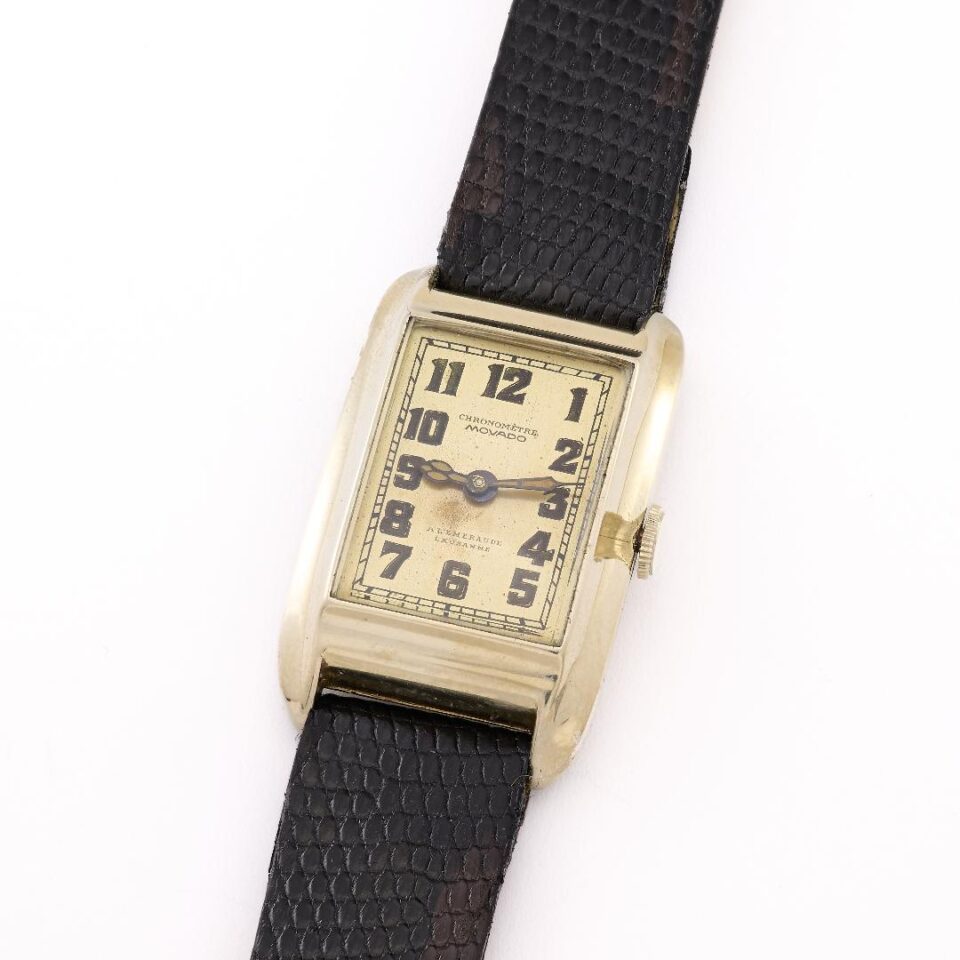
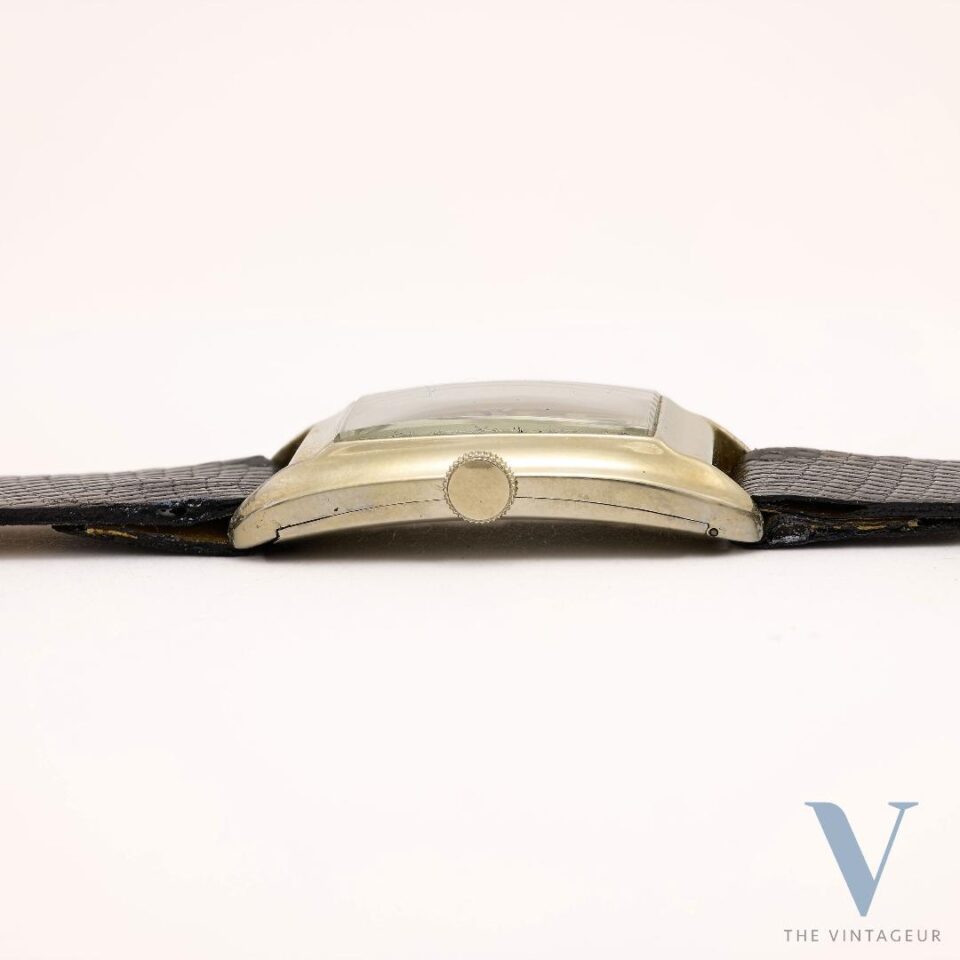
The case is extremely rare. It is rectangular with very generous and unusual measurements for the production period and for the tastes of that time (38.3mm x 31.6mm). This wonderful case is a micro-sculpture in usual 18Kt white gold: it is slightly curved to better embrace the wrist, it has two hinged bodies and has an amazing and unusual work flared of the hips. It looks incredibly soft to the eye and touch. This plastic surface treatment gives a truly incredible ripple of light to the sight.

The inner case contains several interesting information. The first is that this case was produced by Gunther & Co, one of the most important craftsmen specialized in the creation of precious metal cases operating in La Chaux-de-Fonds. Their laboratories supplied prestigious Maisons such as Minerva. Inside the small punch of the hammer with handle positioned at the bottom, there is in fact the number 117, which certifies its production origin. To reinforce this attribution, there is also the small head punch of Helvetia that bears a “C”, still referring the origin of this beautiful and rare case in white gold to La Chaux-de-Fonds.
Another distinctive element is the German Imperial Crown stamp inscribed inside the circle symbolizing the Sun, which obviously refers to the German market for which this watch was intended. To this is added the double head of Helvetia, which is the standard for Swiss gold watches exported to Germany.

The movement inside is another element that increases the rarity of this precious object. It is the caliber of ovoidal form 550 produced by Movado from 1910/1911 approximately until 1925/1926 approximately. It measures 15.4mm x 25.3mm and was the largest caliber of its family at that time (will be replaced in the early ’30s by movement 440 which will keep the same dimensions and proportions but with a shape no longer oval but rectangular). This movement oscillates at 18,000 vph, it has 15 jewels, and is highly finished with treatment to anglage of the bridges, perlage on the base plate and gold castons screwed in correspondence of the rubies on the bridge of wheel train. It is also adjusted on 4 adjustments, which justify the inscription “Chronometre” placed on the dial.

This watch, in conclusion, is not an object for everyone: only a scholar and a collector of this Maison can understand its exceptional nature. It is part of the history of Movado, one of the most important and prestigious Swiss watch houses.